CM Bhajan Lal Congratulates Taga Ram Bhil on Padma Shri
Synopsis
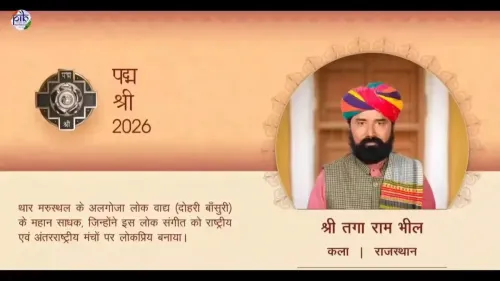
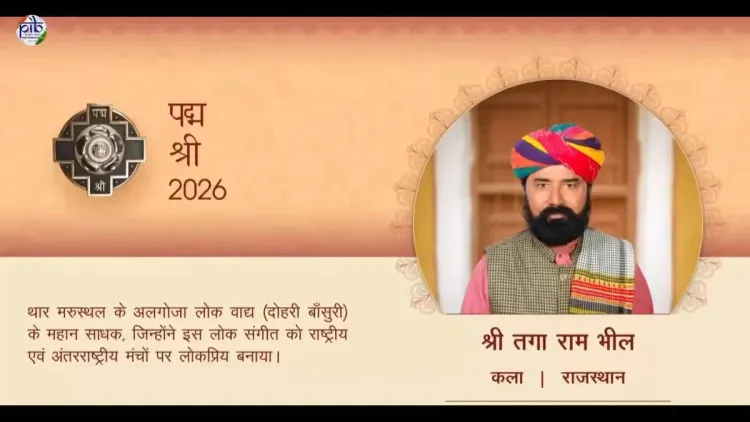
Rajasthan Chief Minister Bhajan Lal Sharma congratulated Jaisalmer-based Algoja player Taga Ram Bhil on being awarded the Padma Shri by President Draupadi Murmu, calling the honour a matter of pride and inspiration for all of Rajasthan.
Key Takeaways
Taga Ram Bhil , a renowned Algoja (double-flute) player from Jaisalmer , has been awarded the Padma Shri by President Draupadi Murmu .
Rajasthan Chief Minister Bhajan Lal Sharma extended public congratulations via X on 25 May 2026 .
The Padma Shri is India's fourth-highest civilian honour, instituted in 1954 .
Sharma described the recognition as 'a matter of pride and inspiration for all of Rajasthan.' The award highlights the enduring significance of Rajasthan's folk instrument traditions on the national stage.
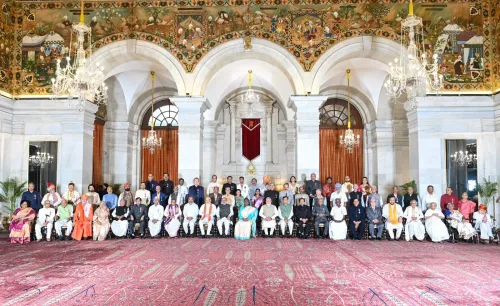
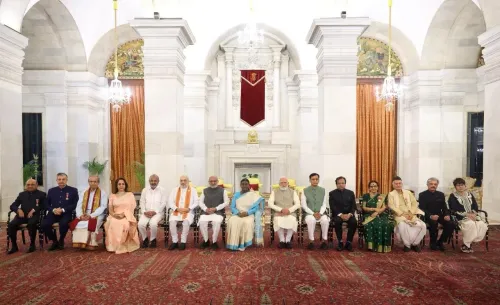
Rajasthan Chief Minister Bhajan Lal Sharma on Monday, 25 May 2026 extended congratulations to Jaisalmer-based folk musician Taga Ram Bhil after President Draupadi Murmu conferred upon him the Padma Shri, India's fourth-highest civilian honour, for his distinguished contribution to the preservation of Rajasthani folk music.
Context
Sharma posted on X in Hindi, writing: 'जैसलमेर के सुप्रसिद्ध अलगोजा वादक श्री तगा राम भील जी को माननीया राष्ट्रपति श्रीमती द्रौपदी मुर्मु जी द्वारा पद्मश्री से सम्मानित किए जाने पर हार्दिक बधाई एवं शुभकामनाएं!' ['Heartfelt congratulations and best wishes to the renowned Algoja player of Jaisalmer, Shri Taga Ram Bhil Ji, on being honoured with the Padma Shri by the honourable President Smt. Draupadi Murmu Ji!']. He further described the recognition as 'a matter of pride and inspiration for all of Rajasthan.'
Taga Ram Bhil is celebrated for his mastery of the Algoja, a traditional double-flute instrument central to the folk music heritage of the Thar Desert region. His work spans decades of performance and informal transmission of the art form across communities in western Rajasthan.
Policy Backdrop
The Padma Awards were instituted in 1954 and are announced annually to recognise distinguished service across disciplines including arts, culture, science, and public affairs. The Padma Shri is the fourth tier in the hierarchy, following the Bharat Ratna, Padma Vibhushan, and Padma Bhushan.
Rajasthan has historically been well-represented among Padma recipients in the folk and performing arts categories, owing to its rich intangible cultural heritage — encompassing instruments such as the Algoja, Sarangi, and Morchang, as well as traditions like Manganiyar and Langa music. Civilian honours for regional folk artists serve to embed local traditions within the national cultural canon.
Stakeholders and Impact
The recognition carries significance for the broader community of folk musicians in Rajasthan, many of whom practise hereditary art forms with limited institutional support. A Padma Shri conferred on a practitioner like Taga Ram Bhil elevates the visibility of the Algoja tradition at the national level, potentially attracting documentation efforts and performance opportunities.
Cultural practitioners, state tourism bodies, and institutions engaged in intangible heritage preservation stand among the stakeholders who may draw upon this recognition to amplify advocacy for folk music programmes.
What's Next
Attention will now turn to whether the Rajasthan government follows up the symbolic acknowledgement with programmatic support — such as state-funded documentation, training initiatives, or inclusion of Algoja performances in cultural festivals. The full Padma Awards 2026 list and any state-level felicitation events for Taga Ram Bhil are expected to draw further attention to folk music preservation in the region.
Point of View
Where folk music is both a cultural asset and a tourism draw, such recognition can catalyse policy conversations around preservation funding. The real test will be whether the acknowledgement translates into concrete state support for Algoja practitioners beyond the ceremonial moment.
NationPress
25 Sept 2026
Frequently Asked Questions
Who is Taga Ram Bhil?
Taga Ram Bhil is a celebrated Algoja (traditional double-flute) player from Jaisalmer, Rajasthan, known for preserving and performing Rajasthani folk music traditions over several decades.
What is the Padma Shri award?
The Padma Shri is India's fourth-highest civilian honour, instituted in 1954 and awarded annually by the President of India for distinguished service in fields including arts, culture, and public affairs.
Why did CM Bhajan Lal Sharma congratulate Taga Ram Bhil?
Rajasthan Chief Minister Bhajan Lal Sharma congratulated Taga Ram Bhil after President Draupadi Murmu conferred upon him the Padma Shri for his contribution to folk music and cultural heritage.
What is the Algoja instrument?
The Algoja is a traditional double-flute instrument from Rajasthan, particularly associated with the folk music heritage of the Thar Desert region and communities in western Rajasthan.
What are the Padma Awards 2026?
The Padma Awards 2026 are the annual civilian honours announced by the Government of India and conferred by the President, recognising distinguished contributions across various disciplines including arts and culture.