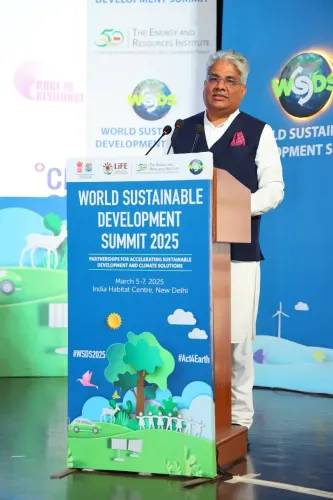
Bhupender Yadav Addresses Climate Leadership at PAFI Forum 2026

Synopsis
Union Environment Minister Bhupender Yadav spoke at the 13th Annual PAFI India Forum 2026, highlighting climate challenges and India's leadership role anchored in its Panchamrit pledges and 2070 net-zero target, continuing India's pitch as a voice for developing nations in global climate talks.
Key Takeaways
Union Environment Minister Bhupender Yadav participated in the 13th Annual Forum 2026 by PAFI India on September 25, 2026 .
India's climate strategy is anchored in its Panchamrit pledges announced at COP26, Glasgow, 2021 , including a net-zero by 2070 target.
India has positioned itself as a champion of developing-nation equity in climate negotiations, pressing for finance and technology transfer.
The International Solar Alliance , co-launched by India and France in 2015 , remains a key pillar of India's multilateral climate diplomacy.
India's Nationally Determined Contributions (NDCs) and its stance at the next UNFCCC COP are the immediate markers to watch.
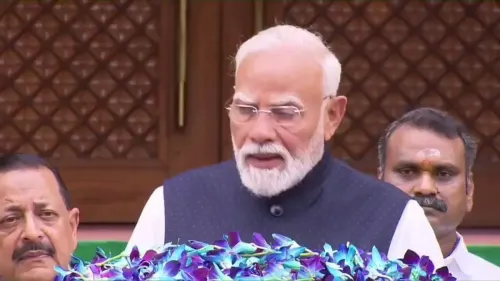
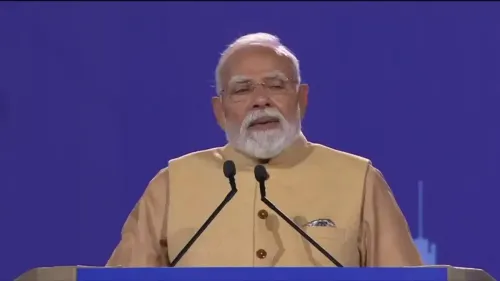
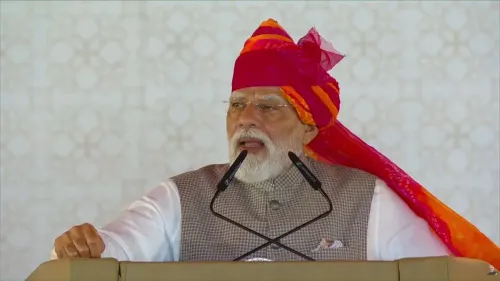
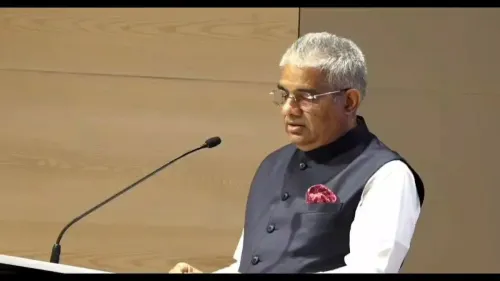
India's climate ambitions landed at the centre of a major policy forum on Friday, September 25, 2026, as Union Environment Minister Bhupender Yadav engaged participants at the 13th Annual Forum 2026 organised by PAFI India, making the case for India's growing role as a global leader in climate action.
India's climate pitch at the PAFI Annual Forum
Speaking at the forum, the minister highlighted the twin challenges of climate change and India's proactive international positioning. The interaction marks another instance of Yadav — who has helmed the Ministry of Environment, Forest and Climate Change since 2021 — carrying India's climate narrative to domestic policy audiences.
India's current global posture on climate is anchored in its Panchamrit strategy, unveiled at COP26 in Glasgow in 2021. The pledge package includes a commitment to reach net-zero emissions by 2070, achieve 50% of its energy from non-fossil sources, and build 500 GW of renewable energy capacity — a set of targets that have since shaped every major Indian intervention in multilateral climate negotiations.
The 'voice for developing nations' thread
India has increasingly cast itself not just as a large emerging economy navigating its own energy transition, but as a spokesperson for the Global South in climate talks — pressing developed nations on equity, climate finance, and technology transfer. Yadav has been a consistent carrier of this message, whether in UNFCCC sessions or coalitions like the International Solar Alliance, the India-France initiative launched in 2015 that has expanded solar deployment across member countries.
The forum interaction fits a well-established pattern: the minister using domestic platforms to reinforce India's international credibility on climate, while keeping pressure on developed countries to fulfil their financial commitments to the developing world.
What comes next in India's climate calendar
With India's Nationally Determined Contributions (NDCs) under periodic review and the next UNFCCC COP on the horizon, forums like this serve a dual function — shaping domestic consensus and telegraphing India's negotiating posture internationally. The conversations the minister holds now will feed directly into the positions India stakes out on the global stage.
India has moved from climate sceptic to climate coalition-builder over two decades. The real test, as negotiators and policymakers will acknowledge, is whether the finance and technology transfer promises from wealthier nations ever match the scale of what countries like India actually need to deliver on their green targets.
Point of View
Quotable framework; the minister's repeated public engagements are designed to deepen both domestic and international buy-in for that framework. The sharper political question is whether India's NDC ambitions will be upgraded ahead of the next COP, a move that would test whether this leadership posture carries substantive policy weight or remains primarily rhetorical. For now, the consistency of India's messaging — equity, finance, technology transfer — signals a negotiating strategy unlikely to shift regardless of the global pressure India faces.
NationPress
25 Sept 2026
Frequently Asked Questions
What are India's Panchamrit climate pledges?
India's Panchamrit pledges, announced at COP26 in Glasgow in 2021, include reaching net-zero emissions by 2070, sourcing 50% of energy from non-fossil fuels, and building 500 GW of renewable energy capacity, among other targets.
What is India's net-zero target year?
India has pledged to achieve net-zero carbon emissions by 2070, as announced by Prime Minister Narendra Modi at the COP26 climate summit in Glasgow in 2021.
What is the International Solar Alliance?
The International Solar Alliance is an India-France initiative launched in 2015 to accelerate solar energy deployment across member countries, and it is a key instrument of India's multilateral climate diplomacy.
What is Bhupender Yadav's role on climate?
Bhupender Yadav has served as India's Union Minister of Environment, Forest and Climate Change since 2021, and is the country's primary representative at major global climate negotiations including UNFCCC COP sessions.