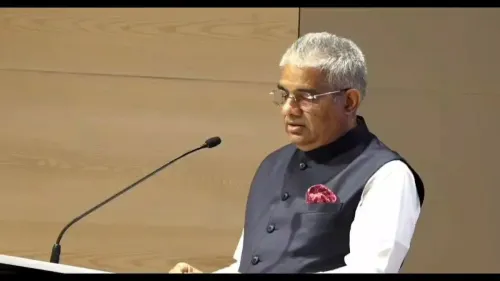
Bhupender Yadav Stresses Urgency on Environment Action
Synopsis
Union Environment Minister Bhupender Yadav on 20 July 2026 signalled urgency on environmental action via X, invoking the phrase 'today, the need of the hour' alongside a video. The post comes against the backdrop of India's 2070 net-zero pledge and ongoing domestic climate legislation.
Key Takeaways
Union Environment Minister Bhupender Yadav posted on X on 20 July 2026 stressing environmental urgency.
The post opened with the Hindi phrase 'आज समय की मांग है' , meaning 'today, the need of the hour is...' The post included a video, suggesting a fuller address or speech accompanied the message.
India is committed to achieving net-zero emissions by 2070 , a pledge made at COP26 in 2021 .
Key stakeholders include Indian industries and forest communities who are directly affected by environment ministry decisions.
Parliamentary debates on environmental bills and future COP positioning are the immediate policy arenas to watch.
Union Environment Minister Bhupender Yadav on Monday, 20 July 2026 took to X to underscore what he called the demand of the times, opening with the phrase 'आज समय की मांग है' ('Today, the need of the hour is...') — a pointed signal of urgency on environmental priorities from one of the government's most senior voices on climate policy.
Context
The post, though brief, carries weight given Yadav's position as the minister responsible for shaping India's domestic environmental regulation and its international climate commitments. The phrase 'aaj samay ki maang hai' is a rhetorical device frequently used in Indian political discourse to signal that a course of action is no longer optional but necessary. Coming from the environment ministry's top official, it points toward a renewed push on ecological or climate-related priorities.
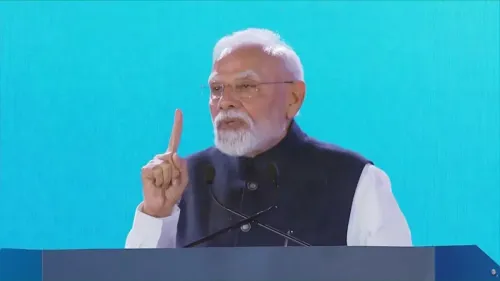
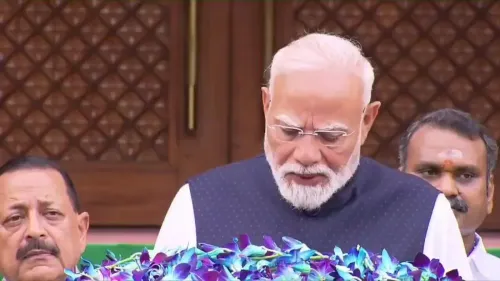
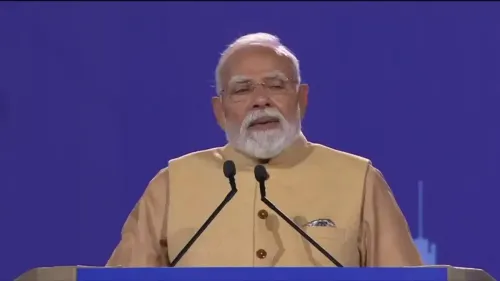
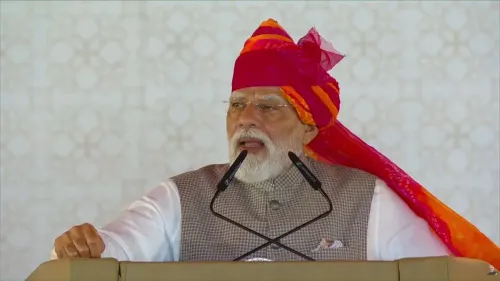
The post included a video, suggesting the minister may have elaborated on the theme in a speech or public address, the contents of which form the core of his message to followers and the wider public.
Policy Backdrop
India committed to achieving net-zero emissions by 2070 at the COP26 summit in 2021, a pledge that has since anchored the country's long-term climate strategy. Successive administrations have balanced this commitment with the imperatives of economic growth, pursuing renewable energy expansion, forest conservation, and air-quality legislation in parallel.
Ministerial communications on environment — particularly those framed around urgency — have historically preceded policy announcements, legislative moves, or India's formal positioning ahead of multilateral climate forums. Yadav has been a central figure in articulating India's stance at global climate negotiations and in steering domestic green legislation through Parliament.
Stakeholders and Impact
Indian industries, which must navigate compliance with evolving environmental norms, and forest communities, whose livelihoods are directly tied to conservation policy, are among the primary stakeholders watching signals from the ministry. A message stressing urgency from the minister could foreshadow tighter enforcement timelines, new scheme launches, or fresh guidelines on biodiversity and land use.
Civil society groups and state governments, which implement central environmental directives on the ground, will also be attentive to any follow-up action that gives substance to the minister's framing.
What's Next
Parliamentary debates on pending environmental bills and India's evolving positions ahead of future COP meetings will be the immediate arenas where the urgency signalled by Yadav is likely to be tested. Observers will watch for ministry notifications, inter-ministerial consultations, or public statements that translate this rhetorical moment into concrete policy steps.
If the video attached to the post contains a fuller address, it may clarify the specific domain — whether air quality, forest cover, renewable targets, or international climate diplomacy — that the minister considers the most pressing demand of the current moment.
Point of View
A legislative push, or a positioning exercise ahead of multilateral negotiations. For Yadav, who has been the face of India's climate diplomacy since COP26, the signal fits a broader pattern of the government calibrating its green credentials for both domestic and international audiences. The accompanying video is the real substance to watch: it may reveal whether this urgency is directed at industry compliance, forest governance, or India's next COP stance. Until that content is fully in the public domain, the post reads as a deliberate priming of the policy conversation.
NationPress
19 Oct 2026
Frequently Asked Questions
What did Bhupender Yadav post on X on 20 July 2026?
Bhupender Yadav posted a message on X stressing environmental urgency, using the Hindi phrase 'aaj samay ki maang hai' ('today, the need of the hour is...'), along with a video that likely elaborated on his remarks.
What is Bhupender Yadav's role in the Indian government?
Bhupender Yadav is the Union Minister of Environment, Forest and Climate Change and a senior leader of the Bharatiya Janata Party (BJP).
What is India's climate commitment under the Paris Agreement?
India pledged to achieve net-zero emissions by 2070, a commitment made at the COP26 summit in Glasgow in 2021.
Who are the key stakeholders affected by India's environment ministry decisions?
Indian industries subject to environmental compliance norms and forest communities whose livelihoods depend on conservation policy are among the primary stakeholders.
What should we watch for after Yadav's post on environmental urgency?
Observers should watch for follow-up ministry notifications, Parliamentary debates on environmental bills, and India's formal positions ahead of upcoming COP climate meetings.