Bhupender Yadav Addresses NDA Rajya Sabha Orientation
Synopsis
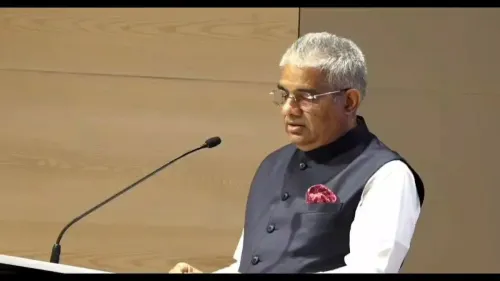
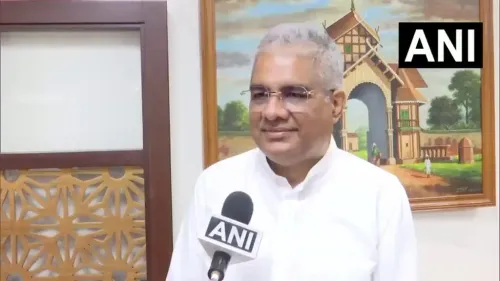
Union Environment Minister Bhupender Yadav addressed 'Prarambh', an orientation for newly-inducted NDA Rajya Sabha members at Parliament House, sharing insights on Department-related Parliamentary Standing Committees and calling on fresh legislators to strengthen democratic deliberation.
Key Takeaways
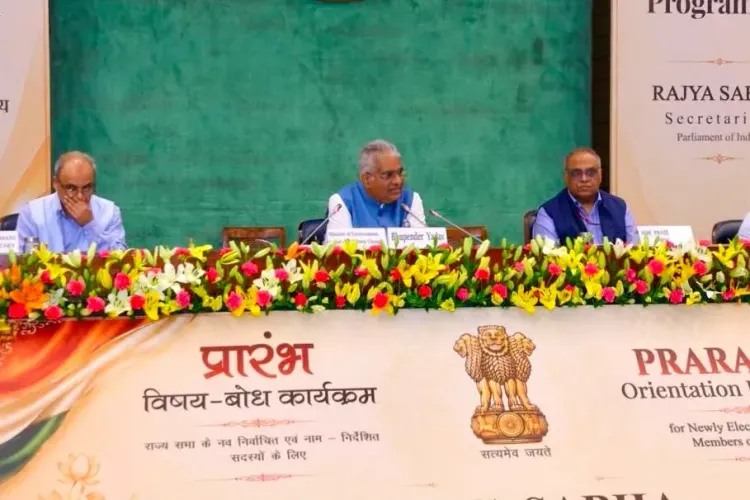
Union Environment Minister Bhupender Yadav addressed the 'Prarambh' orientation programme for new NDA Rajya Sabha members at Parliament House on 26 July 2026 .
His address focused on Department-related Parliamentary Standing Committees , the primary mechanism for legislative scrutiny of executive functioning.
India's standing committee system was established in 1993 , initially comprising 17 panels to examine ministry-specific bills and budgets.
Yadav called on all new members to strengthen parliamentary democracy through 'meaningful discussions and deliberations'.
The orientation is part of a broader, recurring institutional practice of capacity-building for fresh parliamentarians in India's bicameral legislature.
Participation of new members in upcoming committee meetings and Parliament sessions will be the key indicator of the programme's impact.
Union Environment Minister Bhupender Yadav addressed 'Prarambh', an orientation programme for newly-inducted NDA Rajya Sabha members, at Parliament House on Sunday, 26 July 2026. The senior BJP leader shared insights on the role and functioning of Department-related Parliamentary Standing Committees, urging fresh members to strengthen parliamentary democracy through meaningful deliberations.
Context
The 'Prarambh' programme — the name translates to 'beginning' or 'commencement' — is designed to familiarise newly-elected Rajya Sabha members of the National Democratic Alliance with the rules, procedures, and institutional architecture of India's upper house. Yadav's address focused specifically on Department-related Parliamentary Standing Committees, a pillar of legislative oversight that examines ministry-specific bills, budgets, and policies in detail outside the full house.
Posting on X, Yadav wrote: 'I wish all new members success in strengthening Parliamentary democracy and legislative processes by way of meaningful discussions and deliberations.' The remark signals the government's emphasis on informed, active participation from its freshly inducted upper-house legislators.
Policy Backdrop
India's Department-related Parliamentary Standing Committees were constituted in 1993, when Parliament established 17 such panels to deepen legislative scrutiny of executive functioning. Over the decades, the committee system has expanded and is widely regarded as the primary mechanism through which Parliament examines complex legislation and the demands for grants of individual ministries.
Orientation programmes for new parliamentarians are a recurring feature of India's bicameral legislature, reflecting the institutional recognition that effective committee participation requires familiarity with procedural norms that go well beyond floor debates. The Rajya Sabha, as the upper house, draws its members from state legislatures rather than direct popular vote, making structured induction especially relevant for members transitioning from state-level roles.
Stakeholders and Impact
The immediate audience — newly-inducted NDA Rajya Sabha members — stands to benefit from guidance by a senior cabinet minister who has himself served on parliamentary committees. Yadav's ministerial portfolio, spanning Environment, Forest and Climate Change, places him at the intersection of legislative and executive processes, lending practical weight to his insights on committee functioning.
For the broader parliamentary ecosystem, such orientation sessions carry significance beyond the ruling coalition: the quality of committee deliberations affects the scrutiny applied to legislation and budgets that impact all citizens. Stakeholders including civil society groups, policy researchers, and state governments that interact with parliamentary committees have a direct interest in how well new members engage with this institutional machinery.
What's Next
Attention will now turn to how the newly-inducted members participate in upcoming Standing Committee meetings and the next session of Parliament. The effectiveness of the 'Prarambh' programme will ultimately be measured by the quality of scrutiny these members bring to legislation and demands for grants referred to their respective committees. Active engagement in committee proceedings remains the clearest indicator that orientation goals have translated into legislative practice.
Point of View
Which has historically been the quieter but more consequential arena of legislative work. By spotlighting Standing Committees — rather than floor rhetoric — the address signals a governance posture that prizes scrutiny and process alongside political messaging. For the NDA, well-briefed Rajya Sabha members are a strategic asset: the upper house remains the chamber where coalition arithmetic is tightest and where legislation can stall. The session is also a reminder that parliamentary capacity-building, often treated as ceremonial, carries real institutional stakes when the committee pipeline is crowded with complex legislation.
NationPress
26 Jul 2026
Frequently Asked Questions
What is the 'Prarambh' orientation programme for Rajya Sabha members?
'Prarambh' is an orientation programme organised for newly-inducted Rajya Sabha members of the NDA to familiarise them with parliamentary rules, procedures, and the functioning of Department-related Standing Committees.
What are Department-related Parliamentary Standing Committees in India?
These are permanent committees of Parliament, first constituted in 1993, that examine ministry-specific legislation, annual budgets, and policy matters in detail, functioning as the primary mechanism of legislative oversight over the executive.
Why did Bhupender Yadav address the Rajya Sabha orientation?
As a senior BJP cabinet minister and experienced parliamentarian, Bhupender Yadav was invited to share practical insights on Standing Committees, helping new NDA Rajya Sabha members understand their legislative responsibilities.
How are Rajya Sabha members elected in India?
Rajya Sabha members are not directly elected by voters; they are elected by the elected members of state legislative assemblies and union territories with legislatures, making the upper house an indirectly elected body.
What happens after the Prarambh orientation for new Rajya Sabha members?
After the orientation, new members are expected to participate actively in Department-related Standing Committee meetings and upcoming Parliament sessions, where the practical value of the programme will be assessed.