Shekhawat backs Nandan Nilekani-led exam reforms panel

Synopsis
Union Minister Gajendra Singh Shekhawat has backed a high-level committee led by Nandan Nilekani to reform India's examination system, framing it as PM Modi's commitment to youth. The initiative aims to make competitive exams more transparent, technology-enabled and trustworthy for crores of aspirants.
Key Takeaways
Union Minister Gajendra Singh Shekhawat publicly endorsed the Nilekani-led exam reform panel on 26 July 2026 .
Nandan Nilekani , co-founder of Infosys and architect of Aadhaar, has been named to lead the high-level committee on examination reforms.
The committee aims to make India's examination system more transparent, technology-enabled and credible.
The move follows recurring controversies over alleged paper leaks in national competitive examinations.
The initiative aligns with the National Education Policy 2020 and the Digital India programme's emphasis on tech-driven public service delivery.
PM Modi is quoted as saying youth talent must be 'respected,' their hard work must receive 'justice,' and 'no compromise' must be made with their future.
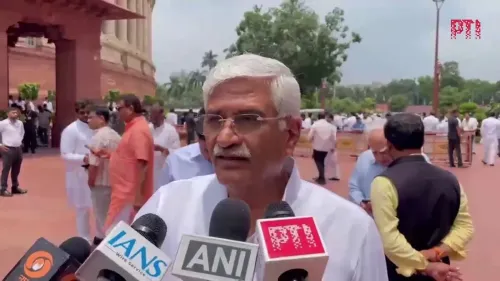
Union Culture and Tourism Minister Gajendra Singh Shekhawat on Sunday, 26 July 2026, voiced strong support for a high-level committee constituted under the leadership of Nandan Nilekani to reform India's examination system, calling it a reflection of Prime Minister Narendra Modi's foremost commitment to the nation's youth.
Context
Shekhawat's post, written in Hindi, states that securing the future of youth — making it 'safe, transparent and full of opportunities' — has been among the top priorities of what he calls a 'visionary Prime Minister.' He cites the formation of the Nilekani-led committee as concrete evidence of that commitment. Quoting Modi directly, he writes: 'Yuvaon ki pratibha ka samman ho, unki mehnat ka nyay ho aur unke bhavishy se koi samjhauta na ho' — ('The talent of youth must be respected, their hard work must receive justice, and no compromise must be made with their future.')
The post underscores a political messaging push by the ruling Bharatiya Janata Party (BJP) to associate the government with credible, technology-driven reform of competitive examinations — a subject that has drawn intense public scrutiny in recent years.
Policy Backdrop
The announcement of a committee headed by Nandan Nilekani — co-founder of Infosys and the architect of Aadhaar, India's biometric identity infrastructure — signals an intent to bring large-scale digital governance thinking to the examination ecosystem. Nilekani previously served as chairman of the Unique Identification Authority of India (UIDAI) and is widely credited with building technology systems capable of operating at population scale.
The move fits within the broader arc of the National Education Policy 2020, which called for a fundamental overhaul of high-stakes assessment systems to reduce rote learning and examination pressure. It also aligns with the Digital India programme launched in 2015, which sought to integrate technology across public service delivery to improve transparency and reduce discretionary human intervention.
Multiple controversies involving alleged paper leaks in national-level competitive examinations have intensified demand for structural reform of exam-conducting bodies, making the committee's mandate politically as well as administratively significant.
Stakeholders and Impact
The primary stakeholders are the crores of students who appear annually for competitive examinations — including those for central government jobs, medical and engineering entrance tests, and other national-level assessments. For these aspirants, the integrity and fairness of the examination process is directly tied to career outcomes and social mobility.
A technology-enabled, auditable examination framework could reduce opportunities for malpractice, standardise evaluation, and build public confidence in merit-based selection — outcomes that successive governments have promised but struggled to deliver consistently. Civil society groups and student organisations across states will be closely watching the committee's composition, mandate, and the timeline for its recommendations.
What's Next
The immediate focus will be on the formal gazette notification of the committee, its precise terms of reference, and the deadline set for submitting recommendations. Any proposals that emerge are likely to require legislative or regulatory amendments to the frameworks governing bodies such as the National Testing Agency (NTA) and other exam authorities. Implementation will be the true test of the initiative's credibility — and the government's ability to translate a high-profile appointment into durable systemic change will shape how millions of young Indians assess this promise.
Point of View
The BJP is working to reframe the narrative around competitive exam integrity from one of failure to one of proactive, tech-first governance. This fits a recurring pattern of using high-profile technocratic appointments to signal seriousness on reform without committing to specific legislative timelines. The real political dividend will accrue only if the committee's recommendations translate into verifiable, on-ground change before the next electoral cycle.
NationPress
26 Jul 2026
Frequently Asked Questions
Who is leading the high-level committee on exam reforms in India?
Nandan Nilekani, co-founder of Infosys and former UIDAI chairman who built the Aadhaar system, has been named to lead the high-level committee on examination reforms in India.
Why was the Nandan Nilekani exam reform committee formed?
The committee was formed to make India's competitive examination system more transparent, technology-enabled and trustworthy, following public concern over alleged paper leaks and integrity failures in national exams.
What did Gajendra Singh Shekhawat say about exam reforms?
Minister Gajendra Singh Shekhawat said the formation of the Nilekani-led committee is proof of PM Modi's commitment to securing the future of youth, and quoted Modi as saying no compromise should be made with young people's futures.
How does the exam reform committee connect to the National Education Policy 2020?
The National Education Policy 2020 called for a fundamental overhaul of high-stakes assessment systems, and the new committee is seen as a step toward implementing those recommendations through technology-driven reforms.
What is the National Testing Agency and why is exam reform important?
The National Testing Agency (NTA) conducts major national-level competitive exams in India; reform of such bodies is considered critical to ensuring fair, merit-based access to higher education and government employment for crores of aspirants.