Bhupender Yadav: Democracy not a licence for anarchy, cites SC
Synopsis
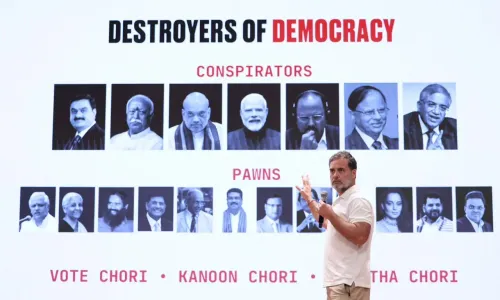
Union Environment Minister Bhupender Yadav on October 16 challenged Rahul Gandhi on X, declaring democracy is not a licence for anarchy or attacking constitutional institutions, and cited a Supreme Court observation from the previous day as judicial backing for his position.
Key Takeaways
Bhupender Yadav on October 16, 2026 directly called out Rahul Gandhi and Congress allies, saying democracy is not a licence for anarchy or attacks on constitutional institutions.
Yadav cited a Supreme Court of India observation from October 15 as judicial corroboration for his argument, though the specific remark remains unverified.
The post is part of a recurring BJP-Congress fault-line over the boundaries between legitimate political protest and institutional disruption.
Using judicial remarks to counter opposition leaders is a well-established tactic in Indian political discourse, lending greater rhetorical weight than party-only statements.
Congress leadership is expected to contest both Yadav's interpretation of the court's words and the framing of opposition activity as anti-democratic.
Democracy is not a blank cheque for disruption — that is the blunt message Union Environment Minister Bhupender Yadav fired at the opposition on Friday, October 16, 2026, invoking a fresh Supreme Court observation to sharpen his attack on Rahul Gandhi and the Congress.
Posting in Hindi on X, Yadav wrote: 'Rahul Gandhi aur unke saathiyon ko yeh samajhna hoga ki loktantra, anarchia failaane, samvaidhanik sansthaaon par chot karne ya Bharat ki vikas yatra mein baadha daalne ka licence nahin hai.' ('Rahul Gandhi and his allies must understand that democracy is not a licence to spread anarchy, strike at constitutional institutions, or obstruct India's development journey.') He added that the Supreme Court's observation from the previous day pointed in exactly the same direction.
The Supreme Court remark Yadav is pointing to
The minister cited an unnamed observation made by the Supreme Court of India on Thursday, October 15, framing it as judicial endorsement of his argument that there are constitutional limits to political conduct. The specific content of the court's remarks could not be independently confirmed at the time of publication, but Yadav used them to argue that even the apex court is signalling the same boundaries on political behaviour that the government has long maintained.
Using a court's words to counter an opposition leader in the same breath is a well-worn move in Indian political combat — but the timing, with the remarks arriving the day before this post, gave Yadav's framing particular punch.
BJP-Congress fault-line: protest or obstruction?
The exchange lands inside a years-long argument between BJP and Congress over where legitimate dissent ends and institutional damage begins. The ruling party has repeatedly accused the opposition of weaponising street protests, parliamentary disruptions, and international statements to sabotage governance. Congress, led by Rahul Gandhi — senior MP and former party president — has countered that holding the government accountable is not anarchy but the lifeblood of democracy.
Yadav's post does not raise a new charge; it raises a familiar charge with fresh judicial ammunition. In India's political theatre, that distinction matters — a party spokesperson citing 'the Supreme Court said so' carries a different weight from a party spokesperson citing only its own position.
What Congress is likely to say next
Congress leadership has historically pushed back hard whenever the ruling party invokes judicial remarks selectively, arguing that courts speak for themselves and their words should not be annexed as political talking points. Expect a response that either contests Yadav's reading of the court's observation or pivots to a counter-attack on the government's own record on institutional independence.
The real test is whether the Supreme Court makes further remarks in coming days — because in this fight, the next word from the bench will belong to no party at all.
Point of View
He attempts to reframe the Congress's dissent as constitutionally suspect rather than politically legitimate. This fits a broader ruling-party arc of casting institutional credibility as a shield against opposition criticism. Congress will almost certainly contest both the reading of the court's remark and the equation of protest with anarchy — making the Supreme Court's next statement the most politically watched words in this exchange.
NationPress
16 Oct 2026
Frequently Asked Questions
What did Bhupender Yadav say about Rahul Gandhi and democracy?
Yadav posted on X that Rahul Gandhi and his allies must understand that democracy is not a licence to spread anarchy, harm constitutional institutions, or obstruct India's development journey.
Which Supreme Court observation did Bhupender Yadav refer to?
Yadav referred to an observation made by the Supreme Court of India on October 15, 2026 — the day before his post — though the specific content of that remark had not been independently confirmed at publication time.
Why is Bhupender Yadav attacking Rahul Gandhi over constitutional institutions?
This is part of a long-running BJP-Congress argument over whether opposition protests and parliamentary disruptions amount to legitimate dissent or damage to constitutional governance — a debate that recurs across multiple parliamentary sessions.
How has Congress responded to BJP citing Supreme Court remarks against them?
Congress has historically argued that judicial observations speak for themselves and should not be selectively used as political ammunition, and has accused the ruling party of misrepresenting court remarks to target the opposition.
What is Rahul Gandhi's current political position?
Rahul Gandhi is a senior leader of the Indian National Congress, a sitting Lok Sabha MP, and former president of the party — the principal face of opposition to the BJP-led government.