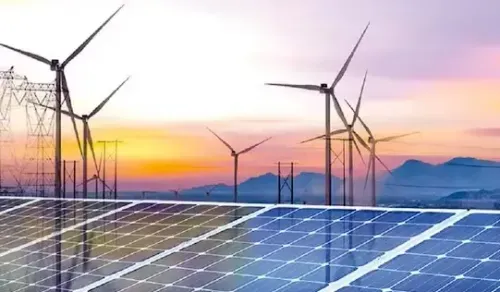
Bhupender Yadav Hails Record 29 GW Solar-Wind Addition in H1 2026
Synopsis
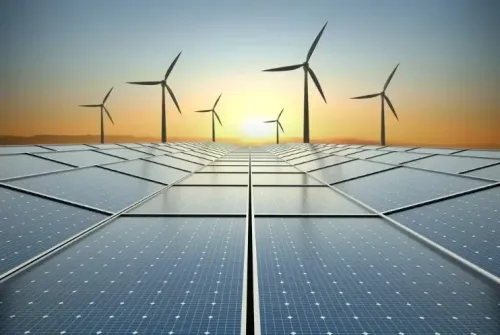
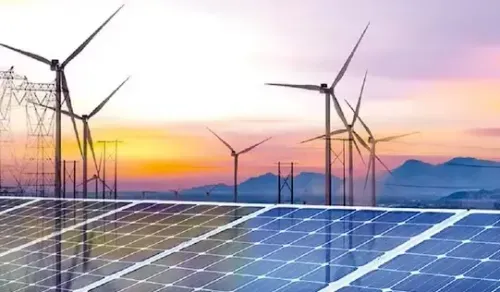
Union Environment Minister Bhupender Yadav on 16 July 2026 shared data showing India added a record 29 GW of solar and wind capacity in the first half of 2026, driven by a solar boom, marking a significant step toward the country's 500 GW non-fossil fuel target by 2030.
Key Takeaways
India added a record 29 GW of combined solar and wind capacity in H1 2026 , the highest ever in a single six-month period.
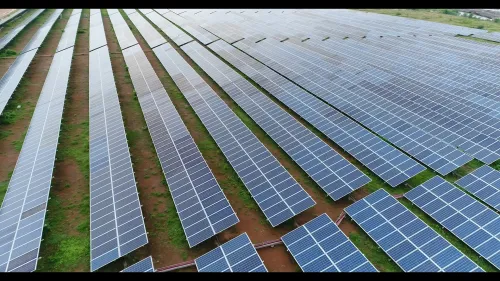
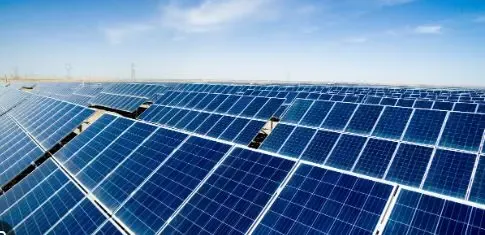
Solar installations accounted for the dominant share of the additions, reflecting sustained cost declines and aggressive project commissioning.
The milestone was highlighted by Union Environment Minister Bhupender Yadav on 16 July 2026 .
India targets 500 GW of non-fossil fuel capacity by 2030 , a commitment made at COP26 in Glasgow in 2021 .
India's renewable capacity has grown from roughly 70 GW in 2014 to well over 200 GW in recent years, with the H1 2026 figure representing a sharp acceleration.
Grid integration, discom health, and storage deployment remain key challenges for sustaining this pace of addition.
Union Environment Minister Bhupender Yadav on Thursday, 16 July 2026 highlighted a landmark milestone in India's clean energy journey, sharing data showing the country added a record 29 gigawatts (GW) of combined solar and wind capacity in the first half of 2026, driven primarily by a solar boom.
Context
Yadav's post, shared on X, cited the figure with the caption 'Green energy!' — underscoring the government's enthusiasm over the pace of renewable capacity addition. The 29 GW addition in a single six-month window, if sustained, would put India on course to add close to 60 GW annually, a rate well above historical averages. Solar installations accounted for the dominant share of the additions, reflecting continued cost declines and aggressive project commissioning across states.
India is the third-largest energy consumer in the world and has set an ambitious target of 500 GW of non-fossil fuel capacity by 2030, a commitment made by Prime Minister Narendra Modi at the COP26 summit in Glasgow in November 2021 as part of the country's Panchamrit climate strategy.
Policy Backdrop
India's renewable energy push has deep policy roots. The National Solar Mission, launched in 2010, set the foundation for large-scale solar deployment, with targets revised upward over successive years. India's updated Nationally Determined Contribution (NDC), submitted in 2022 under the Paris Agreement, committed to achieving 40 percent of cumulative electric power installed capacity from non-fossil fuel sources — a goal the country has already surpassed.
India also co-founded the International Solar Alliance (ISA) in 2015 to mobilise global investment in solar energy, positioning itself as a leader in the global clean energy transition. Renewable capacity has grown from roughly 70 GW in 2014 to well over 200 GW in recent years, with solar leading the charge on the back of falling module prices and state-level policy support. The H1 2026 figure represents a significant acceleration of that trajectory.
The Ministry of New and Renewable Energy (MNRE) has been facilitating large-scale solar and wind auctions, while viability gap funding and must-run status for renewables have helped developers commission projects at pace. State electricity distribution companies (discoms) remain a key link in translating installed capacity into actual power supply.
Stakeholders and Impact
The record addition has broad implications for solar developers, renewable energy investors, and state discoms across India. For developers and investors, the data signals a conducive policy and regulatory environment that has enabled rapid project execution. For discoms, absorbing 29 GW of new renewable capacity in six months requires commensurate investment in grid infrastructure, storage, and demand management.
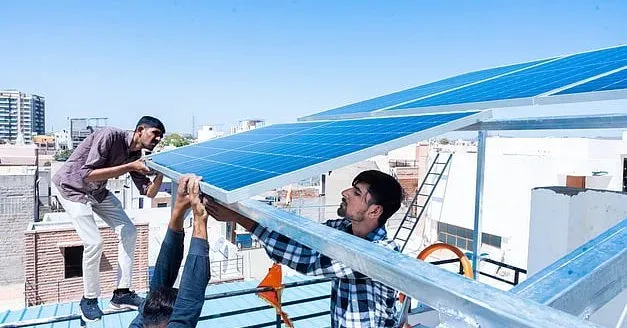
India's renewable expansion also carries geopolitical weight. As a major participant in global climate negotiations, consistent capacity additions strengthen India's credibility ahead of COP31 and in bilateral clean energy dialogues. Domestically, the solar boom supports employment in manufacturing, installation, and operations, particularly as India pushes to build a domestic solar module supply chain under the Production Linked Incentive (PLI) scheme.
What's Next
The trajectory of capacity additions in H2 2026 will be closely watched to assess whether the record H1 pace can be sustained or exceeded. Analysts and policymakers will monitor new bidding rounds, grid integration progress, and any announcements on viability gap funding or storage mandates. Parliamentary scrutiny of renewable energy progress is expected during the winter session, and India's updated climate targets and performance data are likely to feature prominently at COP31. Sustained momentum at this scale would mark a structural shift in India's energy mix and significantly close the gap to the 500 GW non-fossil target by 2030.
Point of View
Which has consistently framed India's renewable scale-up as both a development and a climate leadership story. For Bhupender Yadav, amplifying this figure reinforces the Environment Ministry's role in India's energy transition narrative ahead of international climate forums. The milestone also raises the stakes for H2 2026 — any slowdown could invite scrutiny over whether the pace is structurally sustainable or driven by a one-time project pipeline flush. Ultimately, the figure strengthens India's hand in multilateral climate negotiations, where developed nations have long questioned the credibility of developing-country targets.
NationPress
16 Jul 2026
Frequently Asked Questions
How much solar and wind capacity did India add in the first half of 2026?
India added a record 29 GW of combined solar and wind capacity in the first half of 2026, according to data shared by Union Environment Minister Bhupender Yadav on 16 July 2026.
What is India's renewable energy target for 2030?
India has set a target of 500 GW of non-fossil fuel energy capacity by 2030 , announced by Prime Minister Narendra Modi at the COP26 summit in Glasgow in November 2021 as part of the Panchamrit climate strategy.
Why is India's solar capacity growing so fast?
India's solar capacity growth is driven by falling solar module costs, large-scale government auctions, policy support including the Production Linked Incentive scheme, and strong private and foreign investment in the sector.
What is the National Solar Mission?
The National Solar Mission was launched in 2010 under India's Ministry of New and Renewable Energy to accelerate solar power deployment, with targets revised upward over the years to reflect the country's growing ambitions.
What challenges does India face in absorbing new renewable capacity?
Key challenges include grid integration, the financial health of state electricity distribution companies (discoms), and the need for adequate energy storage to manage the intermittent nature of solar and wind power.