Bhupender Yadav honours forest frontline at 4th Eco Warrior Awards

Synopsis
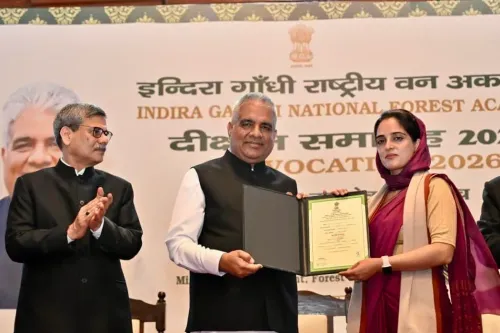
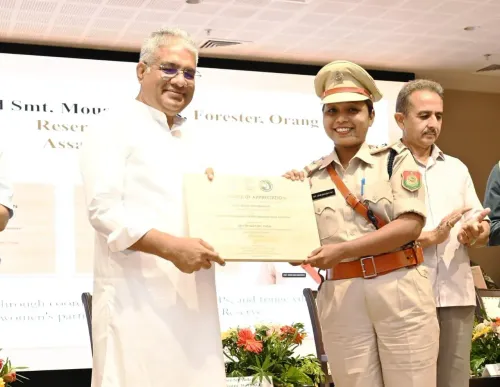
Union Environment Minister Bhupender Yadav honoured beat guards, rangers and frontline forest personnel at the 4th Eco Warrior Awards 2026 in New Delhi, recognising their role in translating India's conservation laws into on-ground action across forests and wildlife habitats.
Key Takeaways
The 4th Eco Warrior Awards 2026 were held in New Delhi on 29 September 2026 .
Union Environment Minister Bhupender Yadav personally presided over the ceremony and presented the awards.
Honourees included beat guards, rangers, and frontline forest personnel across India's state forest departments.
The awards recognise field staff who respond to forest fires, combat poaching, and protect wildlife habitats.
The ceremony underscores the central government's emphasis on grassroots enforcement of the Wildlife Protection Act, 1972 and the Forest Conservation Act, 1980 .
The annual awards are an initiative of the Ministry of Environment, Forest and Climate Change .
They patrol dense forests before dawn, battle wildfires without headlines, and stand between poachers and the last habitats of India's most endangered wildlife. On Tuesday, 29 September 2026, Union Environment Minister Bhupender Yadav put them centre-stage at the 4th Eco Warrior Awards 2026 in New Delhi — a ceremony dedicated entirely to the beat guards, rangers, and frontline forest personnel who turn conservation law into lived reality on the ground.
Who the awards celebrate — and why it matters
The Eco Warrior Awards are an annual recognition programme run under the Ministry of Environment, Forest and Climate Change, honouring field staff whose daily work underpins India's forest and wildlife protection architecture. This year's fourth edition brought together awardees drawn from across the country's forest departments — personnel who respond to fire alerts, monitor wildlife corridors, and enforce the provisions of the Wildlife Protection Act, 1972 and the Forest Conservation Act, 1980.
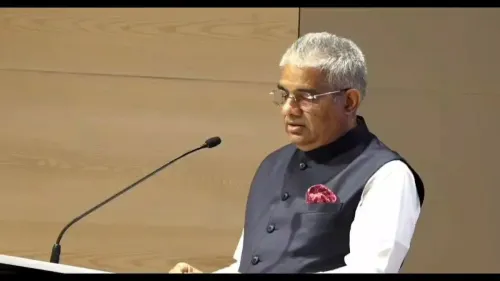
Minister Yadav described the honourees as those who 'protect our forests, respond to fires and safeguard wildlife habitats — turning conservation policy into action on the ground.' The framing is deliberate: India's environmental commitments, from international climate pledges to domestic biodiversity targets, depend entirely on whether these personnel can enforce them in remote terrain, often with limited resources.
From legislation to the forest floor
India's legal framework for conservation is among the most comprehensive in the world, but its effectiveness has always rested on the shoulders of field staff — a reality successive governments have acknowledged through training drives, equipment upgrades, and recognition programmes. The Eco Warrior Awards sit within that broader pattern: a formal signal from the central government that grassroots enforcement is valued, not just assumed.
Beat guards, the lowest rung of the forest department hierarchy, typically manage vast stretches of forest with minimal backup. Rangers coordinate across beats and are often first responders to illegal felling, poaching incidents, and fire outbreaks. Recognising them by name and in person — rather than through administrative circulars — carries symbolic weight that field departments across states have long said matters for morale and retention.
The ministry's conservation signalling in 2026
The ceremony arrives as India continues to position itself as a global leader on biodiversity and climate action. The Ministry of Environment, Forest and Climate Change has in recent years tied frontline capacity-building to broader targets under national forest and wildlife programmes. Whether the awards translate into sustained budgetary support for state forest departments — better equipment, hazard pay, and staffing — remains the sharper question that the next fiscal cycle will answer.
For now, the spotlight belongs to the people who answered the call in the field. That, at minimum, is a start.
Point of View
Forest and Climate Change: they generate goodwill within often under-resourced state forest departments, and they project a narrative of implementation-first governance at a time when India's environmental commitments face international scrutiny. Recognising beat guards and rangers by name is a low-cost but high-visibility signal that the Centre values field-level enforcement, not just policy architecture. The critical test, however, is whether such ceremonies are backed by meaningful allocations — hazard pay, modern equipment, and adequate staffing — in subsequent budget cycles. Without that follow-through, the awards risk becoming a morale gesture rather than a structural investment in India's conservation workforce.
NationPress
29 Sept 2026
Frequently Asked Questions
What are the Eco Warrior Awards in India?
The Eco Warrior Awards are an annual recognition programme by India's Ministry of Environment, Forest and Climate Change, honouring frontline forest personnel — including beat guards and rangers — for their work in conservation, fire response, and wildlife protection.
When and where was the 4th Eco Warrior Awards 2026 held?
The 4th Eco Warrior Awards 2026 was held on 29 September 2026 in New Delhi , presided over by Union Environment Minister Bhupender Yadav.
Who are beat guards and rangers in India's forest department?
Beat guards are the frontline staff of India's state forest departments, responsible for patrolling designated forest areas. Rangers coordinate across multiple beats and are typically first responders to illegal felling, poaching, and fire incidents.
What laws do India's frontline forest personnel enforce?
Frontline forest staff enforce key legislation including the Wildlife Protection Act, 1972 and the Forest Conservation Act, 1980 — the two foundational laws governing India's forests and wildlife habitats.
What is Bhupender Yadav's role in India's environment policy?
Bhupender Yadav is India's Union Minister of Environment, Forest and Climate Change and a senior BJP leader. He oversees national forest conservation, wildlife protection, and climate policy implementation across the country.