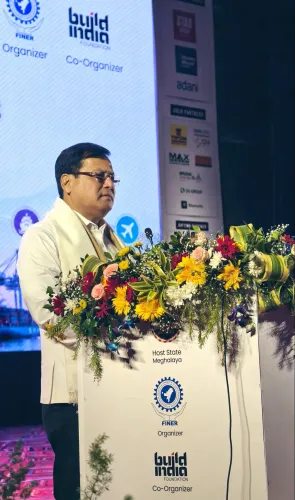
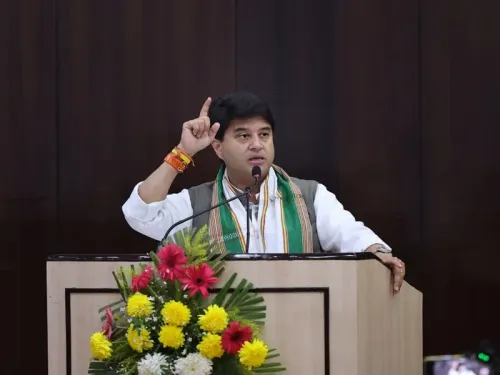
Bhupender Yadav marks 12 years of Act East, hails Northeast rise

Synopsis
Union Environment Minister Bhupender Yadav marked 12 years of India's Act East Policy on 20 June 2026, calling Northeast India — referred to as Ashtalakshmi — a 'shining example of inclusive growth' under PM Narendra Modi's leadership, as the government highlights connectivity and development gains across the eight-state region.
Key Takeaways
Bhupender Yadav posted on 20 June 2026 to mark 12 years of the Act East Policy , launched in 2014 by the Modi government .
The policy rebranded the earlier Look East Policy (1991) and elevated Northeast India's development as central to India's engagement with Southeast Asia .
The Northeast's eight states — collectively called Ashtalakshmi — are the primary domestic focus of the Act East framework.
Key infrastructure projects under Act East include the India-Myanmar-Thailand Trilateral Highway and the Kaladan Multi-Modal Transit Transport Project .
The minister described the Northeast as 'a shining example of inclusive growth and transformation' under PM Narendra Modi 's leadership.
Union Environment Minister Bhupender Yadav on Saturday, 20 June 2026, marked 12 years of the Act East Policy, crediting Prime Minister Narendra Modi's leadership for transforming Northeast India — referred to as Ashtalakshmi (the eight-state region) — into what he called 'a shining example of inclusive growth and transformation.'
Context
Yadav's post, carrying the hashtag #12YearsOfRisingNortheast, marks the anniversary of the Act East Policy, which was launched in 2014 when the Narendra Modi government rebranded and significantly expanded the earlier Look East Policy. The term Ashtalakshmi — a reference to the eight states of the Northeast as eight forms of the goddess Lakshmi — has been used in political and cultural discourse to frame the region as a source of national prosperity rather than a zone of neglect.
The minister wrote: 'From aspiration to achievement, 12 years of Acting East, have propelled Ashtalakshmi to new heights of progress and empowerment.' The post was accompanied by a video, underscoring the government's emphasis on audio-visual communication around the milestone.
Policy Backdrop
The Look East Policy, first articulated in 1991 under Prime Minister P.V. Narasimha Rao, aimed to deepen India's economic and strategic ties with Southeast Asia and East Asia. When the Modi government took office in 2014, it recast the framework as the Act East Policy — signalling a shift from passive engagement to proactive outreach — and simultaneously elevated domestic development in the Northeast as integral to the strategy.
The policy framework links cross-border connectivity projects with internal infrastructure investment across Arunachal Pradesh, Assam, Manipur, Meghalaya, Mizoram, Nagaland, Sikkim and Tripura. Flagship initiatives under this umbrella include the India-Myanmar-Thailand Trilateral Highway and the Kaladan Multi-Modal Transit Transport Project, both designed to open trade and transit corridors between India and ASEAN nations through the Northeast.
Stakeholders and Impact
The eight Northeastern states and their combined population stand as the primary stakeholders of Act East's domestic dimension. Successive budget cycles have seen increased allocations for roads, railways, waterways and digital connectivity in the region, aimed at reducing the geographic and economic isolation that has historically set the Northeast apart from mainland India.
Local communities, state governments and cross-border trading communities in neighbouring countries such as Myanmar and Bangladesh are all affected by the pace of project implementation. The policy also carries a people-to-people dimension, with cultural and educational exchanges forming part of the broader outreach to Southeast Asia.
What's Next
The 12-year milestone is likely to be accompanied by government-wide communication campaigns reviewing progress on connectivity and development targets. Attention will focus on the implementation status of long-pending infrastructure projects, particularly the India-Myanmar-Thailand Trilateral Highway, which has faced construction delays, and annual budget commitments to the Northeast. The degree to which the Act East Policy translates into measurable trade and investment outcomes with ASEAN partners will remain a key benchmark for analysts and regional stakeholders alike.
Point of View
Framing 12 years of Act East as a civilisational correction rather than routine policy. The invocation of Ashtalakshmi is politically deliberate — it reframes a historically marginalised region as a site of cultural and economic abundance, directly countering opposition claims of neglect. This fits a broader pattern in which senior Cabinet ministers amplify the Prime Minister's development record on symbolic anniversaries, distributing the messaging burden across the government. The durability of the Act East brand will ultimately rest on the pace of delivery on stalled cross-border infrastructure projects, which remain the most concrete test of the policy's ambition.
NationPress
20 Jun 2026
Frequently Asked Questions
What is the Act East Policy and when was it launched?
The Act East Policy is India's strategic initiative to deepen economic, cultural and connectivity ties with Southeast Asia and East Asia. It was launched in 2014 by the Narendra Modi government as an expanded successor to the Look East Policy, which was first introduced in 1991.
What does Ashtalakshmi mean in the context of Northeast India?
Ashtalakshmi refers to the eight states of Northeast India — Arunachal Pradesh, Assam, Manipur, Meghalaya, Mizoram, Nagaland, Sikkim and Tripura — likening them to the eight forms of the goddess Lakshmi, symbolising prosperity and potential.
Why did Bhupender Yadav post about the Act East Policy?
Bhupender Yadav posted on 20 June 2026 to mark 12 years since the Act East Policy was adopted in 2014, highlighting what he described as the Northeast's transformation into a 'shining example of inclusive growth' under PM Narendra Modi.
What are the key infrastructure projects under the Act East Policy?
Major connectivity projects under the Act East framework include the India-Myanmar-Thailand Trilateral Highway and the Kaladan Multi-Modal Transit Transport Project, both aimed at opening trade and transit corridors between India and ASEAN nations through the Northeast.
What was the Look East Policy and how does it differ from Act East?
The Look East Policy was launched in 1991 under Prime Minister P.V. Narasimha Rao to build ties with ASEAN nations. The Modi government rebranded it as the Act East Policy in 2014, signalling a more proactive and implementation-focused approach that also integrated domestic development of the Northeast.