Rijiju attends Bhutan stupa consecration, Stupa 76 dedicated to PM Modi
Synopsis
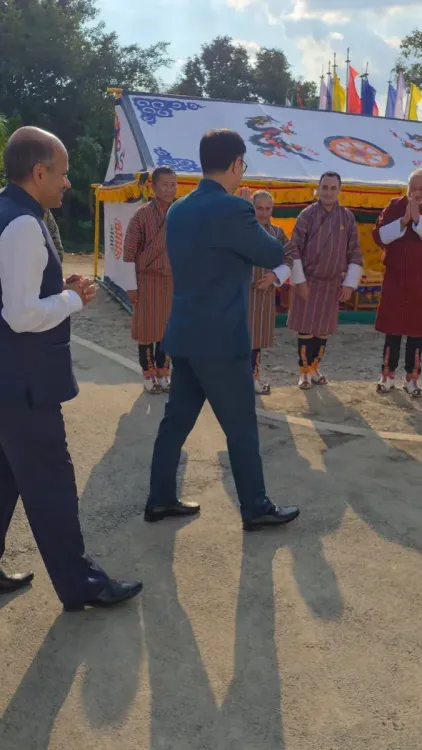
Union Minister Kiren Rijiju attended the consecration of 108 stupas at Gelephu Mindfulness City, Bhutan. The King of Bhutan dedicated Stupa 76 to PM Modi on the sacred occasion of Lhabab Duchen, in a rare gesture honouring India-Bhutan spiritual and diplomatic ties.
Key Takeaways
The King of Bhutan dedicated Stupa 76 to Prime Minister Narendra Modi at a ceremony in Gelephu Mindfulness City on 2 November 2026 .
Union Minister Kiren Rijiju attended the raising and consecration of 108 stupas as part of Project 108 , a Bhutanese spiritual initiative.
The ceremony coincided with Lhabab Duchen , one of Buddhism's most sacred festivals, marked by the ceremonial blowing of Dungchens .
In Buddhist tradition, a stupa is considered a physical representation of the Buddha's enlightened mind; dedicating one is a deeply meritorious act.
PM Modi made Bhutan the destination of his first foreign visit in June 2014 , and the two nations revised their Friendship Treaty in 2007 .
Gelephu Mindfulness City is located in southern Bhutan near the Indian border, making it a key node in India-Bhutan cultural and connectivity ties.
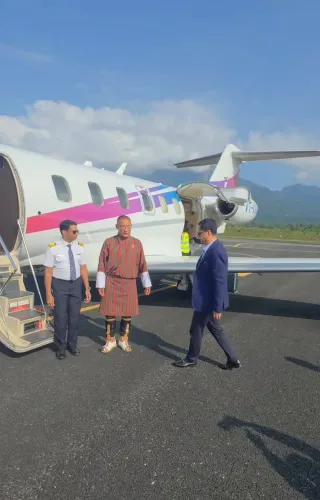
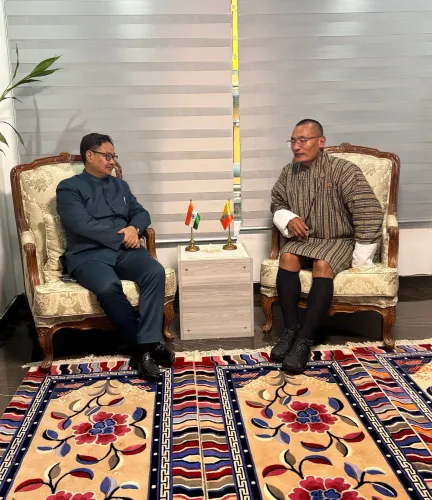
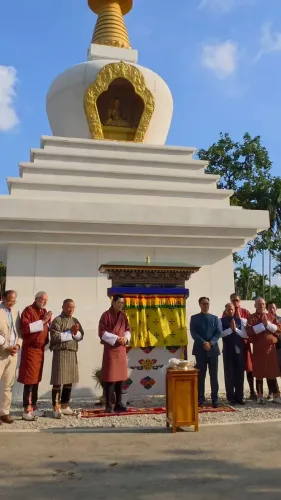
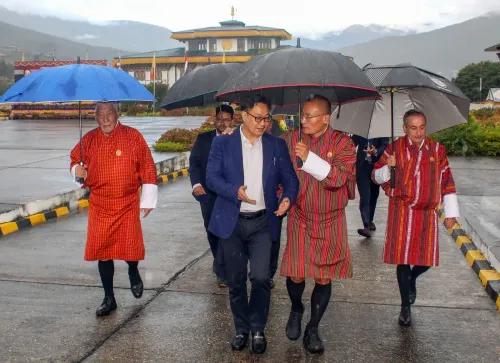
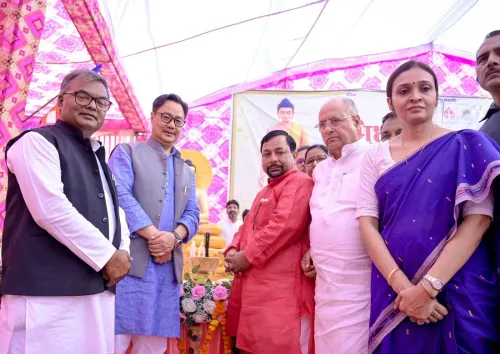
A stupa dedicated to a sitting prime minister is a gesture that cuts across diplomacy and devotion — and on Monday, 2 November 2026, Union Parliamentary Affairs and Minority Affairs Minister Kiren Rijiju witnessed exactly that at Gelephu Mindfulness City, Bhutan. His Majesty King Jigme Khesar Namgyel Wangchuck of Bhutan graciously dedicated Stupa 76 to Prime Minister Narendra Modi, in recognition of his deep understanding of and immense contribution to the enduring friendship between the two nations.
What Stupa 76's dedication actually means
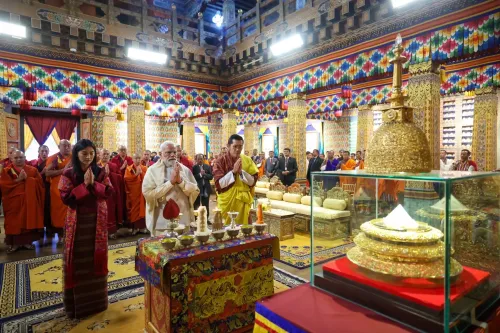
Rijiju was unambiguous about the weight of the moment. 'Dedicating a sacred stupa to someone is not an ordinary gesture,' he wrote. 'It is highly meritorious, auspicious, and spiritually significant.' In Buddhist tradition, a stupa is not merely an architectural monument — it is understood as a physical representation of the Buddha's enlightened mind. To dedicate one is to honour a person's role in the spiritual and moral fabric of a community.
The consecration took place on Lhabab Duchen, one of the four most sacred festivals in the Tibetan Buddhist calendar, commemorating the Buddha's descent from the celestial realm. The occasion was marked by the ceremonial blowing of Dungchens — the long Himalayan horns whose deep resonance is integral to major Buddhist rites. The convergence of this festival with a stupa dedication amplified the ceremony's spiritual significance many times over.
Project 108 and Gelephu Mindfulness City
The Gelephu ceremony was part of Project 108, Bhutan's ambitious initiative to raise and consecrate 108 stupas — a number sacred in Buddhism, representing the 108 volumes of the Kangyur and the 108 earthly temptations overcome on the path to enlightenment. The project is situated within Gelephu Mindfulness City, a landmark Bhutanese development initiative in the kingdom's south, close to the Indian border, designed around principles of spiritual sustainability and conscious living.
That this project unfolds on Bhutan's frontier with India is no accident. Gelephu's proximity to Assam and the broader northeast makes it a natural node in the India-Bhutan connectivity and development corridor, weaving spiritual ambition into a very practical geography.
The India-Bhutan bond: soft power through sacred stone
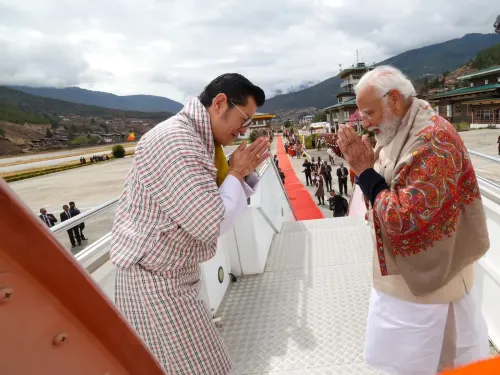
PM Modi made Bhutan the destination of his very first foreign visit after taking office in June 2014 — a choice that signalled the neighbourhood-first doctrine in the clearest possible terms. The two countries revised their foundational India-Bhutan Friendship Treaty in 2007, updating the original 1949 framework and reinforcing the terms of their unique partnership. That relationship spans hydropower, border management, development aid, and — increasingly — cultural and spiritual co-investment.
High-level gestures like stupa dedications recur during visits by Indian leaders and Bhutanese royalty, serving as a soft-power channel that no joint communiqué can replicate. A stupa outlasts a summit. It outlasts a headline. The King's decision to dedicate one to a sitting Indian prime minister, at a consecration ceremony for 108 stupas, is a statement of civilisational kinship that will stand long after the diplomatic paperwork has been archived.
With the remaining stupas of Project 108 still to be consecrated, every subsequent milestone will carry the imprint of a relationship that India and Bhutan have spent decades building — one sacred stone at a time.
Point of View
Not merely ceremonial. Project 108, centred in Gelephu near the Assam border, also quietly advances India's interest in deepening connectivity with Bhutan's southern corridor. The event fits a long-running pattern: every Indian government since 2014 has invested in cultural and spiritual co-branding with Bhutan as a hedge against Chinese influence in the Himalayas.
NationPress
2 Nov 2026
Frequently Asked Questions
Why was Stupa 76 dedicated to PM Modi in Bhutan?
The King of Bhutan dedicated Stupa 76 to PM Narendra Modi in recognition of his deep understanding and immense role in India's steadfast commitment to the unique and enduring friendship between India and Bhutan, as stated by Union Minister Kiren Rijiju.
What is Project 108 in Bhutan?
Project 108 is a Bhutanese initiative to raise and consecrate 108 stupas at Gelephu Mindfulness City in southern Bhutan. The number 108 holds deep significance in Buddhist tradition.
What is Lhabab Duchen?
Lhabab Duchen is one of the four most sacred festivals in the Tibetan Buddhist calendar, commemorating the Buddha's descent from the heavens. It is observed with special rituals including stupa consecrations and religious ceremonies.
What is Gelephu Mindfulness City?
Gelephu Mindfulness City is a major Bhutanese development initiative in southern Bhutan, near the Indian border, designed around principles of spiritual sustainability and mindful living.
What is the significance of India-Bhutan ties?
India and Bhutan share a unique relationship rooted in the 1949 and 2007 Friendship Treaties, spanning hydropower, border cooperation, development aid, and deep cultural and spiritual bonds. PM Modi's first foreign visit after taking office in 2014 was to Bhutan.