Bihar CMO: 143.529 km Highway Cleared on BOT Model

Synopsis
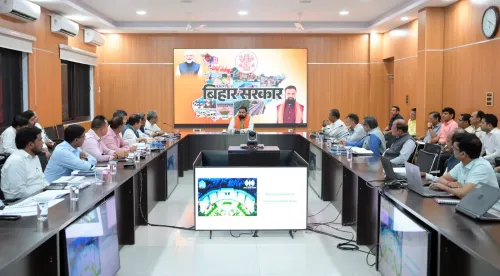
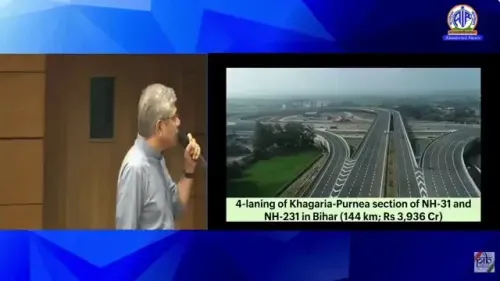
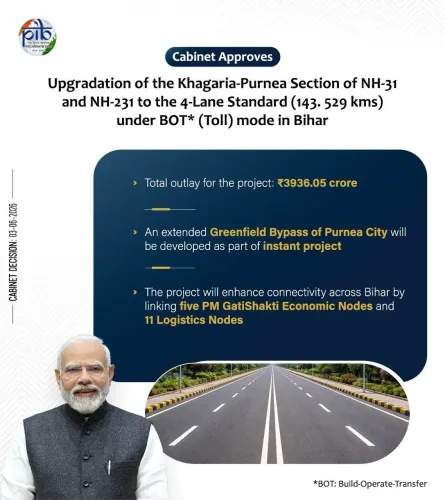
The Chief Minister's Office of Bihar announced approval of a 143.529 km highway to be built on the build-operate-transfer model. CM Samrat Choudhary thanked the Prime Minister, calling it a historic decision that will give new momentum to Bihar's development and strengthen the state's connectivity backbone.
Key Takeaways
Bihar CMO announced clearance of a 143.529 km highway project on 3 June 2026 .
The project will be constructed on the build-operate-transfer (BOT) model.
CM Samrat Choudhary thanked the Prime Minister for the approval.
The CMO called it an 'important step' to give new momentum to Bihar's development.
Highway expansion in Bihar has been anchored by Bharatmala Pariyojana , launched in 2015 .
Next steps include tendering, route finalisation and district-level land acquisition.
The Chief Minister's Office of Bihar on 3 June 2026 announced that a 143.529 km highway project for the state has been cleared for construction on a build-operate-transfer (BOT) model, with Chief Minister Samrat Choudhary thanking the Prime Minister for the approval. The post described the clearance as a 'historic decision' aimed at accelerating Bihar's development trajectory.
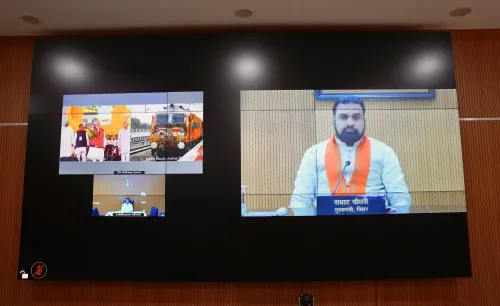
In its post, the CMO stated: 'The 143.529 km long project will be constructed on the build-operate-transfer model. Expressing gratitude to the Hon'ble Prime Minister for this historic decision, Hon'ble Chief Minister Shri Samrat Choudhary said that this is an important step that will give new momentum to Bihar's development.' The original Hindi phrasing — 'बिहार के विकास को नई गति प्रदान करने वाला महत्वपूर्ण कदम' (an important step that will give new momentum to Bihar's development) — frames the announcement as a milestone in the state's connectivity push.
Context
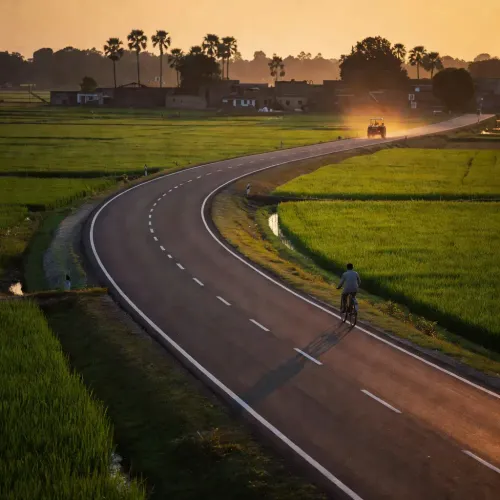
The announcement positions the project squarely within a central-state collaboration template that has defined highway expansion in eastern India over the past decade. The BOT model allows a private concessionaire to finance, build and operate the road for a fixed concession period, recovering investment through tolls before transferring the asset back to the government.
By choosing BOT over engineering-procurement-construction (EPC) or hybrid annuity, the government typically signals that traffic projections on the corridor are robust enough to attract private capital. The exact alignment of the 143.529 km stretch was not specified in the post.
Policy backdrop
India's large-scale highway expansion has been anchored by Bharatmala Pariyojana, launched in 2015, which expanded national highway construction through BOT and public-private partnership formats, with Bihar identified as a priority state for connectivity upgrades. Successive central governments have prioritised eastern India for highway investment to narrow the logistics gap with western and southern states.
Bihar has received multiple stretches under national programmes designed to compress travel times between district headquarters, industrial clusters and inter-state borders. A project of this length — exceeding 140 km — would typically rank among the larger single-stretch awards in a given financial year.
Stakeholders and impact
The most immediate beneficiaries cited by the CMO are Bihar's residents and the logistics ecosystem moving goods through the state. Faster road links tend to compress freight cycle times, lower per-tonne transport costs and pull warehousing investment toward interchange points along the corridor.
For the construction sector, a BOT award of this scale signals a sizeable engineering, procurement and financing opportunity, attracting bids from highway developers, infrastructure investment trusts and lenders. State agencies will simultaneously be tasked with land acquisition, utility shifting and environmental clearances along the alignment.
What's next
Attention will turn to the tendering process, the publication of the detailed project report, and the precise route of the 143.529 km corridor. Land acquisition notifications at the district level will be the next visible administrative step, followed by financial bids from shortlisted concessionaires.
For CM Samrat Choudhary, the project offers a tangible delivery to point to as Bihar competes with neighbouring states for industrial investment. If construction timelines hold, the corridor could become a reference point for how quickly eastern India can absorb large BOT awards into operational infrastructure.
Point of View
A marker that eastern Indian highways are no longer seen purely as social infrastructure. Politically, a single-stretch award of this length gives the Bihar CMO a concrete deliverable to anchor its development pitch. The pace of land acquisition will determine whether the announcement converts into visible groundwork in the coming quarters.
NationPress
21 Oct 2026
Frequently Asked Questions
What did the Bihar CMO announce about the 143.529 km project?
The Bihar CMO announced that a 143.529 km highway project has been cleared for construction on the build-operate-transfer (BOT) model. CM Samrat Choudhary thanked the Prime Minister for the approval and called it a historic decision for Bihar's development.
What is the BOT model in highway construction?
BOT, or build-operate-transfer, is a public-private partnership model where a private concessionaire finances, builds and operates a highway for a fixed period. The developer recovers its investment through toll revenue before transferring the asset back to the government.
Who is Samrat Choudhary?
Samrat Choudhary is referenced in the post as the Chief Minister of Bihar who publicly thanked the Prime Minister for approving the 143.529 km highway project. He framed the clearance as an important step for the state's development.
How does this project link to Bharatmala Pariyojana?
Bharatmala Pariyojana, launched in 2015, expanded national highway construction across India using BOT and public-private partnership models, with Bihar among the priority states. Large BOT awards in Bihar typically sit within the broader Bharatmala framework for eastern India connectivity.
What happens next after the highway approval?
The next steps typically include publication of the detailed project report, the tendering process to select a concessionaire, and district-level land acquisition notifications. Financial bids and environmental clearances usually follow before physical construction can begin.