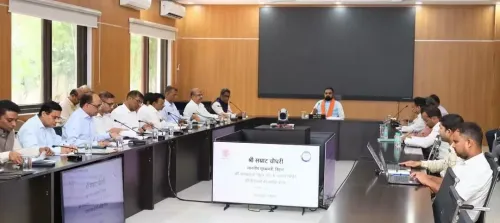
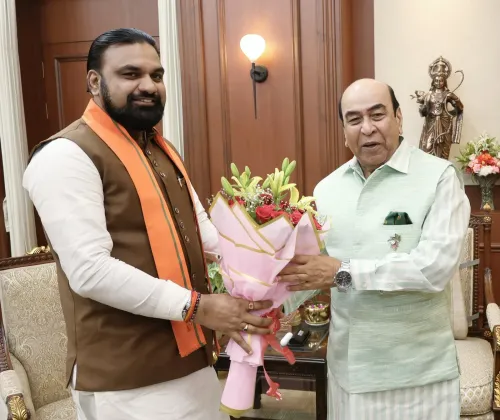
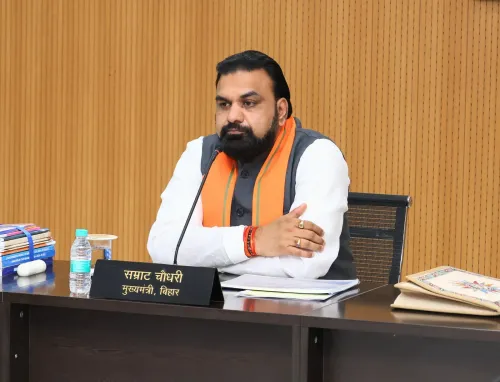
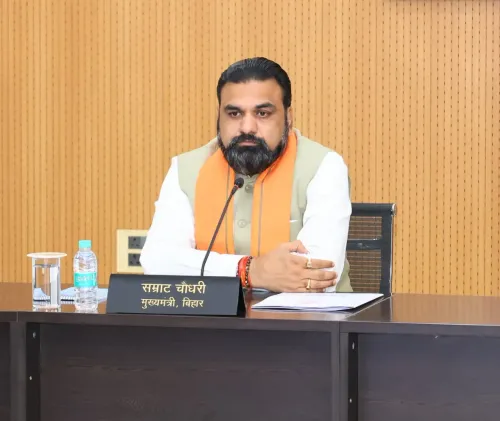
CM Samrat Choudhary clears GeM Forward Auction for Bihar depts

Synopsis
Bihar CM Samrat Choudhary announced cabinet approval on September 30, 2026 to use the GeM portal's Forward Auction Module for auctioning disposable government assets, amending the Bihar Finance Rules 1950 by inserting a new sub-rule (x) under Rule 130.
Key Takeaways
Bihar cabinet approved use of the GeM Forward Auction Module for auctioning surplus/disposable assets by state departments.
The decision amends Rule 130 of the Bihar Finance Rules, 1950 by inserting a new sub-rule (x) after sub-rule (ix).
GeM (Government e-Marketplace) was launched by the Union Government in 2016 to digitise public procurement and auctions.
The change gives Bihar departments a statutory basis to conduct online forward auctions, replacing older offline disposal processes.
Bihar joins multiple states in updating colonial-era financial rules to align with central e-governance platforms .
Key metrics to watch: volume of auctions conducted on GeM and revenue realisation reported in subsequent audit findings.
Bihar's 74-year-old financial rulebook just got a digital-age update. Bihar Chief Minister Samrat Choudhary announced on Wednesday, September 30, 2026, that the state cabinet has approved the use of the GeM portal's Forward Auction Module for the auction of disposable and surplus assets by government departments — and formally embedded the change inside the Bihar Finance Rules, 1950.
The approval, highlighted under the hashtags #CabinetDecisions #NDA4Bihar, amends Rule 130 of the Bihar Finance Rules, 1950 by inserting a new sub-rule (x) after the existing sub-rule (ix). The amendment gives state departments and procurement units the legal footing to conduct forward auctions of executable or disposable goods directly on the Government e-Marketplace (GeM) platform, rather than through older, often opaque, offline processes.
What the GeM Forward Auction Module actually does
GeM was launched by the Union Government in 2016 to digitise public procurement and reduce discretionary spending. While the platform's procurement side is widely used, the Forward Auction Module flips the direction — instead of the government buying, it sells or auctions off surplus assets to the highest bidder in a transparent, competitive, online process. Bihar's cabinet decision now formally permits state departments to plug into this existing national infrastructure.
The practical significance is considerable. Previously, disposal of government assets required navigation through financial rules written in an era of paper ledgers. By adding sub-rule (x), the state acknowledges that a nationally standardised digital channel can handle what archaic provisions never contemplated. Transparency, competitive price discovery, and an audit trail come built into the platform.
Bihar joins a national wave of e-governance rule updates
Bihar is not the first state to modernise its procurement framework around GeM, but the amendment matters because it goes beyond mere administrative instruction — it changes the actual statutory rules. Multiple states have updated colonial-era financial codes to accommodate e-governance platforms, and NDA-ruled Bihar has consistently framed such cabinet decisions as pillars of its administrative reform agenda.
The immediate stakeholders are state government departments and procurement units sitting on surplus inventory, as well as vendors and suppliers who gain a transparent bidding channel. The longer-term measure of success will be the volume of forward auctions Bihar departments actually conduct on GeM and whether audit reports confirm genuine gains in revenue realisation.
A rulebook written in 1950 now carries a clause fit for 2026. Whether Bihar departments make full use of it is the next question worth watching.
Point of View
The Samrat Choudhary government signals a preference for durable statutory reform over reversible administrative instructions — a small but meaningful governance distinction. The move sits within a broader BJP-ruled-state pattern of presenting e-governance integrations as administrative credibility markers ahead of electoral cycles. The real test will be departmental adoption rates: Bihar's track record on translating legislative enablement into operational change has historically been uneven. If forward auction volumes rise and audit trails demonstrate revenue gains, the amendment becomes a replicable model for other lagging states still governing asset disposal via paper-era rules.
NationPress
30 Sept 2026
Frequently Asked Questions
What is the GeM Forward Auction Module approved by Bihar cabinet?
The GeM Forward Auction Module is a feature of the Government e-Marketplace that allows government departments to auction off surplus or disposable assets online to the highest bidder, ensuring competitive price discovery and a transparent audit trail. Bihar's cabinet has now approved its use by state departments and procurement units.
What change was made to the Bihar Finance Rules 1950?
A new sub-rule (x) has been added after sub-rule (ix) under Rule 130 of the Bihar Finance Rules, 1950, giving state departments and procurement units statutory authority to use the GeM portal's Forward Auction Module for conducting auctions of disposable goods and assets.
What is GeM and when was it launched?
GeM, or Government e-Marketplace, is a national online platform launched by the Union Government in 2016 to digitise public procurement and reduce discretion in government purchases. It is used by both central and state government departments.
Why does updating Bihar Finance Rules 1950 matter for digital auctions?
Without a statutory amendment, departments would lack formal legal backing to conduct forward auctions digitally. By inserting sub-rule (x) into the 1950 rules, the Bihar government ensures the practice is legally grounded, not just administratively directed, making it harder to reverse and easier to audit.
Which Bihar cabinet decisions were announced on September 30, 2026?
Among the decisions announced by Bihar CM Samrat Choudhary on September 30, 2026 was cabinet approval for using the GeM portal's Forward Auction Module by state departments for auctioning surplus assets, formalised through an amendment to the Bihar Finance Rules, 1950.