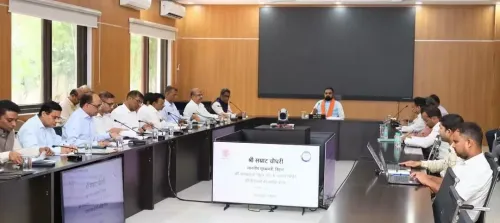
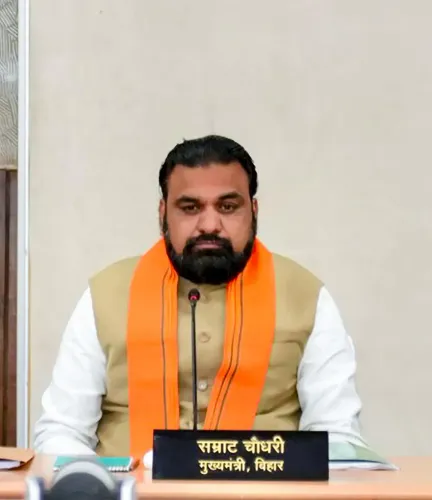
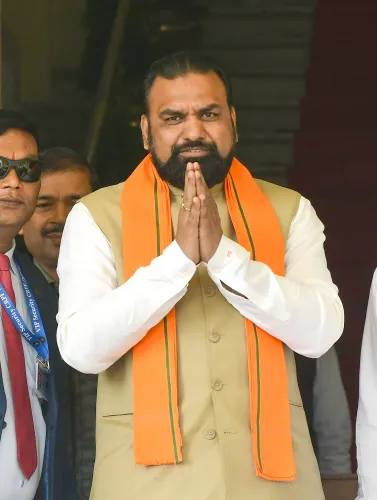
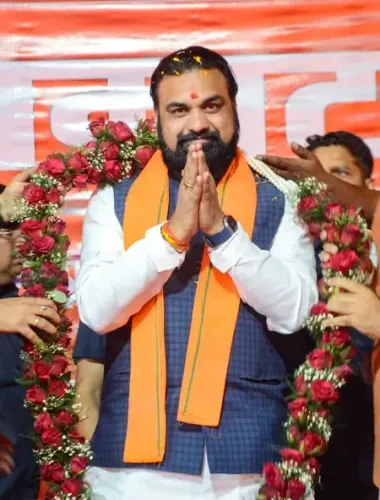
Bihar CM Samrat Choudhary in Delhi for key talks with Shah, Jal Shakti Minister
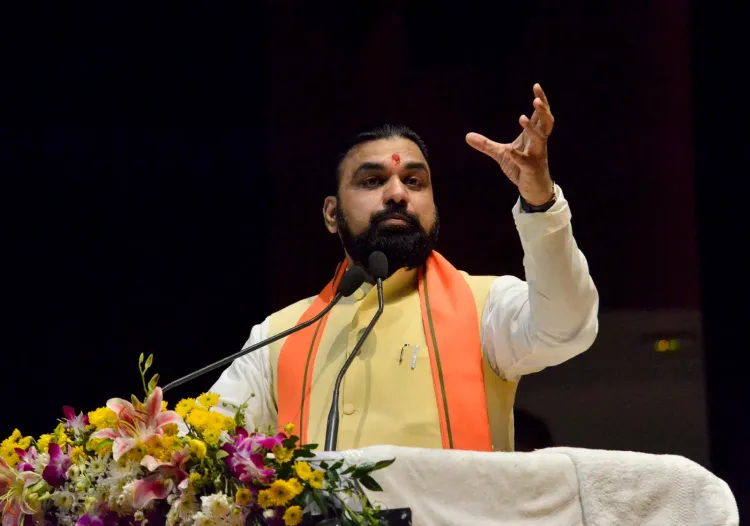
Synopsis
Newly installed Bihar CM Samrat Choudhary is in Delhi for back-to-back meetings with Home Minister Amit Shah and Jal Shakti Minister C.R. Patil — a visit that signals the state's urgent push for central support on floods, law and order, and infrastructure at a defining early moment of his tenure.
Key Takeaways
Bihar CM Samrat Choudhary is in New Delhi on 31 August for meetings with senior Union ministers.
A meeting with Home Minister Amit Shah at Janpath is expected to cover law and order, development, and Centre-State coordination.
Talks with Jal Shakti Minister C.R.
Patil are focused on flood control, river management, and irrigation infrastructure.
Bihar faces annual flooding from the Ganga , Gandak , and Kosi rivers, with much of the damage linked to rivers originating in Nepal .
The visit is Choudhary's early-term effort to secure both political alignment and central funding for Bihar's priorities.
Bihar Chief Minister Samrat Choudhary arrived in New Delhi on Monday, 31 August for a high-stakes round of meetings with senior Union ministers, a visit being watched closely for both its political and administrative significance. The engagements come as the Bihar government grapples with a range of pressing challenges — from recurring floods and infrastructure gaps to law and order concerns.
Meeting with Home Minister Amit Shah
A high-level meeting between Choudhary and Union Home Minister Amit Shah is scheduled at Janpath. While the official agenda has not been disclosed, the discussions are expected to span law and order, development programmes, administrative priorities, and Centre-State coordination.
Law and order is likely to occupy a significant portion of the talks, given its political sensitivity in Bihar. The Chief Minister is also expected to brief Shah on the state government's roadmap for strengthening the security apparatus and improving crime control. Faster approvals and implementation of centrally supported schemes — particularly in roads, transport, and urban development — could also feature on the agenda.
Flood Control on the Table with Jal Shakti Minister
A separate and equally critical meeting is scheduled with Union Jal Shakti Minister C.R. Patil. The engagement carries particular weight for Bihar, where large swathes of the state face devastating floods year after year. Rivers originating in Nepal — including the Ganga, Gandak, and Kosi — regularly inundate several districts, displacing communities and straining state resources.
The Bihar government is expected to seek central assistance for strengthening embankments, upgrading flood protection infrastructure, improving river management systems, and expanding irrigation networks. Issues related to drinking water supply and the efficient utilisation of water resources are also likely to come up.
A Push for Permanent Flood Solutions
The timing of the Jal Shakti meeting is notable. Bihar has long sought structural, long-term solutions to its flood crisis rather than relying on annual relief and rescue cycles. This visit could serve as an opportunity for the state to formally place proposals for permanent flood-control measures and improved river governance before the Centre.
Notably, this is not merely a courtesy call — the breadth of issues on the table reflects the scale of challenges the new administration is navigating simultaneously: accelerating development, containing floods, and maintaining law and order.
Political and Administrative Context
Choudhary's Delhi visit comes shortly after he assumed office, making these early-term engagements with Union ministers significant for setting the tone of Centre-Bihar relations. The meetings are being read as an effort to secure both political alignment and administrative support from the Centre at a critical juncture for the state.
How much ground the Chief Minister covers in these discussions — and what concrete commitments emerge — will be closely tracked by both political observers and citizens awaiting relief on the flood and infrastructure fronts.
Point of View
Not just a scheduling item. Bihar's flood crisis is structural — the Kosi and Gandak have defied decades of embankment politics — and no state government has yet extracted a durable central commitment on river management. The law-and-order conversation with Shah is equally loaded: Bihar's crime perception problem has electoral consequences, and Choudhary needs visible wins. The risk is that these meetings produce assurances rather than action. Bihar has been promised central flood infrastructure support before; what the state needs is a funded, time-bound project framework, not another round of coordination meetings.
NationPress
15 Oct 2026
Frequently Asked Questions
Why is Bihar CM Samrat Choudhary visiting Delhi on 31 August?
Choudhary is in New Delhi on 31 August for high-level meetings with Union Home Minister Amit Shah and Jal Shakti Minister C.R. Patil. The visit aims to secure central support on law and order, flood control, infrastructure, and development priorities for Bihar.
What is expected to be discussed in the meeting with Amit Shah?
The meeting at Janpath is expected to cover law and order, Centre-State coordination, development programmes, and administrative requirements. The Chief Minister may also brief Shah on the state's plans to strengthen the security apparatus and fast-track centrally supported schemes.
Why is the meeting with Jal Shakti Minister C.R. Patil significant for Bihar?
Bihar faces recurring floods every year from major rivers including the Ganga, Gandak, and Kosi, many of which originate in Nepal. The meeting is an opportunity for Bihar to seek central funding for embankment strengthening, flood protection systems, river management, and irrigation expansion.
What long-term flood solutions is Bihar seeking from the Centre?
Bihar is reportedly looking to move beyond annual relief operations and place proposals for permanent flood-control measures and improved river governance before the Centre. Strengthening embankments and managing cross-border river flows are among the key asks.
What is the political significance of Choudhary's early-term Delhi visit?
The visit comes shortly after Choudhary assumed office as Bihar Chief Minister, making these engagements critical for establishing the tone of Centre-Bihar relations. Securing early commitments on development and flood infrastructure could shape the political narrative of his tenure.