Bihar CM Office Backs Krishi Input Grant Scheme for Farmers
Synopsis
The Chief Minister's Office of Bihar highlighted on 22 June 2026 that the state's Krishi Input Anudan Yojana provides small farmers with more than financial aid — it delivers confidence and stability in agriculture, complementing national schemes like PM-KISAN.
Key Takeaways
The Chief Minister's Office of Bihar shared remarks on 22 June 2026 emphasising the broader impact of the Krishi Input Anudan Yojana .
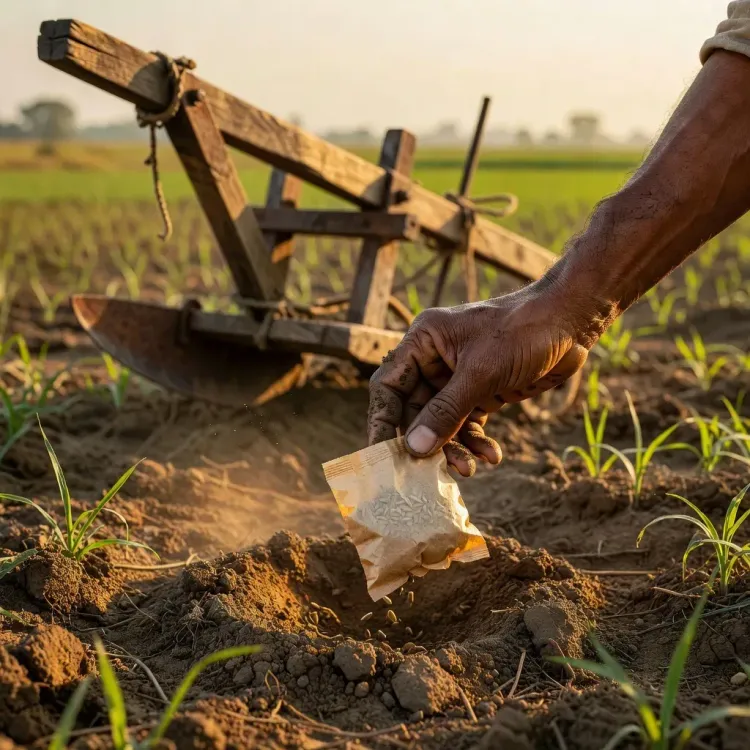
The scheme subsidises agricultural inputs such as seeds and fertilisers for small and marginal farmers in Bihar .
Officials framed the programme as delivering 'confidence and stability' in farming, beyond pure financial relief.
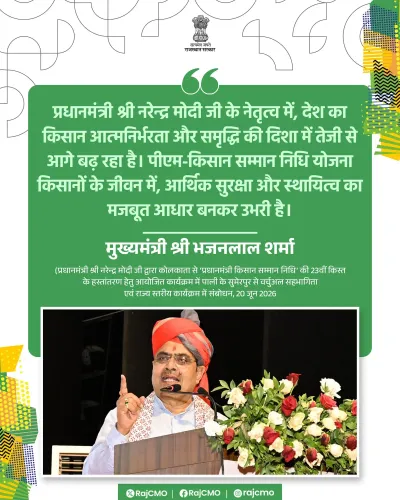
The scheme complements the central government's PM-KISAN programme, which has provided direct income support since 2019 .
Next state budget allocations and pre-season announcements will indicate the scheme's future trajectory.
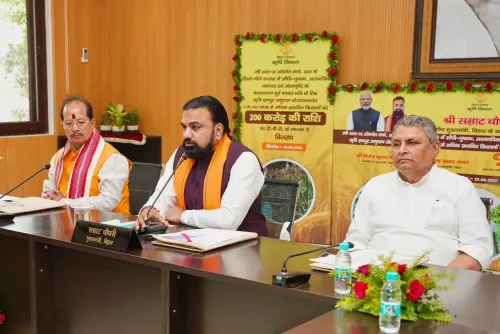
The Chief Minister's Office of Bihar on Monday, 22 June 2026 shared remarks underlining that the state government's Krishi Input Anudan Yojana (Agricultural Input Subsidy Scheme) does more than provide financial relief to farmers — it also builds their confidence and stability in farming as a livelihood.
Context
The post quoted a speaker as saying that the Bihar government's Krishi Input Anudan Yojana 'kewal aarthik sahayata hi nahin pradaan karti, balki unhe kheti-kisaani ke prati aatmvishwas aur sthirta bhi deti hai' — meaning the scheme 'does not merely provide financial assistance but also gives farmers confidence and stability in agriculture.' The statement frames the scheme as a holistic support mechanism rather than a narrow cash-transfer programme.
Bihar, an eastern Indian state with one of the largest agrarian populations in the country, has long grappled with farm-income volatility driven by erratic monsoons and rising input costs. The Krishi Input Anudan Yojana specifically addresses this by subsidising seeds, fertilisers, and other agricultural inputs for small and marginal farmers.
Policy Backdrop
The scheme sits within a layered support architecture for Bihar's farm sector. At the national level, the PM-KISAN programme — launched in 2019 — provides direct income transfers of Rs 6,000 per year to landholding farmers across India, including those in Bihar. The state's input subsidy scheme complements this by targeting the cost side of farming rather than income alone.
Chief Minister Nitish Kumar has overseen multiple agricultural support programmes during his tenure, and the Krishi Input Anudan Yojana is one of the flagship state-level interventions aimed at reducing the financial burden on small cultivators. Bihar has periodically expanded such subsidies as part of broader efforts to stabilise farm incomes and reduce input-cost volatility.
Stakeholders and Impact
The primary beneficiaries of the scheme are small and marginal farmers — a demographic that constitutes the majority of Bihar's agricultural workforce. For these cultivators, the cost of seeds and fertilisers can represent a significant share of seasonal expenditure, making input subsidies a critical buffer against crop losses or price shocks.
The framing of the scheme as a source of 'confidence and stability' signals a policy intent that goes beyond economics. State officials appear to be positioning the programme as a psychological and social safety net — addressing farmer sentiment and reducing distress migration from rural Bihar to urban centres.
What's Next
Attention will now turn to the next state budget cycle and any revisions to the scheme's allocation ahead of the kharif or rabi sowing seasons. Stakeholders will watch whether the government expands the scheme's coverage, increases per-farmer subsidy limits, or integrates it more closely with central agricultural programmes. Any such announcement would be a key indicator of the state's commitment to sustaining farm-sector support.
Point of View
A framing increasingly common among state governments seeking to differentiate their farm welfare from generic transfer schemes. For Chief Minister Nitish Kumar, reinforcing this narrative ahead of the sowing season serves a dual political and administrative purpose: it signals agrarian commitment while anchoring voter loyalty in a state where the farm vote remains decisive. The statement also fits a broader national pattern of states layering their own schemes atop PM-KISAN to claim distinct credit for rural welfare. Whether the scheme's on-ground delivery matches the aspirational framing will be the real test.
NationPress
22 Jun 2026
Frequently Asked Questions
What is Bihar's Krishi Input Anudan Yojana?
The Krishi Input Anudan Yojana is a Bihar government scheme that provides subsidies on agricultural inputs such as seeds and fertilisers to small and marginal farmers, aiming to reduce their input costs and stabilise farm incomes.
Who benefits from the Bihar agricultural input subsidy scheme?
The primary beneficiaries are small and marginal farmers in Bihar, for whom input costs like seeds and fertilisers represent a significant share of seasonal farming expenditure.
How is Bihar's scheme different from PM-KISAN?
PM-KISAN is a central government scheme providing direct income transfers of Rs 6,000 per year to landholding farmers. Bihar's Krishi Input Anudan Yojana is a state-level programme that subsidises the actual cost of agricultural inputs, making the two complementary rather than overlapping.
What did the Bihar CM Office say about the Krishi Input Anudan Yojana?
The Chief Minister's Office of Bihar shared remarks on 22 June 2026 stating that the scheme does not merely provide financial assistance but also gives farmers confidence and stability in agriculture.
What is the future of Bihar's farm input subsidy scheme?
Observers are watching the next state budget cycle and any pre-season announcements for revisions to the scheme's coverage or subsidy limits ahead of the kharif or rabi sowing seasons.