CM Bihar's Office Reaffirms Farmer Welfare as Top Priority

Synopsis
The Chief Minister's Office of Bihar declared on 22 June 2026 that protecting farmers' interests and ensuring their economic empowerment is the state government's foremost priority, reaffirming a long-standing policy commitment in an agrarian state where farming employs roughly 70 percent of the workforce.
Key Takeaways
The Chief Minister's Office of Bihar stated on 22 June 2026 that farmer welfare is the government's highest priority.
Bihar has approximately 70 percent of its workforce engaged in agriculture, making farmer policy central to state governance.
Chief Minister Nitish Kumar has led Bihar since 2005 and has consistently championed rural and agricultural development.
The state launched the Mukhyamantri Kisan Kalyan Yojana in 2019 to provide direct financial support and input subsidies to farmers.
Bihar pairs central schemes like PM-KISAN with state-specific measures covering irrigation, flood mitigation, and crop insurance.
Future budget allocations for agriculture and new central scheme tie-ups will be key indicators of follow-through on this commitment.
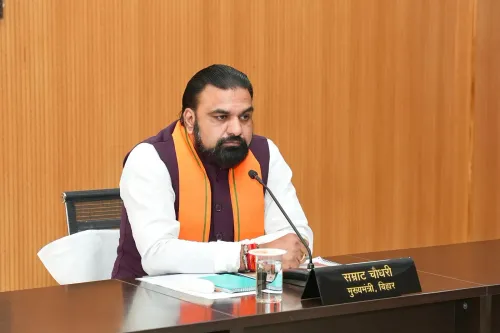
The Chief Minister's Office of Bihar reaffirmed on Monday, 22 June 2026 that protecting farmers' interests and strengthening their economic standing remains the state government's highest priority, in a post on X that drew attention to the administration's continuing agrarian focus.
The post, in Hindi, stated: 'Kisanon ke hiton ki raksha tatha unki aarthik sashaktata sarkar ki sarvoch prathamikta hai' ('Protecting the interests of farmers and their economic empowerment is the government's topmost priority'). The message was issued as a reply, signalling an active engagement with public discourse around agricultural policy in the state.
Context
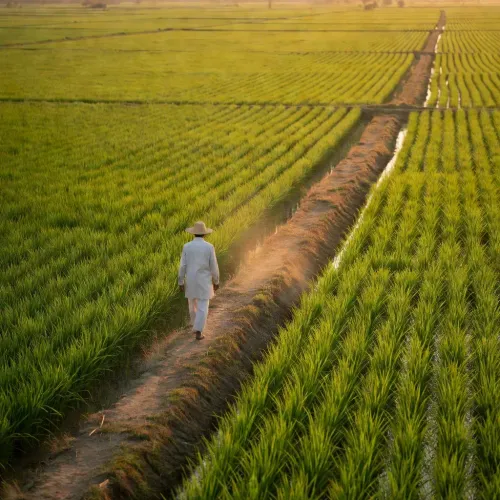
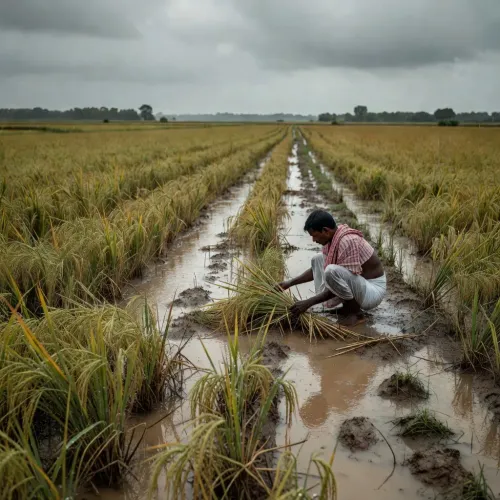
Bihar is one of India's most agrarian states, with roughly 70 percent of its workforce engaged in farming. The state's agricultural economy is characterised by small and marginal landholdings, dependence on monsoon rainfall, and recurring flood damage — particularly in the northern districts bordering Nepal. These structural vulnerabilities have made farmer welfare a central plank of governance across successive administrations in Patna.
Chief Minister Nitish Kumar, who has led the state since 2005 with brief interruptions, has consistently positioned rural development and farmer support as signature policy commitments. The reaffirmation from his office fits a long-standing pattern of public communication around agrarian priorities.
Policy Backdrop
The Bihar government has pursued a layered approach to farmer support, combining central government schemes with state-specific interventions. In 2019, the state launched the Mukhyamantri Kisan Kalyan Yojana, which provided direct financial assistance and input subsidies to cultivators, complementing the Centre's PM-KISAN scheme that transfers Rs 6,000 annually to eligible farm households.
State initiatives have also addressed irrigation expansion, crop insurance coverage, and flood mitigation — all of which directly affect farm income stability. The government has periodically announced input compensation for crop losses caused by excess or deficient rainfall, given Bihar's exposure to both droughts and floods within the same agricultural year.
Stakeholders and Impact
The primary beneficiaries of Bihar's farmer welfare architecture are small and marginal farmers and agricultural labourers, who together constitute the bulk of the rural population. Economic empowerment in this context typically encompasses income support, access to institutional credit, subsidised inputs such as seeds and fertilisers, and better market linkages for produce.
For this demographic, policy continuity and timely disbursement of benefits carry direct consequences for household income and food security. Any new scheme or expansion of existing programmes announced by the state government would have an immediate on-ground impact across Bihar's 38 districts.
What's Next
Observers will watch Bihar's upcoming state budget allocations for agriculture to gauge whether this stated priority translates into enhanced financial commitments. Potential areas include expanded irrigation infrastructure, new tie-ups with central agencies for seed distribution, and strengthened crop insurance outreach in flood-prone districts.
The government's ability to align state resources with central programmes — and to ensure last-mile delivery to the most vulnerable cultivators — will be the practical measure of the commitment reaffirmed in this communication.
Point of View
Such public commitments serve to maintain the ruling coalition's credibility among smallholder farmers. The invocation of 'economic empowerment' alongside protection suggests a shift in framing from mere relief to structural uplift, though the distance between rhetoric and delivery remains the critical variable. Watchers will look to the next budget cycle to see whether this stated priority is matched by measurable resource allocation.
NationPress
21 Sept 2026
Frequently Asked Questions
What did the Bihar Chief Minister's Office say about farmers on 22 June 2026?
The Chief Minister's Office of Bihar stated that protecting farmers' interests and ensuring their economic empowerment is the state government's highest priority, in a post on X on 22 June 2026.
What is the Mukhyamantri Kisan Kalyan Yojana in Bihar?
The Mukhyamantri Kisan Kalyan Yojana is a Bihar state scheme launched in 2019 that provides direct financial assistance and input subsidies to farmers, complementing the central government's PM-KISAN programme.
How dependent is Bihar on agriculture?
Bihar is heavily agrarian, with roughly 70 percent of its workforce engaged in farming, making agricultural policy one of the most consequential areas of state governance.
Who is the Chief Minister of Bihar?
Nitish Kumar is the Chief Minister of Bihar. He has held the post since 2005, with brief interruptions, and has made rural development and farmer welfare central to his administration.
What schemes does the Bihar government have for farmers?
Bihar supports farmers through a combination of central schemes like PM-KISAN and state-specific programmes including the Mukhyamantri Kisan Kalyan Yojana, along with initiatives covering irrigation, crop insurance, flood compensation, and input subsidies.