Bihar CM Directs Depts to Adopt Innovation for Public Good
Synopsis
Chief Minister Nitish Kumar has directed Bihar's government departments and technical institutions to adopt innovations, strengthen inter-agency cooperation, and tie technological solutions directly to public welfare — continuing his long-standing administrative modernisation agenda.
Key Takeaways
Chief Minister Nitish Kumar issued a formal directive on October 29, 2026 to all concerned Bihar government departments.
Technical institutions have been specifically included in the instruction, bridging academic and administrative spheres.
The directive covers three pillars: adopting innovation, increasing mutual cooperation, and connecting tech solutions to public interest.
The order aligns with Kumar's governance reform push sustained since he first took office in 2005 .
Follow-up departmental actions and specific project announcements are the next milestone to watch.
Innovation in governance is no longer optional — it is an order. The Chief Minister's Office of Bihar on Thursday, October 29, 2026, shared that Chief Minister Nitish Kumar has formally directed all concerned government departments and technical institutions to embrace new technologies, deepen inter-departmental cooperation, and align technological solutions with public welfare.
The directive, posted in Hindi on the CMO's official handle, states: 'Mananeeya Mukhyamantri ji ne sabhi sambandhit vibhagon evam takniki sansthaanon ko navaacharon ko apnane, aapasi sahyog badhane aur takniki samadhanon ko janhit se jodne ka nirdesh diya' — 'The Honourable Chief Minister has instructed all concerned departments and technical institutions to adopt innovations, increase mutual cooperation, and connect technological solutions to public interest.'
Nitish Kumar's long push for administrative modernisation
Nitish Kumar, who has led Bihar as Chief Minister since 2005, has consistently positioned technology adoption and inter-agency coordination as pillars of the state's governance reform agenda. From digitising public services to bringing technical institutions into the orbit of state policymaking, the thrust has been to reduce friction between government and citizen. Thursday's directive continues that thread — pressing departments not to operate in silos but to pool technical capacity for on-the-ground impact.
Why the push for innovation matters in Bihar's context
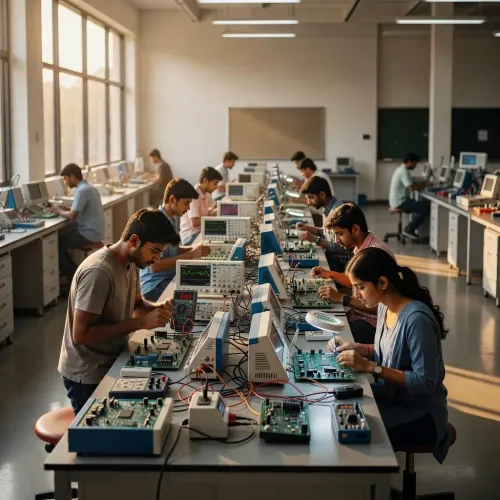
Bihar is one of India's most populous states, and closing service-delivery gaps at scale demands technology that works in low-connectivity, high-density environments. Bringing technical institutions — engineering colleges, research bodies, and digital agencies — into active collaboration with line departments is a recognition that in-house bureaucratic capacity alone cannot drive the transformation the state needs. The Chief Minister's instruction effectively tells both sides of that equation to stop waiting and start building.
Point of View
Not passive training grounds. In the broader arc of Indian state governance, Bihar's model — centralising reform intent at the CM level and cascading it downward — is a pattern shared by several reform-minded states, but its real test is always in departmental follow-through. Without named projects or timelines attached, the directive reads as agenda-setting; the pressure now shifts to whether it produces measurable outcomes before the next electoral cycle.
NationPress
29 Oct 2026
Frequently Asked Questions
What did Bihar CM Nitish Kumar direct government departments to do?
He directed all concerned departments and technical institutions to adopt innovations, increase mutual cooperation, and link technological solutions to public welfare.
When did Bihar CMO issue the technology directive?
The directive was shared by the Chief Minister's Office of Bihar on October 29, 2026 .
Why is Nitish Kumar pushing technology adoption in Bihar?
Nitish Kumar has focused on administrative modernisation since 2005, aiming to close service-delivery gaps in one of India's most populous states through better technology and inter-agency coordination.
Which institutions does the Bihar CM's technology directive cover?
The directive covers all concerned government departments as well as technical institutions, bringing both administrative and academic-technical bodies under the same mandate.
What should we watch for after this Bihar governance directive?
Follow-up announcements of specific projects, departmental action plans, or government-institution partnerships that translate the CM's instruction into on-the-ground programmes.