Bihar CM Nitish Directs Fast-Track Solar Feeders, Tubewells
Synopsis
Chief Minister Nitish Kumar has ordered officials to urgently complete solarisation of agricultural feeders and run state tubewells on solar power, aligning Bihar's farm infrastructure with PM-KUSUM goals and India's 500 GW renewable target by 2030.
Key Takeaways
CM Nitish Kumar directed officials on 24 September 2026 to fast-track solarisation of agricultural feeders in Bihar.
State-owned tubewells are to be converted to solar energy operation under the directive.
The push aligns with the PM-KUSUM scheme launched by the central government in 2019 to solarise farm power infrastructure.
Bihar's directive supports India's 500 GW non-fossil fuel capacity target by 2030 .
Solar tubewells will reduce dependence on diesel and grid power, directly benefiting smallholder farmers reliant on groundwater irrigation.
State discom subsidy burden is expected to ease as agricultural feeders shift to solar supply.
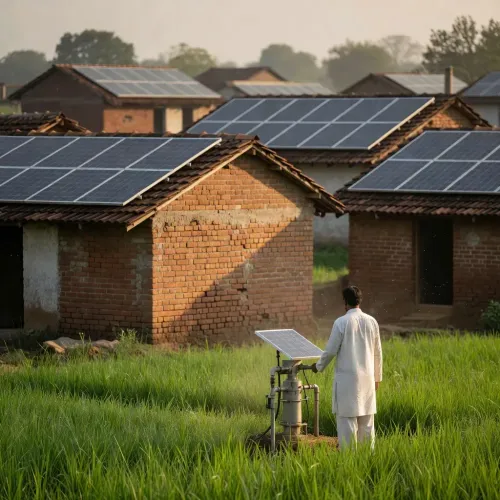
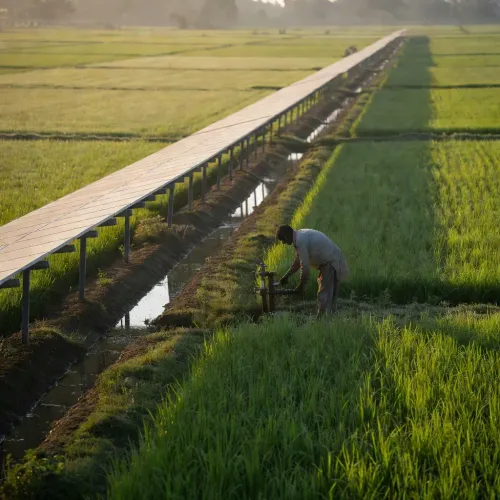
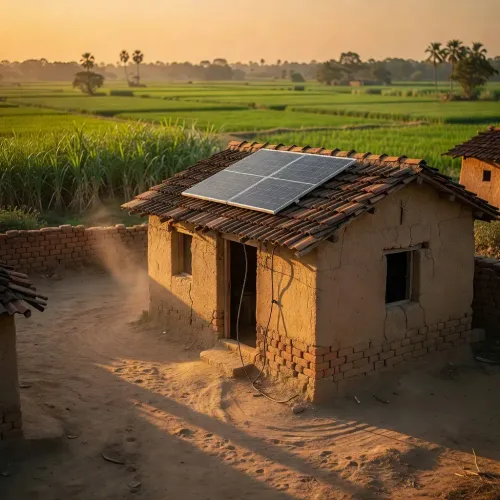
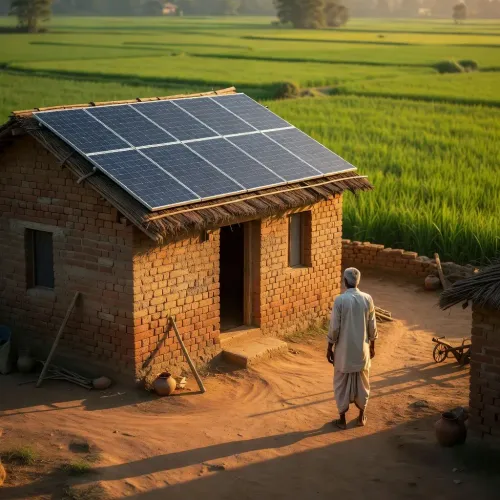
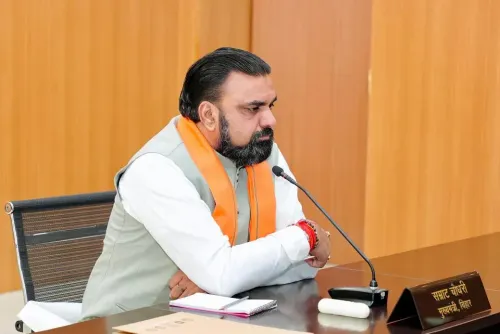
Bihar's farms could soon draw power straight from the sun. The Chief Minister's Office of Bihar announced on Thursday, 24 September 2026 that Chief Minister Nitish Kumar has directed officials to accelerate the solarisation of agricultural feeders and to run state-owned tubewells on solar energy — a move that puts clean, uninterrupted irrigation within reach of millions of farmers across the state.
The directive, shared by the official CMO account, instructs that 'kṛiṣhi feederon ke solārāijeśan kā kārya tejī se pūrā karne' — 'the work of solarising agricultural feeders must be completed rapidly' — and that state tubewells be converted to solar operation. The order signals impatience with the pace of an initiative that has been on Bihar's energy agenda for several years.PM-KUSUM and Bihar's renewable push
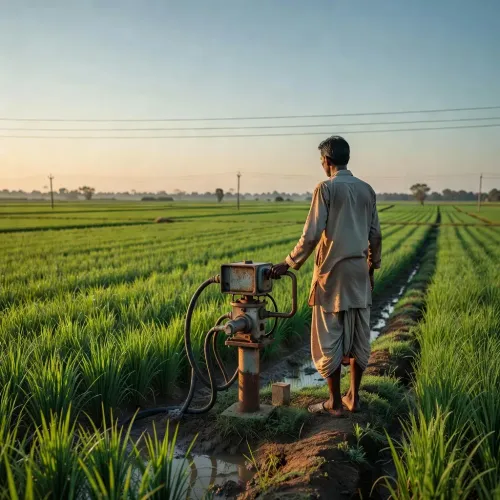
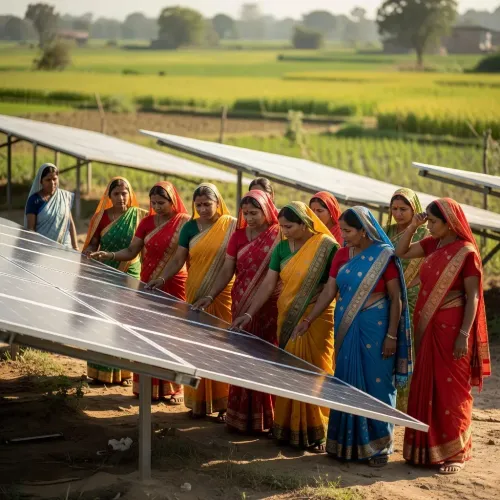
PM-KUSUM, the central government scheme launched by the Ministry of New and Renewable Energy in 2019, was designed precisely for moments like this: solarising agricultural feeders, replacing diesel pump sets with solar alternatives, and cutting the subsidy drain that grid-connected farm power imposes on state electricity distribution companies. Bihar has been a participating state, but ground-level execution has lagged behind political ambition — a pattern that the CM's fresh directive appears aimed squarely at reversing. Solar-powered tubewells matter beyond the electricity bill. Bihar's agriculture is heavily dependent on groundwater irrigation, and diesel or grid-dependent pump sets leave farmers exposed to power cuts and price volatility. A solar tubewell, once commissioned, delivers predictable, cost-free daytime irrigation — a genuine productivity unlock for smallholder farmers who dominate the state's agrarian landscape.Fitting into India's 500 GW non-fossil target
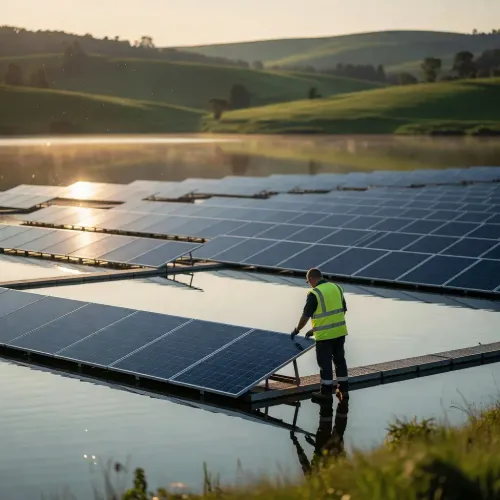
Nitish Kumar's directive lands inside a much larger national frame. India has committed to 500 GW of non-fossil fuel power capacity by 2030, and agricultural solarisation is one of the fastest routes states can travel to contribute. Every feeder converted reduces the load on thermal generation, cuts carbon emissions, and frees up grid capacity for other uses — a trifecta that aligns state-level agricultural policy with national climate goals. Several other states have used feeder solarisation aggressively to bring down their discom losses; Bihar's renewed push suggests the state government is watching those results and wants to close the gap. Progress reports on feeder-wise completion targets and any supplementary budget support in the next state or central allocation cycle will be the metrics that show whether Thursday's directive translates into action on the ground.For Bihar's farmers, the real test will be simple: water when they need it, powered by the sky above their fields — not a promise on a policy document.
Frequently Asked Questions
What did Bihar CM Nitish Kumar direct regarding solar energy for agriculture?
CM Nitish Kumar directed officials to rapidly complete the solarisation of agricultural feeders and to operate state-owned tubewells on solar energy, aiming to improve irrigation reliability for Bihar's farmers.
What is PM-KUSUM and how does it relate to Bihar?
PM-KUSUM is a central government scheme launched in 2019 to solarise agricultural feeders and replace diesel pump sets with solar alternatives. Bihar is a participating state, and Nitish Kumar's directive aims to accelerate implementation of this scheme.
How will solar tubewells benefit Bihar's farmers?
Solar-powered tubewells provide daytime irrigation without dependence on the grid or diesel, reducing costs and protecting farmers from power cuts — a significant advantage for smallholders reliant on groundwater.
How does Bihar's solarisation push connect to India's 2030 energy targets?
India aims for 500 GW of non-fossil fuel power capacity by 2030. Agricultural feeder solarisation in states like Bihar reduces thermal load and adds renewable capacity, directly supporting the national target.
What should we watch for next in Bihar's agricultural solarisation programme?
Key indicators will be state-level progress reports on feeder-wise completion targets and any additional budget allocations in upcoming Bihar state budgets or central scheme disbursements under PM-KUSUM.