Bihar CM Office Directs Solar Panel Upkeep, JEEViKA Push
Synopsis
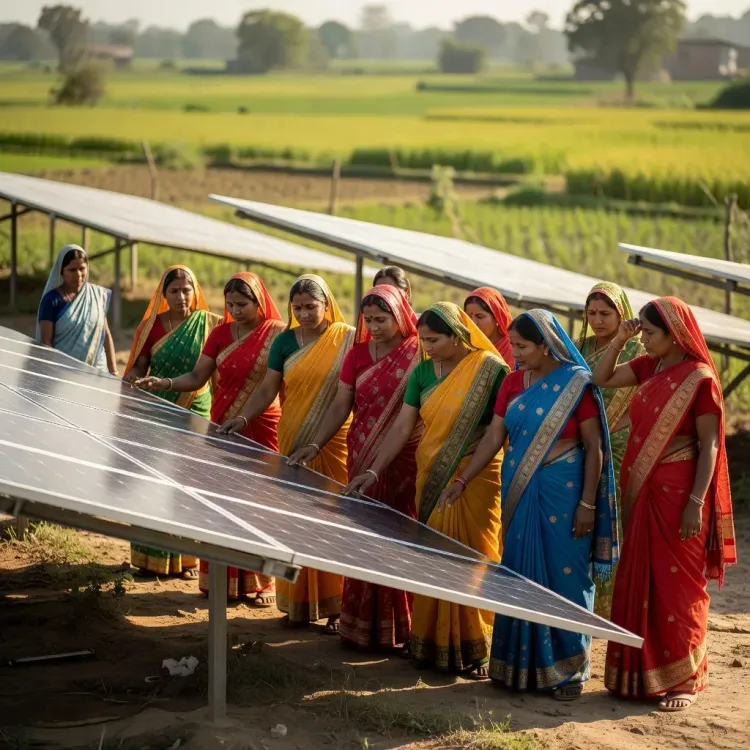
The Chief Minister's Office of Bihar has directed that installed solar panels receive regular maintenance and that JEEViKA women self-help group members be encouraged to set up solar plants in villages, integrating rural livelihoods with clean energy expansion.
Key Takeaways
The Chief Minister's Office of Bihar issued the directive on 25 May 2026 , attributed to CM Nitish Kumar .
The order mandates regular maintenance of all solar panels already installed across Bihar .
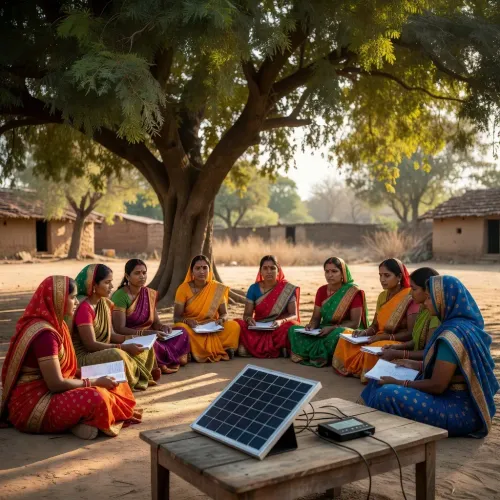
JEEViKA Didis — members of the state's women's self-help group network — are to be encouraged to install solar plants in rural areas.
JEEViKA was established in 2007 and is one of India's largest rural women's livelihood programmes.
The directive follows a broader pattern of Bihar integrating decentralised solar infrastructure with community-based implementation models.
Next steps include potential financing guidelines and monitoring frameworks for solar asset upkeep.
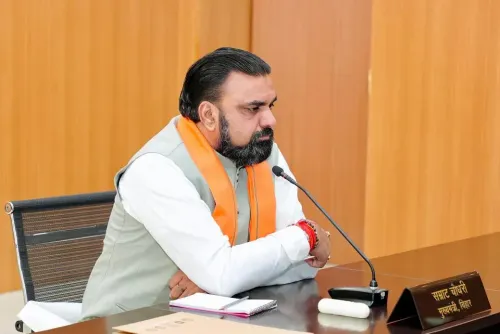
The Chief Minister's Office of Bihar, on Monday, 25 May 2026, issued a directive calling for regular maintenance of solar panels already installed across the state and encouraging JEEViKA women self-help group members — known as Jeevika Didis — to take up solar plant installation as a livelihood activity in rural areas.
Context
The post, shared from the official handle of the Chief Minister's Office, states: 'Unhoṅne nirdesh diya ki jahāṅ-jahāṅ solar panel sthāpit kiye gaye haiṅ, unka niyamit rakharakhāv sunishchit kiya jāye. Sāth hī grāmīṇ kṣetroṅ meṅ Jeevika Didiyon ko solar saṅyaṅtra sthāpit karne hetu protsāhit kiya jāye.' In English: 'He directed that wherever solar panels have been installed, their regular maintenance must be ensured. Additionally, JEEViKA Didis in rural areas should be encouraged to set up solar plants.' The directive is attributed to Chief Minister Nitish Kumar, Bihar's longest-serving chief minister and the architect of several rural infrastructure programmes in the state.Policy Backdrop
JEEViKA, formally the Bihar Rural Livelihoods Promotion Society, was established in 2007 to organise rural women into self-help groups and expand their economic opportunities. Over the years, the programme has grown into one of the largest women's livelihood networks in India, with millions of members across Bihar's villages. Bihar also joined national efforts under the Jawaharlal Nehru National Solar Mission from 2010 onward, which seeded decentralised solar infrastructure in rural pockets of the state. Maintenance directives of this nature typically follow the initial rollout phase of solar assets, aimed at protecting public investment and extending the operational life of installed equipment.Stakeholders and Impact
The directive has two distinct beneficiary groups. First, village households and institutions that depend on existing solar installations stand to gain from assured upkeep, reducing outages and equipment degradation. Second, JEEViKA Didi members — rural women already embedded in a structured self-help ecosystem — are being positioned as active participants in expanding Bihar's solar footprint rather than merely passive consumers. This dual approach aligns with India's broader emphasis on community-based renewable energy models, where women's groups serve as last-mile implementers and operators of clean-energy assets.What's Next
Attention will now turn to whether the state government issues formal guidelines or financing pathways — such as subsidies or low-interest loans — enabling JEEViKA groups to access capital for solar plant installation. State-level monitoring mechanisms for maintenance contracts on existing panels will also be a key indicator of follow-through. If structured support materialises, Bihar's model of integrating women's self-help infrastructure with renewable energy could serve as a replicable template for other states with large rural electricity gaps.Point of View
Not just installation numbers, will define programme outcomes. Folding JEEViKA into the solar supply chain is a politically astute move: it deepens CM Nitish Kumar's rural-women constituency while advancing the state's clean-energy credentials. The convergence of livelihood infrastructure and renewable energy is increasingly a template across Indian states, and Bihar's explicit institutional linkage between JEEViKA and solar plants could give it an edge in attracting central scheme funding. Whether the directive translates into measurable outcomes will depend on the financing architecture the state builds around it.
NationPress
9 Oct 2026
Frequently Asked Questions
What did the Bihar Chief Minister's Office say about solar panels?
The Chief Minister's Office of Bihar directed on 25 May 2026 that regular maintenance of all installed solar panels must be ensured, and that JEEViKA women self-help group members in rural areas should be encouraged to set up solar plants.
Who are JEEViKA Didis and what is their role in Bihar's solar push?
JEEViKA Didis are members of Bihar's women's self-help groups under the JEEViKA programme, established in 2007. The new directive asks that they be encouraged to install solar plants in villages, positioning them as active participants in rural clean-energy expansion.
What is the JEEViKA programme in Bihar?
JEEViKA, formally the Bihar Rural Livelihoods Promotion Society, was set up in 2007 to organise rural women into self-help groups for economic empowerment. It is one of India's largest such networks and has been used to deliver multiple state welfare initiatives.
Why is solar panel maintenance important for Bihar's rural areas?
Maintenance ensures that existing solar assets remain functional and cost-effective, protecting public investment and guaranteeing uninterrupted electricity access for village households and institutions that depend on decentralised solar power.
What is Bihar's history with solar energy in rural areas?
Bihar participated in national solar mission efforts from 2010 onward to expand decentralised solar infrastructure in villages. The state has since pursued incremental expansion of such assets, often linking them with community-based programmes like JEEViKA.