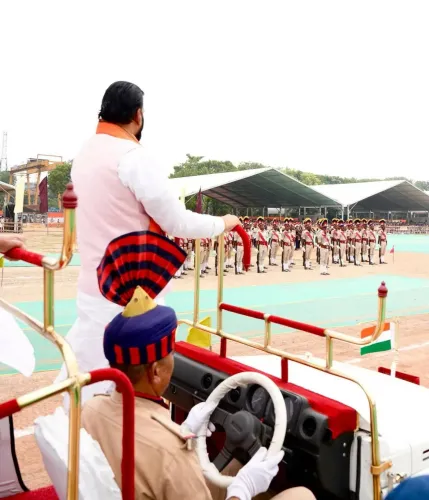
CM Bihar: Law and Order Top Priority, Police to Get Modern Resources

Synopsis
The Chief Minister's Office of Bihar declared on 17 July 2026 that law and order is the state's highest governance priority, with the government fully committed to modernising the Bihar Police through contemporary resources and equipment.
Key Takeaways
The Chief Minister's Office of Bihar posted the statement on 17 July 2026 .
The Chief Minister described law and order as the state government's highest priority .
The government reaffirmed full commitment to equipping Bihar Police with modern resources.
Bihar's police reform drive dates to post- 2005 elections and has included forensic labs, CCTV networks, and recruitment drives.
Stakeholders including Bihar's 13 crore residents and police personnel await concrete budget allocations to back the stated commitment.
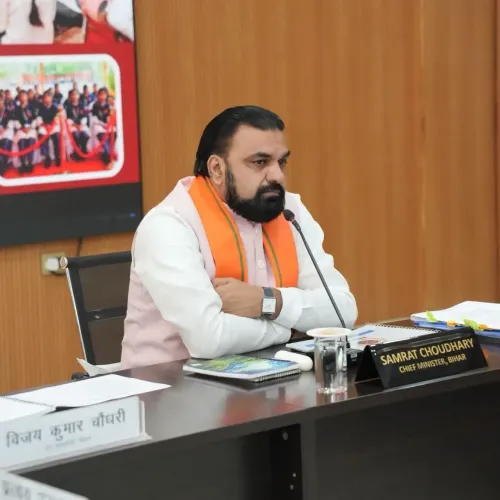
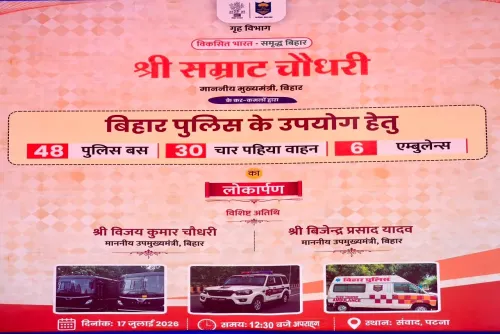
The Chief Minister's Office of Bihar shared a statement on 17 July 2026 in which the Chief Minister declared that law and order is the state government's highest priority, and reaffirmed full commitment to equipping the police force with modern resources.
The post, shared from the official @officecmbihar account, quoted the Chief Minister as saying: 'Kanoon-vyavastha rajya sarkar ki sarvoch prathamikta hai. Police bal ko aadhunik sansadhano se sashakt banane ke liye rajya sarkar poori tarah pratibaddh hai.' ('Law and order is the state government's highest priority. The state government is fully committed to empowering the police force with modern resources.')
Context
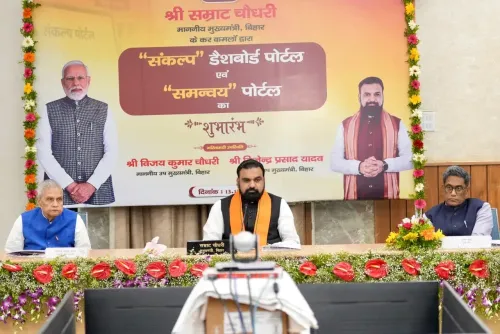
The statement was made at an unspecified official occasion where the Chief Minister addressed matters of internal security. Bihar's political leadership has repeatedly placed public order at the centre of its governance agenda, a position that dates to the post-2005 reform era when the state undertook a sustained effort to reverse years of elevated crime rates.
The reiteration of this commitment in July 2026 signals that police modernisation remains an active, ongoing policy concern rather than a resolved one.
Policy Backdrop
Since the mid-2000s, successive administrations in Bihar have channelled state budget resources into upgrading the Bihar Police through forensic laboratories, CCTV surveillance networks, and periodic recruitment drives. These measures were designed to improve both the operational capacity of the force and public confidence in the criminal justice system.
The pattern mirrors strategies adopted in several other Indian states where law-and-order metrics are closely watched by investors and voters alike. A modern, well-equipped police force is increasingly seen as a prerequisite for attracting industry and sustaining economic development in large states.
Stakeholders and Impact
Bihar Police personnel stand to benefit most directly from any fresh procurement of equipment, vehicles, communication systems, or training programmes that may follow from this commitment. For the roughly 13 crore residents of Bihar, improved policing translates into expectations of faster response times and better crime detection.
Civil society groups and opposition parties will likely scrutinise whether the stated commitment is followed by concrete budget allocations in the coming assembly session, as similar pledges in past years have been measured against actual expenditure outcomes.
What's Next
Observers will watch the upcoming state budget discussions and assembly proceedings for specific line items tied to police modernisation — including technology procurement, new recruitment notifications, and infrastructure upgrades for district police stations across Bihar.
If the government moves from stated commitment to announced programmes, it would mark a continuation of a two-decade-long reform trajectory; the pace and scale of those announcements will determine whether this statement is seen as routine affirmation or a precursor to a significant new initiative.
Point of View
Likely ahead of budget or legislative activity. The real test will be whether the rhetoric is matched by measurable allocations — forensic infrastructure, recruitment numbers, or technology contracts — that analysts and opposition can scrutinise. Until specifics emerge, the statement functions primarily as a political signal to voters and potential investors that Bihar's law-and-order gains are being actively defended.
NationPress
16 Oct 2026
Frequently Asked Questions
What did the Bihar Chief Minister say about law and order on 17 July 2026?
The Chief Minister stated that law and order is the state government's highest priority and that the government is fully committed to empowering the Bihar Police with modern resources.
What is the Bihar government doing to modernise the police force?
The Bihar government has pledged to equip the police force with modern resources. Past modernisation efforts have included forensic laboratories, CCTV surveillance networks, and recruitment drives.
When did Bihar's police reform drive begin?
Bihar's sustained police reform effort began after the 2005 state elections, when the incoming government made restoring public order a central governance objective.
Who benefits from Bihar's police modernisation plans?
Bihar Police personnel benefit directly through better equipment and training, while Bihar's roughly 13 crore residents stand to gain through improved public safety and faster law enforcement response.
What should I watch for next regarding Bihar police modernisation?
Watch the upcoming Bihar state budget and assembly sessions for specific allocations on police technology procurement, new recruitment notifications, and district police station upgrades.