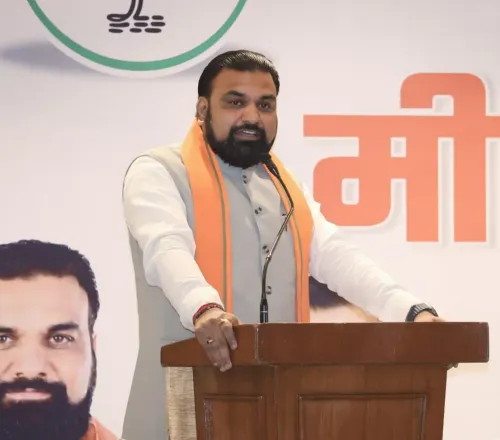
Bihar CM Samrat Choudhary greets broadcasters on National Broadcasting Day
Synopsis
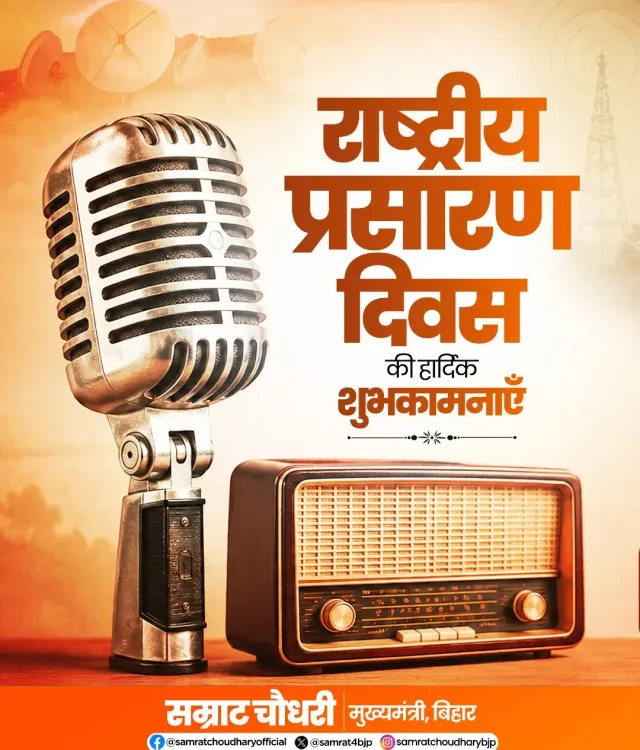
Bihar Chief Minister Samrat Choudhary on 23 July 2026 extended National Broadcasting Day greetings to journalists, announcers and technical media staff, calling strong communication and credible information the foundation of an aware society. The day marks India's first radio broadcast in 1927.
Key Takeaways
Bihar CM Samrat Choudhary posted National Broadcasting Day greetings on 23 July 2026 via X.
He addressed journalists, announcers, technical experts and all broadcast media personnel.
His message stated that 'strong communication and credible information are the identity of an aware society.' National Broadcasting Day marks India's first radio broadcast by the Radio Club of Bombay on 23 July 1927 .
Prasar Bharati , established under the Prasar Bharati Act, 1990 , oversees All India Radio and Doordarshan .
No new scheme or policy announcement was made alongside the greeting.
Bihar Chief Minister Samrat Choudhary on Thursday, 23 July 2026, extended greetings to journalists, announcers, technical experts and all media personnel associated with broadcasting on the occasion of National Broadcasting Day, underlining that strong communication and credible information are the hallmarks of an aware society.
Context
Posting in Hindi on X, CM Choudhary wrote: 'सशक्त संचार और विश्वसनीय सूचना ही जागरूक समाज की पहचान है' ('Strong communication and credible information are the identity of an aware society'). The message was addressed to everyone connected with broadcast media — from reporters and announcers to the technicians who keep transmission running.
The greeting follows a well-established pattern among central and state leaders who use National Broadcasting Day to acknowledge the contribution of electronic media to public life. The post was tagged with #NationalBroadcastingDay.
Policy Backdrop
National Broadcasting Day is observed every year on 23 July to commemorate the first radio broadcast in India, made by the Radio Club of Bombay on 23 July 1927 — nearly a century ago. That landmark transmission laid the foundation for what would eventually become a vast public broadcasting architecture across the country.
Prasar Bharati, the statutory autonomous public broadcaster established under the Prasar Bharati Act, 1990 — which came into force in 1997 — today oversees All India Radio and Doordarshan, the two pillars of India's public service broadcasting. All India Radio expanded the reach of news, education and development programmes to remote corners of the country after independence, a role that continues alongside newer digital formats.
Stakeholders and Impact
The message directly recognises three categories of media workers: journalists who report, announcers who deliver content on air, and technical staff who sustain broadcast infrastructure. Successive governments have linked reliable broadcasting with citizen awareness on governance, agriculture and public health — a thread that runs from the earliest radio transmissions to today's digital streams.
For Bihar, a state with a large rural population where radio and television have historically served as primary information channels, the acknowledgment carries particular resonance. Community radio and regional All India Radio stations continue to serve listeners in areas where internet penetration remains uneven.
What's Next
The day typically sees state and central bodies organising events honouring broadcast professionals, with no new scheme or policy announcement indicated in the post. Observers will watch for any parliamentary debate on proposed amendments to the Prasar Bharati Act or updated broadcasting codes that could reshape the regulatory landscape for both public and private electronic media in coming sessions.
Point of View
The message broadens the frame beyond editorial workers to the infrastructure of broadcasting, reflecting a more inclusive understanding of the media ecosystem. The reference to 'strong communication' also dovetails with the ruling party's emphasis on direct-to-citizen information delivery through digital and broadcast platforms. Such observances, while ceremonial, help state governments signal their relationship with the media community ahead of future policy conversations on broadcasting regulation.
NationPress
23 Jul 2026
Frequently Asked Questions
Why is National Broadcasting Day celebrated on 23 July?
National Broadcasting Day is observed on 23 July every year to mark the first radio broadcast in India, made by the Radio Club of Bombay on 23 July 1927 .
What did Bihar CM Samrat Choudhary say on National Broadcasting Day 2026?
CM Samrat Choudhary extended greetings to journalists, announcers, technical experts and all broadcast media personnel, stating that 'strong communication and credible information are the identity of an aware society.'
What is Prasar Bharati and what does it do?
Prasar Bharati is India's statutory autonomous public broadcaster, established under the Prasar Bharati Act, 1990 and operational from 1997 . It oversees All India Radio and Doordarshan .
When did All India Radio start broadcasting in India?
The origin of public radio broadcasting in India dates to 23 July 1927 , when the Radio Club of Bombay made the country's first radio broadcast, a date now commemorated as National Broadcasting Day.
Who is Samrat Choudhary?
Samrat Choudhary is the Chief Minister of Bihar and a senior leader of the Bharatiya Janata Party (BJP) , who has held the post since 2025.