Rajnath Singh backs Fast Track Courts for paper leak cases

Synopsis
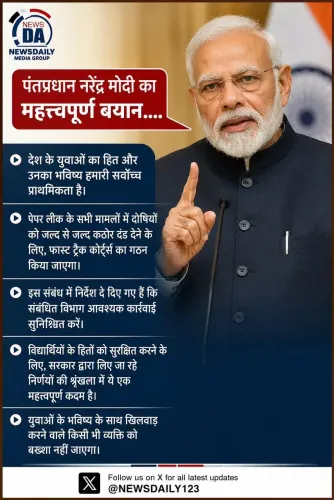
Union Defence Minister Rajnath Singh on 23 July 2026 endorsed the Modi government's move to establish Fast Track Courts for paper leak cases, framing it as a decisive commitment to protecting the futures of India's youth aspirants from examination fraud.
Key Takeaways
Rajnath Singh publicly backed the Modi government's decision to set up Fast Track Courts specifically for paper leak cases on 23 July 2026 .
He described the move as reflecting PM Modi's 'firm resolve and unwavering commitment' towards empowering youth.
Fast Track Courts were first introduced in India in 2000 following 11th Finance Commission recommendations to clear case backlogs.
In 2019 , the Union government had already extended Fast Track Courts to POCSO and rape cases , establishing a precedent for category-specific judicial fast-tracking.
Formal details on the number, funding and jurisdiction of the new courts are awaited from the Ministry of Law and Justice .
The move targets organised networks responsible for leaking question papers of national and state-level competitive examinations.
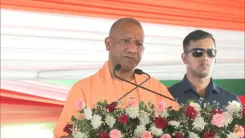
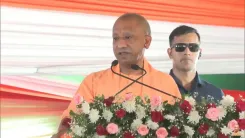
Union Defence Minister Rajnath Singh on Thursday, 23 July 2026 backed the Modi government's decision to establish Fast Track Courts for speedy trials in paper leak cases, calling it a reflection of Prime Minister Narendra Modi's firm resolve to protect the aspirations of India's youth.
Context
In his post, Rajnath Singh stated that 'securing the future of India's youth is the topmost priority of PM Shri Narendra Modi-led NDA Government.' He described the decision to set up Fast Track Courts for paper leak cases as a 'decisive step' that 'will ensure swift and strict action against those who jeopardize the aspirations and future of our youth.'
Paper leak incidents in national-level competitive examinations have repeatedly triggered public outrage, with student aspirants demanding accountability and faster judicial redressal. The announcement of dedicated Fast Track Courts is positioned by the government as a direct response to those demands.
Policy Backdrop
Fast Track Courts are not a new instrument in India's judicial architecture. They were first recommended by the 11th Finance Commission in 2000 to address mounting case backlogs across district courts. In 2019, the Union government extended the model specifically to cases under the Protection of Children from Sexual Offences Act and rape-related offences, fast-tracking some of the most sensitive criminal trials.
Extending the Fast Track Court mechanism to paper leak cases marks a further expansion of this model into the domain of examination fraud — an area that has acquired significant political and social salience. Successive administrations have used specialised courts to signal both urgency and institutional seriousness on issues that directly affect large sections of the population.
The Ministry of Law and Justice is expected to issue notifications detailing the number, funding, and jurisdiction of the new courts. Any accompanying amendments to the Bharatiya Nyaya Sanhita or existing examination laws would likely come up in the next parliamentary session.
Stakeholders and Impact
The primary beneficiaries of this move are the millions of students and youth aspirants who appear each year for national and state-level competitive examinations. Paper leaks compromise the integrity of these processes, erasing months or years of preparation for candidates who had no role in the fraud.
Beyond students, the decision affects examination-conducting bodies, coaching institutions, and state governments that administer their own recruitment tests. Swift judicial action through dedicated courts could serve as a deterrent against organised networks that profit from leaking question papers.
What's Next
The government's stated commitment now moves to implementation. Formal notifications from the Ministry of Law and Justice on the operational framework — including the number of courts, their geographic spread, funding allocation, and the categories of cases they will handle — will determine how quickly the initiative translates into actual trials.
If Fast Track Courts for paper leak cases are operationalised with dedicated prosecutors and time-bound disposal mandates, they could set a precedent for treating examination fraud as a category of crime warranting the same institutional urgency as offences against children or economic crimes. The broader test will be whether the speed of judicial action matches the scale of public expectation.
Point of View
The government is borrowing from a proven institutional playbook — one it used effectively for POCSO cases in 2019 — and applying it to a new category of public grievance. The move reflects a deliberate effort to convert judicial reform into a youth-facing political narrative ahead of state elections where student voters are a significant constituency. Whether the courts are operationalised swiftly will determine if this remains a statement of intent or becomes a credible deterrent.
NationPress
23 Jul 2026
Frequently Asked Questions
What are Fast Track Courts in India?
Fast Track Courts are specialised judicial bodies set up to expedite trials in specific categories of cases. They were first established in India in 2000 on the recommendation of the 11th Finance Commission to reduce case backlogs, and were later extended in 2019 to handle POCSO and rape cases.
Why is the government setting up Fast Track Courts for paper leak cases?
The government has cited the need for swift and strict action against those who compromise the integrity of competitive examinations. Paper leak incidents have repeatedly disrupted national and state-level recruitment processes, harming lakhs of student aspirants.
What did Rajnath Singh say about Fast Track Courts for paper leaks?
Defence Minister Rajnath Singh said the decision reflects PM Modi's 'firm resolve and unwavering commitment' to empowering youth, calling it a 'decisive step' that will ensure swift justice against those who jeopardise the futures of young aspirants.
Will Fast Track Courts for paper leaks be different from regular courts?
Yes, Fast Track Courts are designed for quicker case disposal with dedicated judges and streamlined procedures. Formal details on their number, funding and jurisdiction are yet to be notified by the Ministry of Law and Justice.
Which ministry oversees Fast Track Courts in India?
The Ministry of Law and Justice is responsible for notifying, funding and overseeing the operational framework of Fast Track Courts in India.