Bihar CM: Technical Education at ₹10 in All 38 Districts
Synopsis
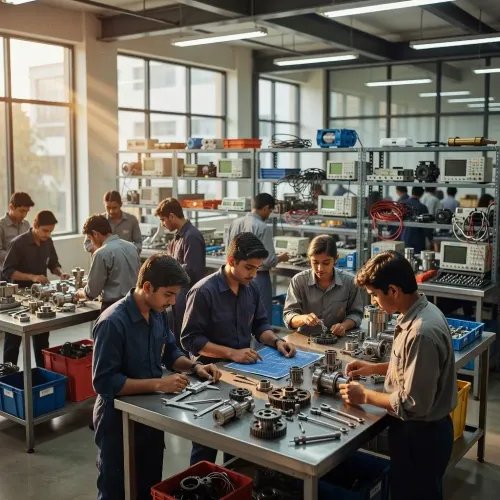
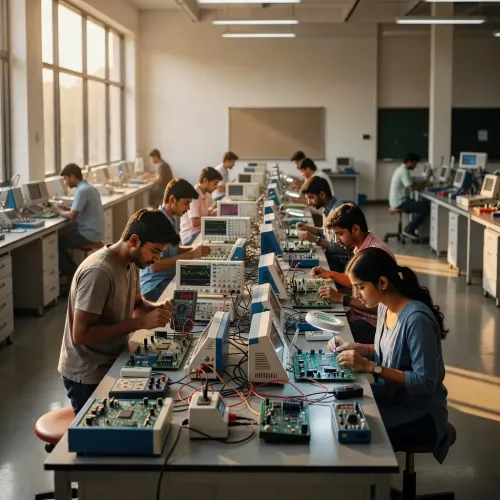
The Chief Minister's Office of Bihar quoted CM Nitish Kumar stating that engineering colleges across all 38 districts charge just ₹10 and polytechnic institutes charge just ₹5 in fees, aiming to ensure equal access to quality technical education for every student in the state.
Key Takeaways
The Chief Minister's Office of Bihar posted on 18 July 2026 quoting CM Nitish Kumar on technical education fees.
Government engineering colleges across all 38 districts of Bihar are charging a nominal fee of just ₹10 .
Government polytechnic institutes in the state are charging an even lower nominal fee of ₹5 .
The stated goal is to provide equal opportunity for quality technical education to every student, regardless of financial background.
The policy builds on Bihar's decade-long effort since 2005 to expand and subsidise public technical education infrastructure.
Rural youth, first-generation students, and lower-income households are the primary intended beneficiaries of the scheme.
The Chief Minister's Office of Bihar, in a reply posted on X (formerly Twitter) on 18 July 2026, quoted Chief Minister Nitish Kumar stating that technical education is being made available at a nominal fee of just ₹10 at engineering colleges and ₹5 at polytechnic institutes across all 38 districts of the state.
The post, a reply to user @samrat4bjp, carried the Chief Minister's words in Hindi: 'राज्य के सभी 38 जिलों के इंजीनियरिंग कॉलेजों में मात्र ₹10 तथा पॉलिटेक्निक संस्थानों में मात्र ₹5 के नाममात्र शुल्क पर तकनीकी शिक्षा उपलब्ध कराई जा रही है' ('Technical education is being provided at a nominal fee of just ₹10 in engineering colleges and ₹5 in polytechnic institutes across all 38 districts of the state'). The stated aim is to ensure 'equal opportunity for every student to receive quality education.'
Context
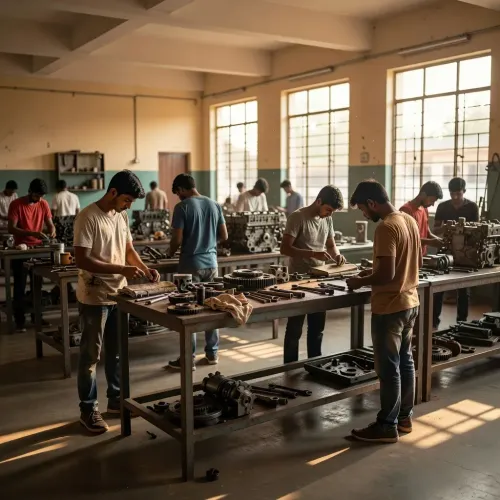
Bihar has long grappled with limited access to affordable professional and technical education, historically prompting large-scale out-migration of students to other states. The current administration's push to place government engineering colleges and polytechnic institutes in every district is framed as a corrective to this structural gap. By pegging fees at near-zero levels, the state signals that cost should not be a barrier to technical training for any student, regardless of household income.Policy Backdrop
Since 2005, successive Bihar governments under Chief Minister Nitish Kumar have steadily expanded the footprint of public technical institutions, establishing new government engineering colleges in districts that previously had none. Alongside infrastructure expansion, the state has introduced successive reductions in tuition fees and layered scholarship programmes for students from economically weaker sections. The nominal-fee model announced in this post represents the furthest point along that trajectory, effectively making tuition costs negligible at state-run institutions. This approach mirrors a broader pattern across lower per-capita-income Indian states, where governments have used heavily subsidised public institutions to raise enrolment from rural and lower-income households and to compete with the high fees charged by private technical colleges.Stakeholders and Impact
The primary beneficiaries are engineering degree students and polytechnic diploma students enrolled in government institutions across all 38 districts of Bihar. Rural youth, first-generation college-goers, and students from families below or near the poverty line stand to gain the most, as even modest fee structures can be prohibitive for such households. Polytechnic institutes, which offer shorter diploma programmes focused on vocational and applied technical skills, have historically served students who cannot afford or qualify for four-year degree programmes, making the ₹5 fee particularly significant for this cohort. The policy also carries implications for private technical colleges in the state, which may face pressure on enrolment if government seats at negligible cost become more widely available and better resourced.What's Next
Attention will now turn to district-level enrolment figures and the quality of infrastructure at these colleges for the current academic year. Questions around faculty strength, laboratory facilities, and accreditation status will determine whether the nominal-fee access translates into meaningful educational outcomes. Any follow-up announcements on seat expansion, hostel facilities for outstation students, or industry linkages for placements would indicate how comprehensively the state intends to back its access-first policy with outcomes-focused investment. If enrolment data confirms a surge in first-generation technical students, Bihar's model could influence similar policy moves in other states with comparable socioeconomic profiles.Point of View
The government shifts the political conversation from 'access' to 'quality' — a harder promise to keep and one that enrolment data and accreditation audits will eventually test. The move also serves an electoral logic: in a state where out-migration of educated youth is a persistent grievance, a visible commitment to affordable local technical education addresses a real and felt concern. Whether the infrastructure behind the ₹10 promise matches its ambition will determine if this becomes a replicable model or a cautionary tale.
NationPress
17 Oct 2026
Frequently Asked Questions
What is the fee for engineering colleges in Bihar government institutions?
According to a statement by Chief Minister Nitish Kumar shared by the Chief Minister's Office of Bihar on 18 July 2026, the fee at government engineering colleges across all 38 districts of Bihar is just ₹10.
What is the fee at government polytechnic institutes in Bihar?
CM Nitish Kumar stated that government polytechnic institutes in Bihar charge a nominal fee of just ₹5, making diploma-level technical education nearly free for students.
How many districts in Bihar have government engineering colleges?
As per the Chief Minister's statement, all 38 districts of Bihar have government engineering colleges offering technical education at the nominal fee of ₹10.
Why has Bihar set such low fees for technical education?
The stated reason is to ensure equal opportunity for every student to receive quality technical education, regardless of their financial background. Bihar has historically seen significant out-migration of students seeking affordable technical training in other states.
Who benefits most from Bihar's nominal technical education fee policy?
Rural youth, first-generation college students, and students from lower-income households benefit most, as even small fees can be a barrier for these groups. Polytechnic students in particular gain from the ₹5 fee, since diploma programmes serve those who cannot afford longer degree courses.