Bihar CMO Links Road Safety Drive to India's Vision-2030 Goal
Synopsis
Bihar's Chief Minister's Office has explicitly linked a state road safety initiative to India's Vision-2030 target of cutting road accident fatalities by 50 per cent, underscoring the federal coordination required to meet one of India's most consequential public health goals.
Key Takeaways
The Chief Minister's Office of Bihar stated on 26 September 2026 that a state road safety initiative is aligned with India's Vision-2030 framework.
Vision-2030 sets a target of reducing road accident fatality rates by 50 per cent for India.
India's National Road Safety Policy dates to 2010 , providing the foundational framework for such state-level action.
India aligned its domestic road safety goals with the UN Decade of Action for Road Safety (2011–2020) , embedding global accountability.
State-level implementation is central to India's federal transport policy, with Bihar's progress feeding into the national fatality count tracked by the Ministry of Road Transport and Highways .
A single statistic frames everything: India wants to cut road accident deaths by 50 per cent by 2030, and Bihar is now formally aligning its own initiatives to that national clock. The Chief Minister's Office of Bihar signalled on Saturday, 26 September 2026 that a state-level road safety initiative is being positioned as a direct step toward that target.
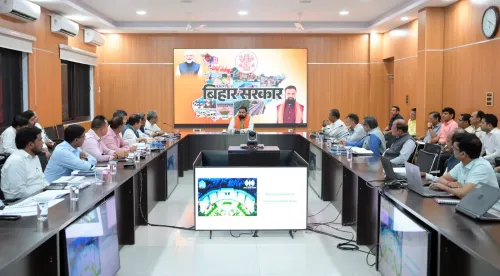
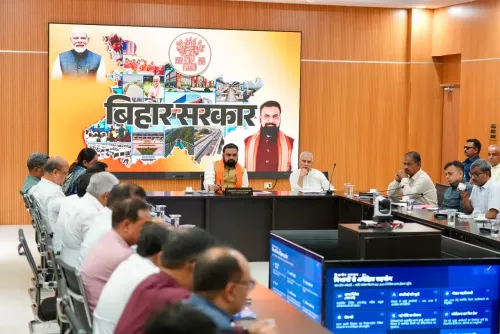
The post, replying to its own handle, stated in Hindi: 'यह पहल भारत सरकार के Vision-2030 के तहत सड़क दुर्घटनाओं में मृत्यु दर को 50 प्रतिशत तक कम करने के लक्ष्य की दिशा में महत्वपूर्ण कदम है' — 'This initiative is an important step toward the goal of reducing road accident fatality rates by 50 per cent under the Government of India's Vision-2030.'
India's road safety target and what 50 per cent means in practice
Road deaths are not an abstraction in India — the country has historically recorded among the highest road fatality numbers in the world, making reduction targets a live public health imperative as much as a policy checkbox. The National Road Safety Policy, adopted as far back as 2010, laid the institutional groundwork, and India's alignment with the UN Decade of Action for Road Safety (2011–2020) embedded those commitments into a global accountability framework.
Vision-2030, as referenced by the Bihar CMO, places a 50-per-cent fatality reduction at the centre of India's road safety ambition — combining infrastructure upgrades, enforcement improvements, and behavioural change campaigns. Hitting that number would require sustained, coordinated action from both the Ministry of Road Transport and Highways at the centre and every state transport department in the federal chain.
Bihar's role in federal road safety architecture
Bihar's explicit framing of its initiative within the national Vision-2030 target is a statement about how the state sees its own accountability. India's transport policy runs on a federal spine: the Centre sets the direction and the data benchmarks; states execute on the ground — fixing black spots, deploying traffic enforcement, retrofitting dangerous stretches of highway.
For a high-population state like Bihar, where road networks serve dense rural and urban corridors alike, the stakes are substantial. Any measurable state-level reduction feeds directly into the national aggregate that the Centre will report against the 2030 deadline. The CMO's language — 'important step' (महत्वपूर्ण कदम) — signals institutional intent, not just rhetorical alignment.
The real test will come in implementation data: accident and fatality figures tracked by the Ministry of Road Transport and Highways, and state-level reports that map Bihar's progress against the national curve. Those numbers will tell whether this step moves the needle — or marks time.
Point of View
Bihar's CMO sets a quantifiable bar that future accountability reporting will have to address. Whether this marks a genuine operational shift or a rhetorical positioning will become clear only when the Ministry of Road Transport and Highways publishes updated state-level fatality data.
NationPress
26 Sept 2026
Frequently Asked Questions
What is India's Vision-2030 road safety target?
India's Vision-2030 framework sets a goal of reducing road accident fatality rates by 50 per cent by the year 2030, coordinated through the Ministry of Road Transport and Highways in partnership with state governments.
What road safety initiative has the Bihar government announced?
The Chief Minister's Office of Bihar described a road safety initiative on 26 September 2026 as an 'important step' toward India's Vision-2030 goal, though the specific operational details of the initiative were not elaborated in the post.
How does Bihar's road safety drive connect to central government policy?
Bihar's initiative is framed as part of the federal road safety architecture in which the Centre sets national targets under Vision-2030 and states implement ground-level measures such as infrastructure upgrades and enforcement, with progress aggregated nationally.
What is India's National Road Safety Policy?
India adopted the National Road Safety Policy in 2010 to provide an institutional framework for reducing road accidents, later reinforced by alignment with the UN Decade of Action for Road Safety from 2011 to 2020.
Why do road safety targets matter so much in India?
India has historically recorded among the highest road fatality numbers globally, making reduction targets a major public health and economic priority — which is why both the Centre and states treat Vision-2030's 50-per-cent goal as a serious planning benchmark.