Bihar CMO orders 100 Urdu school sites identified in Kishanganj
Synopsis
The Chief Minister's Office of Bihar has directed the identification of 100 suitable sites in Kishanganj district for establishing Urdu-medium schools. The order, part of a broader set of directives, targets the Seemanchal region's large Urdu-speaking minority population and extends Bihar's long-standing minority education expansion policy.
Key Takeaways
The Chief Minister's Office of Bihar issued directions on 3 July 2026 to identify 100 suitable sites for Urdu-medium schools in Kishanganj district .
The announcement is part of a broader set of directives, as indicated by the phrase 'in addition' in the original post.
Kishanganj lies in the Seemanchal region of eastern Bihar, which has a large Urdu-speaking Muslim population and below-average literacy rates.
Bihar has maintained state-supported Urdu-medium schooling under the Bihar State Madrasa Education Board framework since at least the 2010s.
No deadline, budget figure, or specific executing authority was mentioned in the announcement; district-level follow-through will be key.
Parallel measures such as Urdu-medium teacher recruitment and budget allocation are expected to be watched as implementation indicators.
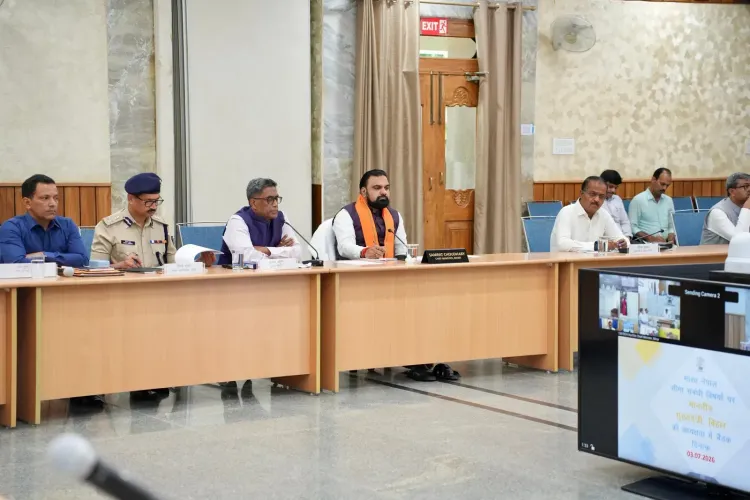
The Chief Minister's Office of Bihar announced on Friday, 3 July 2026 that directions have been issued to identify 100 suitable sites in Kishanganj district for the establishment of Urdu-medium schools, with instructions to ensure the necessary follow-up action is taken promptly.
Context
The post, shared from the official @officecmbihar handle, states: 'Kishanganj jile mein Urdu vidyalayon ki sthapna ke liye 100 upyukt sthalon ki pehchaan kar aavashyak kaarvaai sunishchit karne ka bhi nirdesh diya' — translated: 'Directions have also been given to identify 100 suitable sites in Kishanganj district for the establishment of Urdu schools and to ensure the necessary action.' The use of the word 'atirikt' (in addition) signals this announcement is part of a broader set of directives issued in the same communication.
Kishanganj is a district in the Seemanchal region of eastern Bihar, home to a large Urdu-speaking Muslim population. The district has historically recorded literacy rates below the state average, making it a focal point for minority education interventions.
Policy Backdrop
Bihar has maintained a framework of state-supported Urdu-medium schooling as part of its minority education policy, administered in part through the Bihar State Madrasa Education Board. During the 2015–2020 period, the state undertook targeted site identification drives for new primary and middle schools across Seemanchal districts, including Kishanganj, specifically to address persistent enrolment gaps among linguistic minorities.
Under Chief Minister Nitish Kumar, who has led Bihar since 2005 with brief interruptions, successive education expansion programmes have included Urdu-medium sections alongside madrasa modernisation efforts. The latest directive appears to extend this incremental approach, focusing on physical infrastructure as a prerequisite for new school establishment.
Stakeholders and Impact
The primary beneficiaries of the proposed schools would be Urdu-speaking students and minority communities concentrated in the Seemanchal belt, a cluster of districts — Kishanganj, Araria, Purnea, and Katihar — that share borders with West Bengal, Nepal, and Bangladesh. Access to mother-tongue-medium instruction at the foundational level is widely associated with improved enrolment and retention rates among linguistic minority children.
Education administrators at the district level, along with local bodies responsible for land identification, will be central to executing the directive. The announcement does not specify a deadline, budget allocation, or the authority conducting the site survey, meaning implementation pace will depend on follow-through at the district level.
What's Next
Observers will watch for district-level reports confirming the finalisation of the 100 sites, subsequent budget provisions in education department orders, and any parallel announcements on Urdu-medium teacher recruitment — a recurring bottleneck in earlier school expansion rounds in the region. The broader directive of which this announcement forms a part may contain additional measures for minority education infrastructure in Bihar that have yet to be made public.
Point of View
Infrastructure-first education expansion — cautious but incremental. Seemanchal has long been an electoral and developmental priority for the state government, and announcements targeting its Urdu-speaking population often serve dual purposes: addressing genuine enrolment deficits and consolidating political goodwill in a region that borders three states. The absence of a budget figure or timeline in the announcement leaves the directive's urgency ambiguous, a pattern seen in earlier rounds of minority school expansion in the state. Whether this round translates faster into functional schools than previous drives will depend on district administration capacity and the speed of land acquisition.
NationPress
2 Oct 2026
Frequently Asked Questions
Why is Bihar opening Urdu-medium schools in Kishanganj?
Kishanganj has a large Urdu-speaking Muslim population and historically low literacy rates. The Bihar government has directed identification of 100 sites to expand Urdu-medium schooling as part of its minority education policy targeting the Seemanchal region.
How many Urdu school sites are being identified in Kishanganj?
The Chief Minister's Office of Bihar has directed the identification of 100 suitable sites in Kishanganj district for the establishment of new Urdu-medium schools.
What is Seemanchal and why does it matter for Bihar education policy?
Seemanchal is a cluster of eastern Bihar districts — Kishanganj, Araria, Purnea, and Katihar — with concentrated linguistic and religious minority populations. The region has been a recurring focus of minority education initiatives due to below-average enrolment and literacy figures.
Who oversees Urdu-medium schools in Bihar?
Urdu-medium schooling in Bihar falls partly under the Bihar State Madrasa Education Board , with the state education department also supporting Urdu-medium sections in regular government schools.
What happens after the 100 sites are identified in Kishanganj?
After site identification, the expected next steps include budget allocation in education department orders, land acquisition or approval by local bodies, and recruitment of Urdu-medium teachers — all of which have been bottlenecks in past expansion rounds in the region.