Bihar CMO: State Seeks 10% Share in National Industry
Synopsis
The Chief Minister's Office of Bihar declared on 19 November 2026 that Bihar will push to secure a 10 per cent share in national industries and revenue, proportional to the state's roughly 10 per cent of India's population — reigniting a long-standing demand rooted in the 2000 Jharkhand bifurcation.
Key Takeaways
Bihar's CMO announced on 19 November 2026 that efforts will be made to ensure the state gets a 10% share in national industries and revenue.
The demand is anchored in Bihar's approximately 10% share of India's total population .
Bihar lost major industrial and mineral assets when Jharkhand was bifurcated in 2000 , creating a lasting economic imbalance.
The state has historically sought Special Category Status and greater central investment to bridge its development gap.
Future Finance Commission devolution formulas and Union Budget allocations for industrial corridors are the key policy levers to watch.
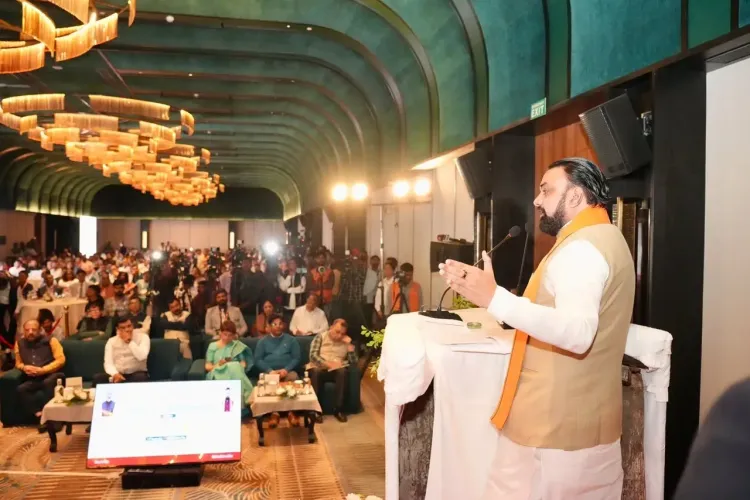
Bihar's population accounts for roughly one in every ten Indians — and now the state's leadership is demanding the economy reflect that arithmetic. The Chief Minister's Office of Bihar posted on X on 19 November 2026, quoting a senior official's declaration that efforts will be made to secure Bihar's 10 per cent share in national industries and revenue, commensurate with the state's approximately 10 per cent contribution to India's total population.
The post quoted the official as saying: 'Efforts will be made to ensure that Bihar's share in national industries and revenue is proportional to its roughly 10 per cent share of the country's population.'The 2000 Bifurcation and Its Lasting Economic Wound
The demand did not emerge in a vacuum. When Jharkhand was carved out of Bihar in November 2000, the new state took with it the bulk of Bihar's mineral wealth and established industrial base — coal fields, steel ancillaries, and dense forest resources that had anchored the region's industrial identity. What remained was a large, agrarian Bihar, suddenly stripped of the revenue engines that could fund its own development.
That structural deficit has haunted Bihar's finances for more than two decades. Despite being home to roughly 130 million people, Bihar's share of national industrial output and tax revenue has remained conspicuously below its demographic weight — a gap that successive state governments have framed as a federal injustice demanding central redress.
The 10-Per-Cent Argument: Simple Math, Complex Politics
The logic being advanced is disarmingly straightforward: if Bihar produces roughly one-tenth of India's citizens, it should receive — and generate — one-tenth of the nation's industrial and revenue wealth. In practice, closing that gap would require substantial central investment in industrial corridors, public-sector unit placement, infrastructure projects, and a revised devolution formula under future Finance Commission recommendations.
Bihar's demands have historically operated on two tracks — a push for Special Category Status, which would unlock higher central grant shares, and project-specific lobbying for industrial investment. Neither has been fully conceded at the Centre. The 10-per-cent framing is a sharper, more quantifiable version of the same argument, designed to be harder to dismiss.
What Bihar Is Watching in Delhi
The timing matters. With Finance Commission cycles shaping multi-year revenue-sharing formulas and central budget discussions always looming, statements of this kind are as much a negotiating signal to New Delhi as they are a message to voters at home. Populous but less industrialised states across India's east and north have collectively been pushing back against a federal resource architecture that critics argue rewards industrial head-starts rather than population need.
Bihar's case — dramatic, documented, and dateable to a single political event in 2000 — may be the sharpest version of that argument in Indian public life. Whether the Union Budget or the next devolution formula answers it is the number to watch.
Point of View
10 per cent economy' formulation is a deliberate reframing of a decades-old grievance into a metric that is harder for the Centre to deflect. By anchoring the demand in demographic arithmetic rather than political sympathy, the state's leadership is positioning the case within the mainstream federal equity debate — the same framework that drives arguments over horizontal devolution in Finance Commission deliberations. The statement also arrives at a moment when populous eastern states are collectively asserting greater claims on central resources, suggesting a coordinated shift in how India's have-less states negotiate with New Delhi. How the Centre responds — through industrial corridor investments, revised devolution weights, or continued deferral — will define Bihar's economic trajectory for the next decade.
NationPress
19 Nov 2026
Frequently Asked Questions
Why is Bihar demanding a 10 per cent share in national industries?
Bihar makes up roughly 10 per cent of India's population, but its share of national industrial output and revenue is far lower. The state argues that proportional economic representation is a matter of federal equity, especially after losing mineral-rich Jharkhand in 2000.
How did the creation of Jharkhand affect Bihar's economy?
When Jharkhand was carved out of Bihar in November 2000, Bihar lost its coal fields, steel ancillaries, and other mineral-based industries, leaving it as a predominantly agrarian state with a significantly reduced industrial and revenue base.
What is Special Category Status and has Bihar received it?
Special Category Status would entitle Bihar to a higher share of central grants and preferential treatment in plan funding. Bihar has repeatedly demanded it but has not been granted the status by the central government.
What policy changes could help Bihar achieve its 10 per cent economic share?
Key levers include central investments in industrial corridors within Bihar, placement of public-sector units in the state, revised horizontal devolution formulas in Finance Commission recommendations, and dedicated infrastructure spending in Union Budgets.
Which official made the statement quoted by Bihar's CMO office?
The Chief Minister's Office of Bihar quoted the statement on 19 November 2026, but the exact speaker and the event context have not been independently confirmed.