Gandak River flood alert: Bihar Dy CM warns of Nepal glacier burst impact
Synopsis
A glacier burst in the Nepal-Tibet region has put Bihar on edge, with meltwater expected to hit the Valmikinagar Barrage within hours. With 80,000 cusecs already flowing against a 2.5-lakh-cusec capacity, the margin looks comfortable — but Deputy CM Chaudhary's admission that this is 'more serious than previous instances' signals the state is not taking chances.
Key Takeaways
Deputy CM Vijay Kumar Chaudhary issued a flood alert for the Gandak River on 26 August following a glacier burst in the Nepal-Tibet region.
Meltwater is expected to reach the Valmikinagar Barrage within two to three hours via the Trishuli River and Devghat.
Current discharge at the barrage stands at 80,000 cusecs ; the system can handle up to 2.5 lakh cusecs .
Additional relief teams have been pre-deployed; Chief Minister Samrat Chaudhary is personally monitoring the situation.
No rise reported in the Kosi River as of the latest update; monitoring continues through the night.
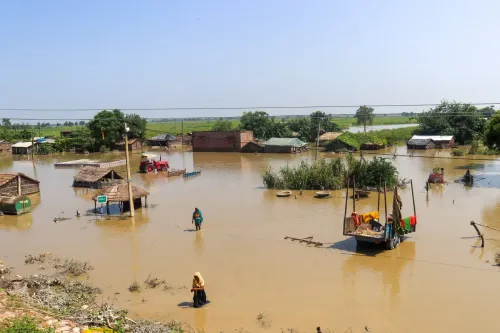
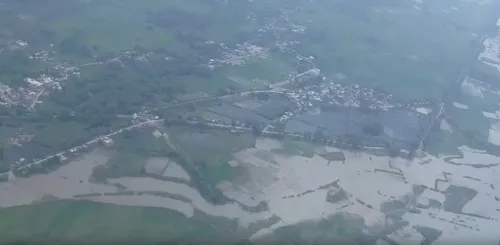
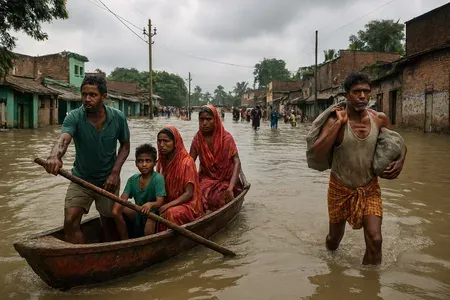
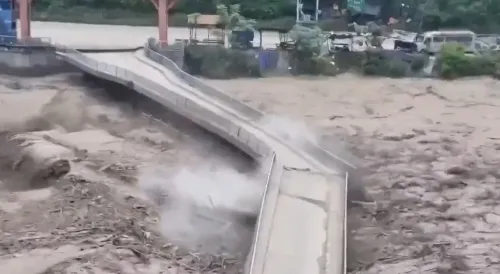
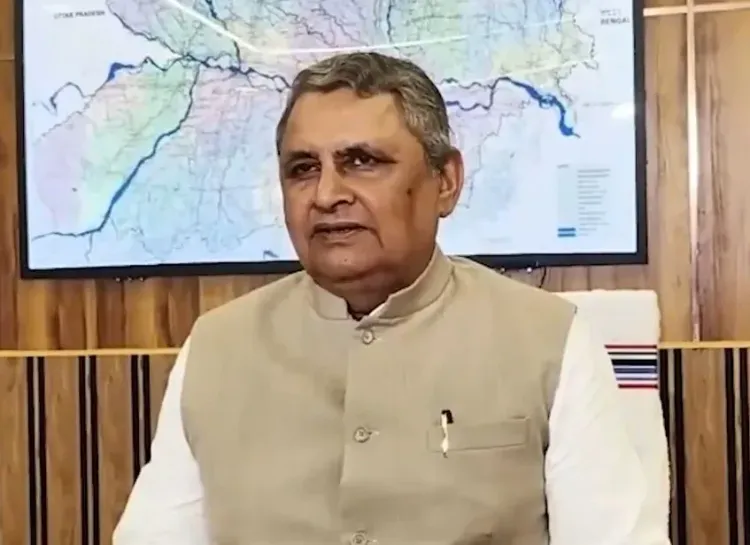
Bihar Deputy Chief Minister and Water Resources Minister Vijay Kumar Chaudhary on 26 August urged residents along the Gandak River to stay alert following reports of flooding and a glacier burst in the Nepal-Tibet region, warning that the situation could intensify over the next five to six hours and through the night. The state has raised its flood preparedness level in anticipation of a possible surge in the Gandak system.
How the Glacier Burst Could Hit Bihar
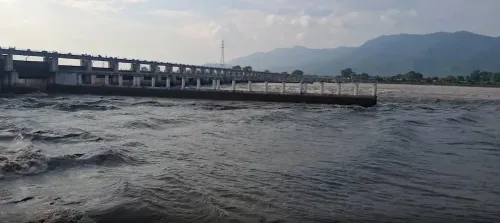
According to Chaudhary, meltwater from the glacier burst is expected to travel through the Trishuli River to Devghat before entering the Gandak river system, potentially placing additional pressure on the river's banks and barrages. He said the water could take approximately two to three hours to reach the Valmikinagar Barrage — Bihar's critical flood-control chokepoint on the Gandak.
Chaudhary acknowledged that the situation is more serious than previous episodes, though he stressed it remains under control. He appealed to residents to follow official instructions and avoid acting on rumours.
Current Water Levels and Barrage Capacity
A key buffer at present is the relatively low baseline water level of the Gandak. Around 80,000 cusecs is currently being discharged from the Valmikinagar Barrage, well within the system's estimated handling capacity of approximately 2.5 lakh cusecs. Officials said this margin provides meaningful headroom before the incoming surge arrives.
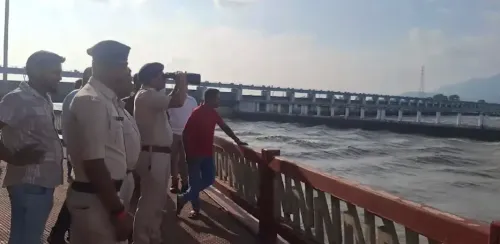
The Water Resources Department and state administration are continuously monitoring both the river and barrage discharge in real time. Engineers have been directed to conduct regular inspections of embankments and critical water infrastructure through the night.
State and Centre Coordination
The Government of Nepal has assessed the situation and shared relevant information with Indian authorities, according to Chaudhary. Additional relief teams have been pre-positioned in vulnerable areas, and essential relief materials have been kept on standby so rescue operations can be launched without delay if conditions deteriorate.
Chief Minister Samrat Chaudhary is personally monitoring developments, the minister confirmed. So far, there has been no reported rise in the Kosi River, another major flood-prone waterway in Bihar, though authorities continue to track it closely.
What Residents Should Do
Officials have urged people living near the Gandak's banks and low-lying flood plains to remain vigilant, heed district administration advisories, and avoid spreading or responding to unverified information. Notably, this alert comes at the tail end of the monsoon season, when river systems in northern Bihar are already running at elevated levels, leaving limited natural buffer against upstream surges.
Authorities say the situation will be reassessed through the night, with further updates expected based on actual water levels at the Valmikinagar Barrage.
Point of View
Often after upstream events in Nepal that gave Indian authorities limited reaction time. What stands out this time is the explicit cross-border coordination: Nepal sharing real-time data with India is a positive signal, but the two-to-three-hour travel time to Valmikinagar leaves almost no room for error if the surge exceeds projections. The 2.5-lakh-cusec capacity buffer is reassuring on paper, but past episodes have shown that embankment integrity — not barrage capacity — is often the real weak link. The state's decision to pre-position relief teams rather than wait for water levels to breach thresholds reflects a more proactive posture, one that deserves scrutiny after the fact to see whether the infrastructure investments of recent years have actually reduced vulnerability.
NationPress
11 Oct 2026
Frequently Asked Questions
Why has Bihar issued a Gandak River flood alert on 26 August?
Bihar issued the alert after reports of flooding and a glacier burst in the Nepal-Tibet region. The resulting meltwater is travelling through the Trishuli River toward the Gandak system and is expected to reach the Valmikinagar Barrage within two to three hours, potentially raising water levels significantly.
What is the current water level at the Valmikinagar Barrage?
As of 26 August, around 80,000 cusecs is being discharged from the Valmikinagar Barrage. The system is estimated to be capable of handling approximately 2.5 lakh cusecs, providing a substantial buffer before the incoming surge arrives.
Is there a risk to the Kosi River as well?
As of the latest update, no rise has been reported in the Kosi River. Authorities are monitoring it closely alongside the Gandak, given that both are major flood-prone waterways in northern Bihar.
What steps has the Bihar government taken to manage the situation?
The state has pre-deployed additional relief teams, stockpiled emergency materials, and directed engineers to conduct night-long inspections of embankments and water infrastructure. Chief Minister Samrat Chaudhary is personally overseeing developments, and the Water Resources Department is monitoring the barrage discharge in real time.
What should residents near the Gandak do right now?
Deputy CM Vijay Kumar Chaudhary has urged residents to stay alert, follow instructions from district administration, and avoid responding to rumours. He stressed there is no need for panic at present, but advised heightened vigilance through the night.