Bihar prohibition failing as NDPS cases triple, 'kota' drug hits rural areas
Synopsis
Bihar's decade-old prohibition has not stemmed intoxicant use — it may have redirected it. As illicit liquor gets seized by the truckload, a harder trade in 'kota', heroin and synthetic drugs has quietly expanded into rural Bihar, with NDPS cases nearly tripling since 2019 and de-addiction centres stretched to 20 times capacity. An entire generation of young Biharis, the Opposition warns, is paying the price.
Key Takeaways
Bihar NDPS Act cases rose from 697 in 2019 to 1,905 in early 2026 , nearly tripling in seven years.
Drug pill seizures have reportedly increased 30-fold ; heroin use is also on the rise across the state.
A new substance called 'kota' — a raw-heroin variant from Myanmar — has spread into rural Bihar via Northeast trafficking routes.
De-addiction centres are reportedly serving up to 20 times their intended patient capacity.
A 2023 Parliamentary panel survey estimated 99,000 children aged 10–17 in Bihar used cannabis; 40,000 used opioids.
RJD MP Manoj Jha tagged Home Minister Amit Shah on X, warning that 'an entire generation has been ruined.'
Bihar's prohibition policy, in place since 2016, has coincided with a dramatic surge in narcotics-related crime, with cases registered under the Narcotic Drugs and Psychotropic Substances (NDPS) Act rising nearly threefold — from 697 in 2019 to 1,905 in early 2026 — according to an investigative report published by The Indian Express. The findings suggest that while illicit liquor has been pushed underground, a parallel and arguably more dangerous narcotics economy has taken its place across the state, including in rural pockets.
The Rise of 'Kota' and Synthetic Drugs
Central to the investigation is the emergence of a substance locally known as 'kota' — a raw-heroin variant reportedly originating from Myanmar and smuggled into Bihar via the Northeast. According to a narcotics officer quoted in the report, the name likely derives from the word 'dose': 'quota' in local parlance refers to a drug dose, and over time, the substance itself came to be called 'kota' by users and peddlers alike.
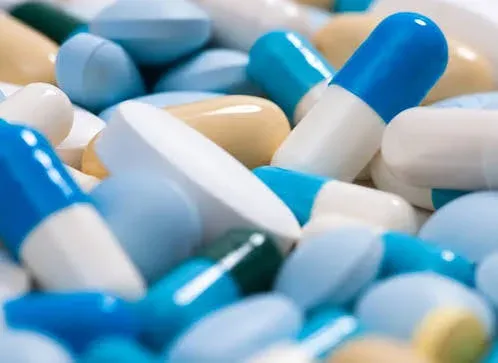
The drug is transported in everyday items — soap boxes, clothing folds and petticoats — before reaching consumers. Seizures of drug pills have reportedly increased 30-fold, and heroin use is also on the rise, according to the investigation. De-addiction centres are struggling to keep pace, with some facilities reportedly serving up to 20 times their intended patient capacity.
The 'Death Triangle' Supply Route
The investigation maps what it calls a 'Death Triangle' — a reference to the Golden Triangle region of Myanmar, Laos, and Thailand — which has increasingly pivoted from traditional opium and heroin toward synthetic drugs like methamphetamine and 'kota'. Clandestine laboratories in Myanmar manufacture methamphetamine, while boxes of 'kota' are reportedly shipped in ready-made form.
High-grade heroin, methamphetamine and 'kota' enter India through porous border stretches adjoining Mizoram and Manipur, then travel along the Champhai–Aizawl–Silchar corridor into Assam. A newer route reportedly running from Changlang to Tinsukia is believed to help traffickers bypass existing checks. Carriers collect consignments in the Northeast and return by train, with shipments then routed through Bihar districts including East Champaran, Kishanganj, Vaishali and Bhojpur. Distribution happens through tea shops, paan and cigarette stalls, and roadside vendors.
Ganja enters Bihar through Nepal, Tripura, Odisha and Andhra Pradesh; poppy husk is sourced from Nepal, Jharkhand and parts of Bihar itself; charas comes mainly from Nepal and is largely transported onward rather than retained in the state.
Juvenile Substance Use and Changing Profiles
Experts cited in the investigation note a marked shift in the profile of people seeking treatment for substance dependence. Where cannabis and plant-based substances once dominated, semi-synthetic and synthetic drugs — particularly heroin — are now increasingly prevalent among those seeking help. The concern, they note, extends beyond sheer numbers to the changing nature of substances being consumed.
A national survey cited in a 2023 report of the Parliamentary Standing Committee on Social Justice and Empowerment estimated that roughly 99,000 children aged 10–17 in Bihar used cannabis, approximately 40,000 used opioids, 29,000 used inhalants, and about 8,000 used sedatives. Social workers in Patna have repeatedly flagged growing drug accessibility among street children and economically disadvantaged youth.
Political Response
Rashtriya Janata Dal (RJD) MP Manoj Jha took to X to tag Union Home Minister Amit Shah, writing: 'Don't stop talking about Punjab but look at Bihar too.' Jha said the situation was 'completely out of control' and warned that an entire generation was being affected. 'I want people to give undivided attention to this issue. This problem is wiping out an entire generation of the state,' he said, urging the Home Minister to focus on Bihar's drug crisis.
The Opposition's intervention signals that the narcotics surge is fast becoming a political liability for the ruling alliance in Bihar, particularly ahead of electoral cycles where law and order traditionally weighs heavily with voters.
What This Means Going Forward
The investigation underscores a structural gap in Bihar's prohibition policy: by concentrating enforcement resources on illicit liquor, the state may have inadvertently created space for a harder and harder-to-detect narcotics trade. With de-addiction infrastructure overstretched and supply routes growing more sophisticated, experts and law enforcement alike argue that a parallel, dedicated anti-narcotics strategy — separate from the liquor ban apparatus — is urgently needed. How quickly the state and Centre respond to that call is likely to define Bihar's public health trajectory in the years ahead.
Point of View
Vote-friendly policy that is difficult to roll back, even as the harder evidence points to a public health trade-off the state has been reluctant to acknowledge. With de-addiction infrastructure at breaking point and juveniles increasingly in the data, the cost of that reluctance is no longer abstract.
NationPress
22 Oct 2026
Frequently Asked Questions
What is 'kota' and why is it spreading in Bihar?
'Kota' is a raw-heroin variant reportedly manufactured in Myanmar and smuggled into Bihar via Mizoram and Manipur, then transported by train through Assam. The name is believed to derive from the word 'quota', local slang for a drug dose. Its low cost and small, easily concealed packaging have made it accessible even in rural areas.
How sharply have drug cases risen in Bihar since prohibition?
NDPS Act cases in Bihar rose from 697 in 2019 to 1,905 in early 2026, according to an investigative report by The Indian Express. Drug pill seizures have reportedly increased 30-fold over the same period, and heroin use is also on the rise.
How are drugs being smuggled into Bihar?
According to the investigation, high-grade heroin, methamphetamine and 'kota' enter India through porous border stretches in Mizoram and Manipur, travel the Champhai–Aizawl–Silchar corridor into Assam, and then reach Bihar districts such as East Champaran, Kishanganj, Vaishali and Bhojpur. Substances are concealed in soap boxes, clothing folds and everyday items.
How serious is juvenile drug use in Bihar?
A national survey cited in a 2023 Parliamentary Standing Committee report estimated roughly 99,000 children aged 10–17 in Bihar used cannabis, around 40,000 used opioids, 29,000 used inhalants, and about 8,000 used sedatives. Social workers in Patna have repeatedly flagged growing drug accessibility among street children.
What has the political response been to Bihar's narcotics surge?
RJD MP Manoj Jha tagged Union Home Minister Amit Shah on X, warning that 'an entire generation has been ruined' and urging central attention on Bihar's drug crisis. The Opposition has accused the Bihar government of losing control of the situation and questioned the lack of focus on narcotics relative to liquor prohibition enforcement.