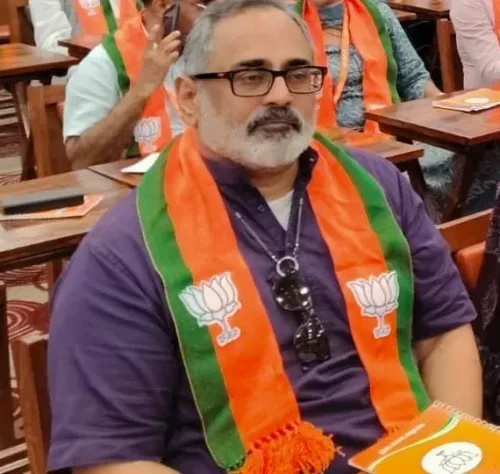
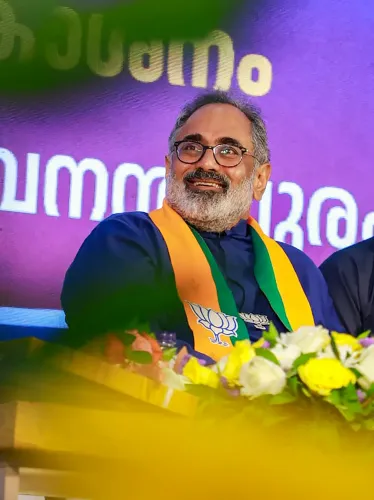
BJP's Chandrasekhar accuses Kerala govt of double standards on religious remarks
Synopsis
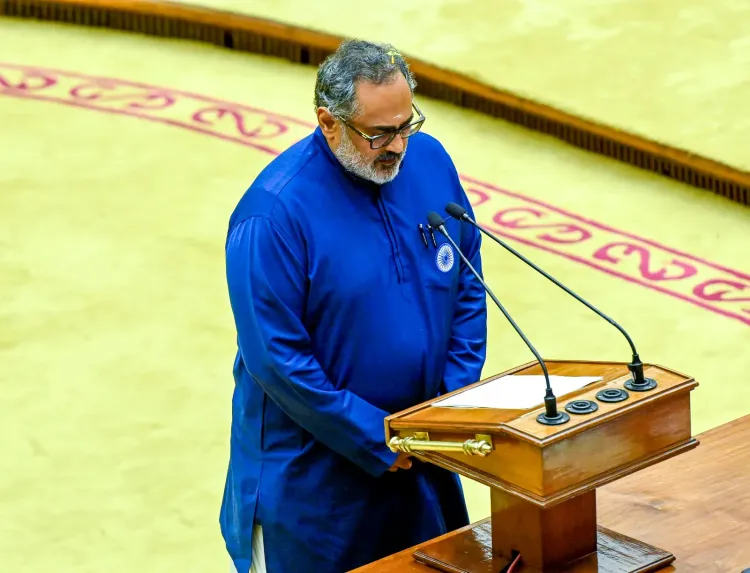
Kerala BJP chief Rajeev Chandrasekhar has launched a sharp broadside against the Satheesan government on its 100th day in office, accusing it of selective silence on anti-Hindu remarks while acting in other religious cases — and reviving the Sabarimala issue to put the Congress on the defensive on its own turf.
Key Takeaways
Kerala BJP president Rajeev Chandrasekhar accused the V.D.
Satheesan government of double standards over remarks targeting religious beliefs on 28 August .
Chandrasekhar demanded immediate legal action against Sunny M.
Kapikad and others for statements he termed derogatory to Hindu faith.
He questioned the silence of CM Satheesan , Home Minister Ramesh Chennithala , and Devaswom Minister K.
Muraleedharan on alleged hate speech against Hindus.
The BJP described the government's first 100 days as ' 100 days of APPAKADAM Politics ', citing failures on development and employment.
Chandrasekhar alleged the Congress had abandoned its Sabarimala stance after coming to power, betraying Hindu voters who had supported it.
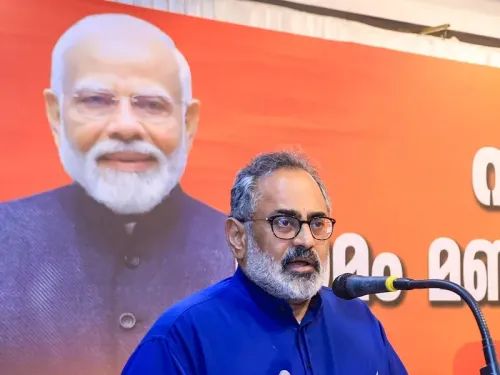
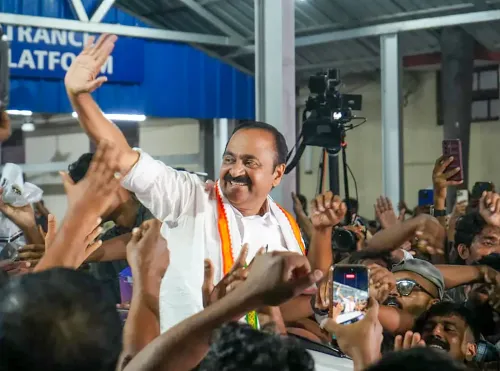
Kerala BJP president Rajeev Chandrasekhar on Friday, 28 August accused the V.D. Satheesan-led government of applying double standards when responding to controversial remarks targeting religious beliefs, alleging that the administration had stayed silent on statements directed at Hindu faith while acting swiftly in other cases.
The Core Allegation
Chandrasekhar specifically questioned the government's inaction over remarks attributed to Sunny M. Kapikad and others, demanding immediate legal proceedings. He argued that freedom of expression cannot be used as a shield for statements that wound religious sentiments.
'Why are Chief Minister V.D. Satheesan, Home Minister Ramesh Chennithala and Devaswom Minister K. Muraleedharan maintaining silence over hate speeches against Hindu beliefs? Is the law not equally applicable to everyone?' Chandrasekhar asked.
100 Days in Office: BJP's Verdict
The BJP leader's remarks coincided with the new government completing 100 days in office. Chandrasekhar described the period as '100 days of APPAKADAM Politics', alleging the administration had failed to deliver on its promises of development and employment.
'The politics of appeasement and double standards is all that we have seen in these 100 days. Instead of taking measures that benefit ordinary people, the government is encouraging a politics of divide and rule,' he alleged.
Sabarimala and the Congress Pivot
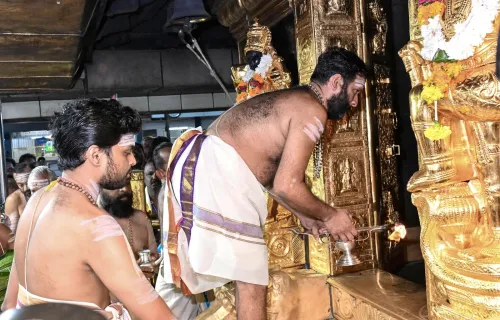
Chandrasekhar also trained his sights on the Sabarimala issue, alleging that the Congress had aggressively raised concerns — including the alleged theft of gold from the temple — while in Opposition, but had gone quiet on Sabarimala and Lord Ayyappa after assuming power. He claimed the government had betrayed thousands of Hindu voters who had placed their trust in it.
Broader Political Context
The BJP leader's offensive adds a religious dimension to his party's wider political campaign against the Satheesan government as it marks its first major milestone in power. Notably, the demand for action against Kapikad comes amid a renewed national debate over the limits of free speech and the obligation of state governments to respond uniformly to contentious statements concerning different faiths. Critics argue that selective enforcement of speech-related laws has become a recurring flashpoint in Indian state politics across party lines.
With the BJP sharpening its attack on multiple fronts — governance, religious sensitivity, and electoral trust — the Satheesan government faces mounting pressure to clarify its position ahead of what is likely to be a sustained political offensive.
Point of View
The BJP is attempting to consolidate Hindu voter sentiment ahead of a longer political battle. The Sabarimala callback is particularly pointed — the Congress spent years in Opposition weaponising the issue, and the BJP is now turning that record against it. What mainstream coverage often misses is that the 'double standards' charge is not new; it has been a staple BJP attack in Kerala for years, with limited electoral traction so far. The real question is whether the Satheesan government's silence on the Kapikad remarks reflects deliberate political calculation or administrative inertia — and whether that distinction matters to voters in a state where the BJP is still fighting for a credible foothold.
NationPress
28 Aug 2026
Frequently Asked Questions
What did Kerala BJP chief Rajeev Chandrasekhar accuse the Satheesan government of?
Chandrasekhar accused the V.D. Satheesan government of double standards, alleging it remained silent on remarks targeting Hindu religious beliefs while taking action in other cases involving different faiths. He demanded immediate legal action against Sunny M. Kapikad and others.
Who is Sunny M. Kapikad and why is he at the centre of the controversy?
Sunny M. Kapikad is an individual whose remarks, according to Chandrasekhar, targeted Hindu religious beliefs. The BJP has demanded that the Kerala government take legal action against him, arguing the state has been selectively silent on such statements.
What is the significance of the '100 days' timing of these remarks?
Chandrasekhar's attack came as the Satheesan government completed 100 days in office. The BJP used the milestone to assess the government's record, describing it as '100 days of APPAKADAM Politics' and alleging failures on development, employment, and governance promises.
Why did Chandrasekhar raise the Sabarimala issue?
He alleged that the Congress had raised concerns about Sabarimala — including the alleged theft of gold from the temple — while in Opposition, but had gone silent on the issue after coming to power. He used this to argue the party had betrayed Hindu voters who supported it.
What is the broader debate this controversy connects to?
The controversy feeds into a wider national debate about whether state governments apply speech-related laws uniformly across religious communities. Critics and legal observers argue that selective enforcement has become a recurring political flashpoint in India, cutting across party lines.