Is Mission ‘Shat Pratishat’ the BJP's Strategy for a Solo Majority in 2029?
Synopsis
The BJP's recent electoral success in local body elections sets the stage for its ambitious aim of achieving a solo majority in the 2029 Assembly elections. With strategic planning and grassroots engagement, the party aims to transform this victory into a broader support base across Maharashtra.
Key Takeaways
BJP's victory in local elections boosts confidence for 2029.
Party targets over 150 seats in the upcoming Assembly elections.
Strong focus on grassroots engagement and rural outreach.
Shift from an urban-centric image to broader appeal.
Challenges remain in converting local successes into Assembly votes .
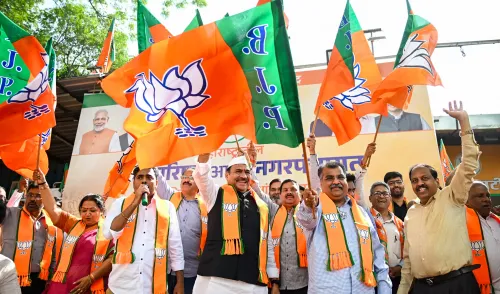
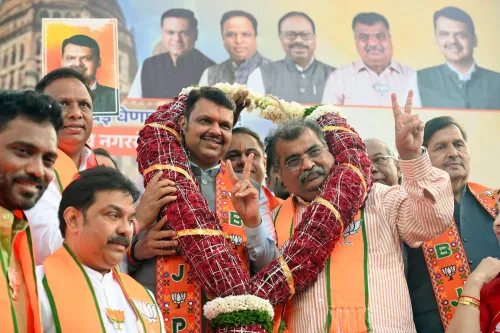
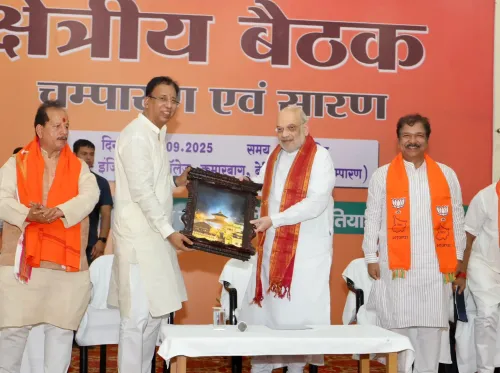
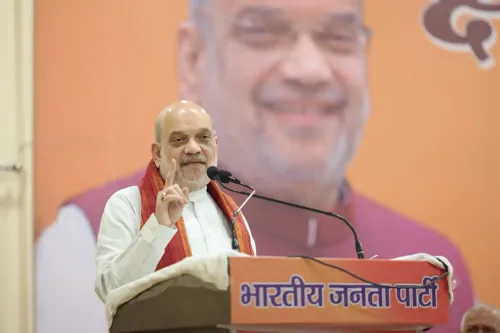
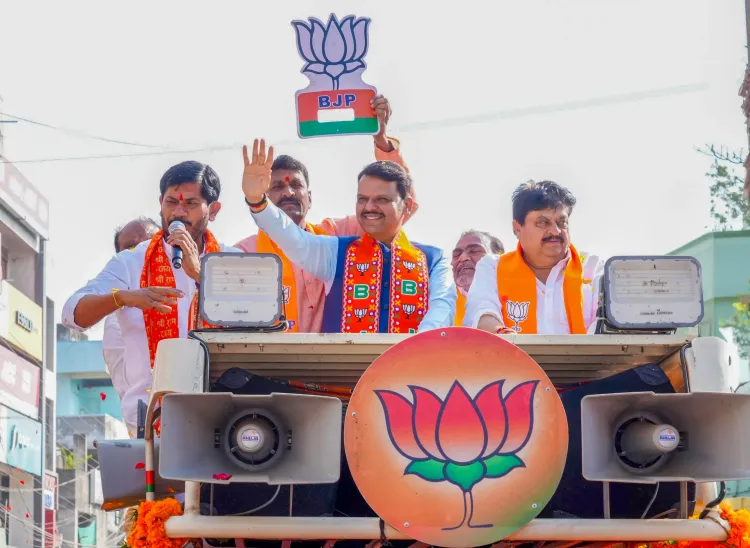
Mumbai, Feb 12 (NationPress) In the aftermath of the municipal elections, the BJP has secured a significant victory in both the Zilla Parishad and Panchayat Samiti elections. This triumph marks the beginning of a large-scale initiative aimed at achieving the ambitious target of ‘Shat Pratishat BJP’ (100 percent BJP) for the upcoming 2029 Assembly elections. The strategy appears to have been shaped by the appeal put forth by Union Home Minister Amit Shah.
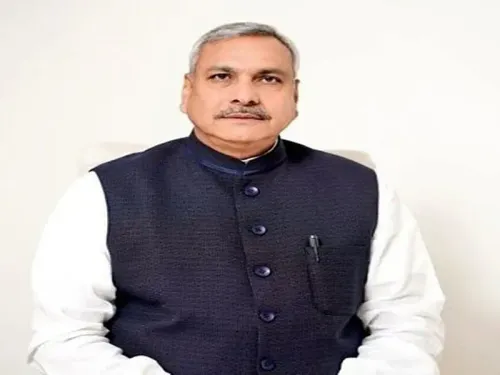
Despite the next major election in the state being approximately three and a half years away, the party has conveyed a strong message to its members to maintain their hard work. BJP State President Ravindra Chavan stated, "Efforts in the BJP are relentless; there is no downtime. The outcomes of the urban and local self-governance elections will enhance our workers' morale, and they will approach the field with renewed vigor."
A senior party figure noted that while achieving a solo majority in the state is a challenging endeavor, it is not unachievable. Currently, the party holds a vote share of about 26-27 percent. To accomplish the target, a further increase of 10 to 15 percent is essential. He elaborated, “The aim for the 2029 Assembly elections is to secure over 150 out of 288 seats. The majority threshold stands at 145, and the party is currently just 13 seats short of that.”
This statement is significant as the BJP participated in the 2024 Assembly elections and the recent local body elections as part of the Mahayuti alliance. Should it contest alone, the dynamics will shift. However, translating this local body success into Assembly votes remains the foremost challenge.
As per data released by the State Election Commission, in the recent elections, the BJP has successfully moved beyond its "urban-centric" image. The party has made remarkable strides into strongholds previously held by the Congress and both factions of the NCP.
Out of 288 Assembly constituencies in the state, 160 are situated in rural areas. In the Zilla Parishad results disclosed on Monday, the BJP emerged as the leading party in six out of 12 Zilla Parishads, including Sindhudurg (Konkan), Satara (Western Maharashtra), Solapur (South-West Maharashtra), and Parbhani, Dharashiv, and Chhatrapati Sambhajinagar (Marathwada).
Moreover, the BJP also excelled in the Panchayat Samiti results. Out of 125 Panchayat Samitis, the party secured a clear majority in 55, while Shiv Sena claimed 26 seats, NCP gathered 25 seats, and the opposition alliance (Maha Vikas Aghadi) comprising Congress and the NCP (Sharad Pawar faction) were limited to eight seats each, with Uddhav Thackeray’s Shiv Sena winning only three.
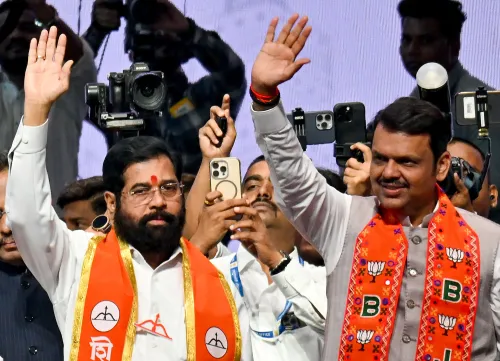
In response to the victories in the 12 zilla parishad and 125 panchayat samiti elections, Chief Minister Devendra Fadnavis remarked that the electorate has voted in favor of the developmental initiatives undertaken by both the Central and state governments. He commented, "The opposition has shown a lack of political will and appeared disconnected from the populace, failing to address grassroots issues, which facilitated the BJP's success."
Party sources indicate that to fortify its presence across 355 talukas and approximately 28,000 villages, grassroots workers have been tasked with achieving 50 percent of the votes at nearly one lakh booths statewide. These local body elections were vital for the BJP because, despite successes in the Assembly and Lok Sabha, the party historically struggled in rural regions.
The notion of achieving a "full majority independently" was first introduced in 2005. Although the demand intensified following the establishment of the first alliance government with the undivided Shiv Sena, the influence of the Congress-NCP in rural Maharashtra had hindered this aspiration. Since 2014, the BJP has consistently broadened its base. Regardless of shifting alliances, the party emerged as the largest single entity in 2014, 2019, and 2024, winning 122, 105, and 132 seats, respectively. The fractures within the Shiv Sena and NCP have greatly benefited the BJP.
BJP spokesperson Keshav Upadhye stated that Uddhav Thackeray allied with the Congress-NCP for power, abandoning Hindutva, which led to his public rejection. Furthermore, the Zilla Parishad results indicate that Sharad Pawar's influence over Maratha leadership in the Western Maharashtra sugar belt is diminishing, with his faction only emerging as the largest party in Sangli and remaining limited to Pune and Kolhapur.
(Sanjay Jog can be contacted at sanjay.j@ians.in)
Point of View
The BJP's victories in local elections indicate a strategic shift aimed at consolidating power ahead of the 2029 Assembly elections. While ambitious, their endeavor to achieve a solo majority demonstrates a commitment to grassroots engagement and addressing rural concerns. This approach could reshape Maharashtra's political landscape in the coming years.
NationPress
29 Sept 2026
Frequently Asked Questions
What is the BJP's target for the 2029 Assembly elections?
The BJP aims to secure more than 150 out of 288 seats in the 2029 Assembly elections.
How many Zilla Parishads did the BJP win?
The BJP emerged as the largest party in six out of 12 Zilla Parishads.
What was the BJP's vote share in recent elections?
The party's current vote share is approximately 26-27 percent.
Who is the BJP State President?
The current BJP State President is Ravindra Chavan.
What challenges does the BJP face in converting local success to Assembly votes?
The main challenge is to transform the success in local bodies into a broader electoral base for the Assembly elections.