Bengal tea garden land scam: BJP minister alleges TMC siphoned sale proceeds
Synopsis
A sitting BJP minister in West Bengal has alleged that tea garden lands in north Bengal were illegally sold under TMC rule and the proceeds bankrolled party elections — a charge that, if substantiated by the Basu commission, could reshape the political narrative ahead of the next state polls. The dual announcement of a corruption probe and a tea tourism push underscores the BJP government's strategy of pairing accountability politics with economic optics.
Key Takeaways
Tourism Minister Shankar Ghosh alleged on 18 August that tea garden lands in north Bengal were illegally sold during the TMC regime.
He claimed proceeds from these sales were used to fund TMC election campaigns — an allegation not yet independently verified.
Ghosh will write to Chief Minister Suvendu Adhikari to refer the matter to the commission headed by retired Justice Biswajit Basu .
The state government has approved use of 15 per cent of tea garden area for commercial purposes.
A tea tourism initiative is planned, including tourist stays in heritage bungalows and new homestays inside tea gardens.
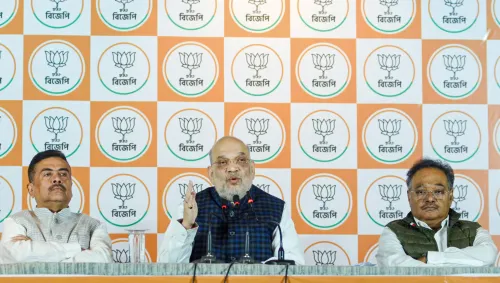
West Bengal Tourism Minister Shankar Ghosh on Tuesday, 18 August alleged that tea garden lands across north Bengal were sold illegally during the Trinamool Congress (TMC) regime, with proceeds purportedly funnelled into the party's election fund. The allegations were made at a press conference in Kolkata, marking one of the sharpest direct attacks by the current state government on its predecessor's land administration record.
Key Allegations
Ghosh, who also serves as a Bharatiya Janata Party (BJP) MLA from Siliguri, alleged 'institutional corruption' in the transfer of tea garden lands during the tenure of former Chief Minister Mamata Banerjee. He claimed the money generated from these allegedly illegal sales was used to finance TMC's election campaigns in the state. The allegations remain unverified independently, and TMC has not yet responded publicly to the charges.
Commission to Probe Land Transfers
The government of Chief Minister Suvendu Adhikari has already constituted a commission headed by retired Justice Biswajit Basu to examine corruption across various government sectors. Minister Ghosh announced he will write to Chief Minister Adhikari, requesting that all issues related to tea garden land transfers, leases, and commercial use be referred to this commission. He said the probe would seek to establish how the lands were used and who benefited from those transactions.
Tea Tourism Push in North Bengal
Separately, Ghosh unveiled plans to develop tea tourism as a significant economic driver in north Bengal. The minister said he intends to sign agreements with tea garden owners and organisations to allow tourists to stay in heritage bungalows within the estates. Alongside these bungalows, the government plans to develop homestays inside tea gardens to expand accommodation options.
'We have a plan to strengthen the local economy by connecting workers and residents of tea gardens with the tourism industry. Emphasis will be placed on the system so that local people and tea workers directly benefit from tourism,' Ghosh said.
Balancing Tourism and Tea Production
The minister stressed that the state government's objective is to transform tea gardens into significant tourism destinations without compromising their primary character as tea-producing zones. He noted that the current government has approved a proposal permitting 15 per cent of tea garden area to be used for commercial purposes — a move intended to unlock economic value while preserving the agricultural core of the estates.
With the Basu commission already operational and a formal letter to the Chief Minister expected shortly, the political fallout from these allegations is likely to intensify in the weeks ahead.
Point of View
Involving workers' rights, lease renewals, and absentee ownership. Routing a probe through a retired-judge commission gives the charge institutional weight, but commissions in Indian states have a mixed record of translating findings into prosecutions. The simultaneous tea tourism announcement is smart optics: it positions the BJP as both accountability-seeker and economic builder in a region where unemployment among tea workers is a genuine grievance. Whether the commission delivers findings before electoral momentum shifts is the real question.
NationPress
3 Oct 2026
Frequently Asked Questions
What has BJP minister Shankar Ghosh alleged about tea garden lands in north Bengal?
Ghosh alleged that tea garden lands in north Bengal were sold illegally during the Trinamool Congress regime and that the proceeds were channelled into TMC's party and election funds. He described the practice as 'institutional corruption' and has sought a formal investigation.
Which body will investigate the alleged tea garden land transfers?
The probe is expected to be referred to a commission headed by retired Justice Biswajit Basu, which was constituted by the Suvendu Adhikari government to examine corruption across various state government sectors. Minister Ghosh has said he will write to the Chief Minister to formally include tea garden land issues within the commission's scope.
Has TMC responded to the corruption allegations?
As of the time of reporting, the Trinamool Congress had not issued a public response to the allegations made by Minister Shankar Ghosh. The charges remain unverified independently.
What is the state government's tea tourism plan for north Bengal?
The government plans to sign agreements with tea garden owners to allow tourist stays in heritage bungalows and build homestays inside tea estates. The aim is to link local workers and residents to the tourism economy while maintaining the primary tea-production character of the gardens.
How much of tea garden land can now be used commercially?
The current West Bengal government has approved a proposal permitting 15 per cent of tea garden area to be used for commercial purposes, intended to generate economic activity without displacing core agricultural operations.