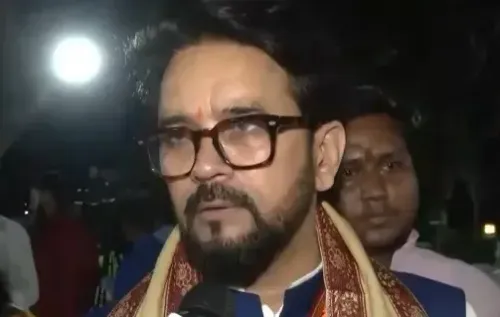
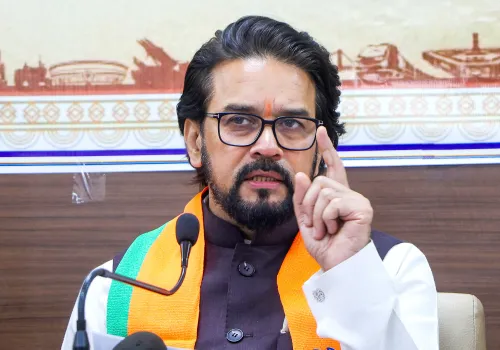
BJP MP Anurag Thakur hits INDIA bloc on women's rights
Synopsis
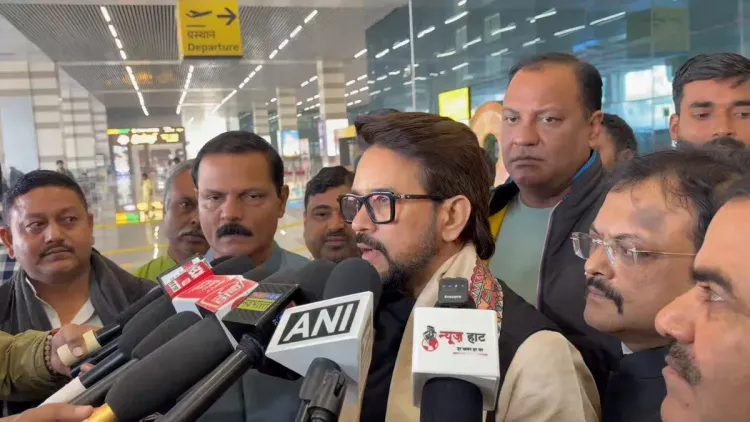
From Patna, BJP MP Anurag Thakur accused the INDIA alliance of complete disarray and of standing against women's rights, saying the opposition bloc lacks both policy and intent.
Key Takeaways
BJP MP Anurag Thakur posted from Patna on 28 November 2026 that the INDIA alliance has completely scattered.
He said the bloc has neither policy nor the right intent and should explain why it stands against women's rights.
The INDIA alliance was formed in July 2023 as a multi-party opposition coalition against the BJP-led NDA.
Parliament passed the Nari Shakti Vandan Adhiniyam in September 2023 , reserving one-third of seats for women.
Thakur is the BJP MP from Hamirpur , Himachal Pradesh, and a former Union Minister of Information and Broadcasting.
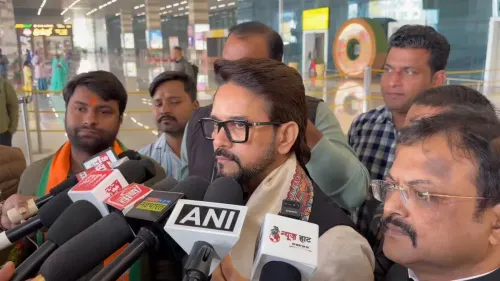
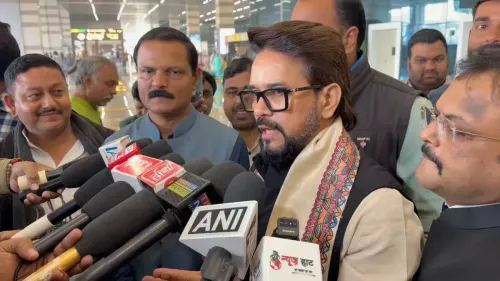
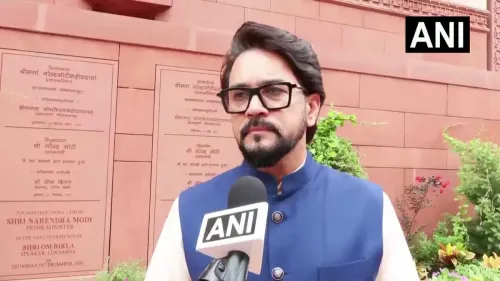
From Patna on 28 November 2026, BJP MP Anurag Thakur accused the opposition INDIA alliance of standing against women's rights and said the coalition has completely fallen apart. The Hamirpur MP and former Union Minister of Information and Broadcasting charged that the bloc has neither policy nor the right intent.
Writing in Hindi from the Bihar capital, Thakur said the Indi gathbandhan has become fully titar-bitar (scattered). He added: 'They have neither any policy nor the right intentions. They should explain why they stand against women's rights.' The post was geotagged Patna.
Patna as the stage for a national charge
Patna is the capital of Bihar and a regular venue for political rallies and alliance meetings in eastern India. Thakur's Saturday message recasts a national argument — whether the INDIA bloc still holds together — as a question of women's rights.
He named no constituent party and cited no specific vote. The post is a demand for an explanation, not a dossier. That keeps the attack simple and shareable.
How the women's reservation law entered the fight
Parliament passed the Women's Reservation Bill, the Nari Shakti Vandan Adhiniyam, in September 2023. It reserves one-third of seats for women in the Lok Sabha and in state assemblies. Implementation still waits on census and delimitation.
Since that vote, BJP leaders have treated the law — and related welfare schemes — as a test of political intent toward women voters. Thakur's claim that the opposition stands against women's rights sits inside that frame. The post itself does not describe a new parliamentary clash or a fresh Bihar-specific dispute over implementation.
The July 2023 bloc, seen through a familiar BJP lens
The INDIA alliance — Indian National Developmental Inclusive Alliance — was formed in July 2023 as a multi-party coalition to challenge the BJP-led NDA. From that launch onward, BJP leaders have routinely described it as fragmented and short of a coherent policy.
Linking that charge to gender legislation is part of a broader partisan pattern that typically intensifies around election cycles. Women voters remain a decisive constituency in national and Bihar politics. Once reservation is implemented, every party that now claims to speak for them will be measured by names on the ballot, not slogans on a platform.
The next move belongs to the alliance's constituents: answer the Patna charge with a record, or leave the women's-rights frame uncontested.
Point of View
Then pin that incoherence to women's rights. The Nari Shakti Vandan Adhiniyam of September 2023 remains the BJP's preferred measuring stick on gender, even as implementation still waits on census and delimitation. For the opposition, silence on that charge cedes the moral high ground among women voters; a detailed rebuttal would have to name actual votes and state-level records. The fight is over who owns the women's-rights story heading into the next electoral cycle.
NationPress
28 Nov 2026
Frequently Asked Questions
What did Anurag Thakur say about the INDIA alliance?
From Patna on 28 November 2026, BJP MP Anurag Thakur said the INDIA alliance has completely scattered, has neither policy nor the right intent, and should explain why it stands against women's rights. He geotagged the post to the Bihar capital.
What is the INDIA alliance?
The INDIA alliance is an opposition coalition of multiple parties formed in July 2023 to challenge the BJP-led NDA in elections. Its full name is the Indian National Developmental Inclusive Alliance.
What is the Women's Reservation Bill in India?
The Women's Reservation Bill, officially the Nari Shakti Vandan Adhiniyam, was passed by Parliament in September 2023. It reserves one-third of seats for women in the Lok Sabha and state assemblies, with implementation tied to census and delimitation.
Who is Anurag Thakur?
Anurag Thakur is a BJP Lok Sabha MP from Hamirpur in Himachal Pradesh. He is a former Union Minister of Information and Broadcasting and of Youth Affairs and Sports.
Why did Anurag Thakur post from Patna?
Patna is the capital of Bihar and a frequent venue for political rallies and alliance meetings in eastern India. Thakur geotagged his post to the city while attacking the INDIA alliance on women's rights.