BJP plans GI tags for Bengali sweets, proposes district 'sweet hubs'
Synopsis
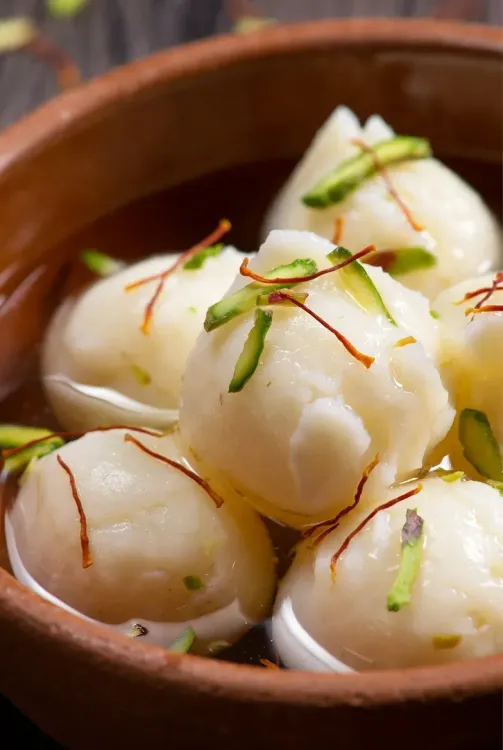
The BJP's West Bengal unit is going beyond politics to pitch itself as a guardian of Bengali culinary heritage — pushing GI tags for sweets like Kansat and Mohan Bhog while proposing district-level 'sweet hubs' to turn tradition into an export industry. It is a cultural strategy wrapped in an economic plan, timed to Bengal's post-2026 political landscape.
Key Takeaways
BJP West Bengal announced plans on 6 June to seek GI tags for traditional Bengali sweets lacking formal recognition.
The first phase targets Malda's 'Kansat' and Cooch Behar's 'Mohan Bhog' ; Hooghly's 'Sada Bonde' and Nabadwip's 'Lal Dahi' are under review.
The party also proposes district-level 'sweet hubs' for production, marketing, and export of heritage sweets.
BJP state president Samik Bhattacharya confirmed the initiative, saying the state will appeal to the BJP government for support.
The plan is linked to the BJP's 2026 Assembly election promise to protect Bengali identity and cultural heritage.
The West Bengal unit of the Bharatiya Janata Party (BJP) has announced a phased initiative to secure Geographical Indication (GI) tags for several traditional Bengali sweets that currently lack formal recognition, the party said on Saturday, 6 June. The plan also envisions establishing 'sweet hubs' across districts to support production, marketing, and export of these heritage confections.
Key Developments
BJP state president Samik Bhattacharya outlined the proposal in Delhi on Friday, stating: 'Bengal is known for its sweets. There are many sweets whose popularity needs to be increased further. The state will appeal to the BJP government in this regard.'
The initial phase focuses on two sweets: Malda's 'Kansat' and Cooch Behar's 'Mohan Bhog'. Under review for subsequent phases are Hooghly's Kamarpukur 'Sada Bonde' and Nabadwip's 'Lal Dahi'. According to party leadership, each of these sweets carries deep ties to Bengal's regional history, culture, and economic potential.
What a GI Tag Means
A Geographical Indication (GI) tag is a legal certification granted to products that originate from a specific geographic region and carry qualities or a reputation uniquely attributable to that origin. It functions as both a mark of authenticity and an intellectual property protection for traditional heritage goods. India's GI registry, administered under the Geographical Indications of Goods (Registration and Protection) Act, 1999, has already recognised a handful of Bengali sweets, but several popular varieties remain outside this framework.
The 'Sweet Hubs' Plan
Beyond the GI tag drive, the BJP is proposing the creation of organised 'sweet hubs' at the district level. These hubs are envisioned as structured infrastructure nodes covering manufacturing, quality control, marketing, and export facilitation. According to party leadership, the GI tag will provide traditional legitimacy, while the hub model will scale the business — a two-pronged approach that links cultural preservation to economic development.
The party says it will send a formal proposal to the state government, after which the government would select eligible sweets, prepare documentation, and initiate the application process. The state BJP is also preparing to engage large sweet traders, food researchers, and experts in traditional confectionery.
Political Context
According to party sources, the initiative is connected to the BJP's promise during the 2026 Assembly elections to 'protect Bengali identity'. The party has adopted a broader strategy of centering language, culture, and tradition in political outreach across West Bengal. Observers note the BJP is attempting to balance this cultural push with a parallel effort to attract large industries and investments through land policy reforms — signalling that the sweet industry plan is part of a wider economic-cultural playbook.
Political observers say the GI-tag initiative is not purely an economic programme but also carries a distinct cultural message, positioning the BJP as a custodian of Bengal's intangible heritage ahead of future electoral contests.
What Happens Next
The BJP has indicated that district-level data collection, expert consultations, and research reports will inform each phase of GI applications. The party claims coordination channels with the state government remain open, though the Trinamool Congress (TMC)-led state administration's formal response to the proposal has not yet been reported. How swiftly the state government acts on a BJP-initiated proposal will be a key factor in the timeline.
Point of View
The party is attempting to occupy ground the Trinamool Congress has long claimed as its own. The real test is delivery: GI applications are bureaucratic, evidence-intensive, and require state government cooperation — cooperation that a TMC-led administration has little political incentive to fast-track for a BJP proposal. Without that, the plan risks remaining a press-release promise.
NationPress
22 Oct 2026
Frequently Asked Questions
Which Bengali sweets are being considered for GI tags by the BJP?
The BJP's initial phase targets Malda's 'Kansat' and Cooch Behar's 'Mohan Bhog'. Hooghly's Kamarpukur 'Sada Bonde' and Nabadwip's 'Lal Dahi' are under review for subsequent phases.
What is a GI tag and why does it matter for Bengali sweets?
A Geographical Indication (GI) tag is a legal certification that links a product to its place of origin and protects its unique qualities as intellectual property. For Bengali sweets, it would provide formal recognition, protect authenticity, and potentially open premium domestic and international markets.
What are the proposed 'sweet hubs' the BJP is planning?
The BJP proposes establishing organised district-level infrastructure nodes — called 'sweet hubs' — to support the production, quality control, marketing, and export of traditional Bengali sweets. The hubs are intended to complement GI recognition by scaling the commercial potential of heritage confections.
Who announced the BJP's Bengali sweets GI initiative?
BJP West Bengal state president Samik Bhattacharya announced the initiative in Delhi on Friday, 6 June, stating that Bengal's sweets need greater national and international visibility and that the state will appeal to the BJP government for support.
What is the next step in the GI tag process for Bengali sweets?
The BJP plans to send a formal proposal to the West Bengal state government. The government would then select eligible sweets, prepare the required documentation, and initiate the GI application process. District-level data collection, expert consultations, and research reports will guide each phase.