BJP hits back at CJP's 48-hour ultimatum to CEC Gyanesh Kumar
Synopsis
A brand-new party called the Cockroach Janata Party has issued a 48-hour ultimatum to India's Chief Election Commissioner to resign — and the BJP has fired back with remarkable coordination, with leaders from Jammu and Kashmir, West Bengal and Parliament all framing the demand not as political protest but as a foreign-influenced assault on constitutional democracy.
Key Takeaways
CJP founder Abhijeet Dipke on 24 September issued a 48-hour ultimatum to CEC Gyanesh Kumar to resign or face a nationwide agitation.
J&K LoP Sunil Sharma alleged that external forces are using the youth to defame constitutional institutions and slow Viksit Bharat .
BJP MP Ghulam Ali Khatana acknowledged the right to protest but asserted democratic institutions have been strengthened under PM Modi .
West Bengal Minister Dilip Ghosh called the ultimatum a 'publicity stunt' and linked it to what he described as recurring anti-institutional campaigns.
BJP MLA Vikram Randhawa accused the Congress of shifting from EVM complaints to directly targeting the Chief Election Commissioner after successive electoral losses.
Sunil Sharma, Leader of the Opposition in the Jammu and Kashmir Assembly, on Friday, 25 September 2026, pushed back sharply against the Cockroach Janata Party (CJP)'s ultimatum to Chief Election Commissioner (CEC) Gyanesh Kumar — demanding his resignation within 48 hours or threatening a nationwide agitation. Sharma said the episode reflected a broader pattern of forces working to weaken constitutional institutions and slow India's growth trajectory.
BJP's Core Allegation
Speaking to reporters in New Delhi, Sharma said he could not fully assess the CJP's goals given how recently it was formed, but raised pointed questions about the direction of its politics. 'Whether in name of secularism or the way the Communists expanded their political ground here, could they also be moving in the same direction?' he asked.
He went further, framing the ultimatum as part of a wider effort to undermine India's development. 'Our nation is growing at fast speed. Many powers are at play, working to reduce the pace of the Viksit Bharat. Owing to these powers, many tools are growing that are working against the nation — we have to counter these forces too,' Sharma said.
He also warned that when young people were used by external forces to destabilise or discredit constitutional bodies, the consequences fell not just on the nation but on the youth themselves. 'We should come together for the growth of the nation,' he added.
Other BJP Leaders Weigh In
BJP MP Ghulam Ali Khatana adopted a more measured tone, affirming that democratic protest was a legitimate right while arguing that institutions had been strengthened under Prime Minister Narendra Modi. 'India is a very large democratic country. Everyone has the right to protest and put forward their views. Under the leadership of Narendra Modi, democratic institutions and people's rights have been strengthened and empowered,' Khatana said.
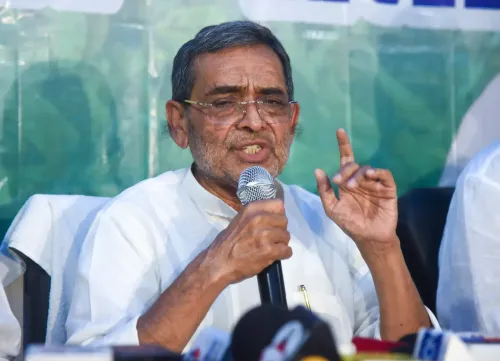
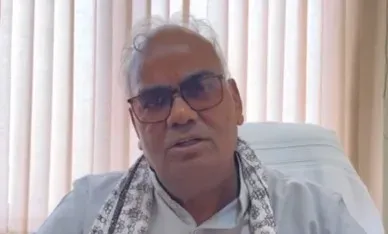
West Bengal Minister Dilip Ghosh was considerably sharper, accusing certain elements of cycling through anti-institutional issues every few months for publicity. 'Every 4 to 6 months they bring out a new issue which is against the institutions of the country or against the country. This is nothing but a publicity stunt. The public is slowly realising these issues,' Ghosh said. He drew a direct line from what he called Gen Z protests to the current campaign against the CEC, describing them as 'conspiracies against the nation.'
BJP MLA Vikram Randhawa brought the charge directly to the Congress, arguing the party had no real agenda and was pivoting from blaming Electronic Voting Machines to targeting the Chief Election Commissioner directly. 'You are losing elections left and right; first they blamed the EVM, but when that didn't work, now you are directly blaming the Chief Election Commissioner,' Randhawa claimed.
What the CJP Said
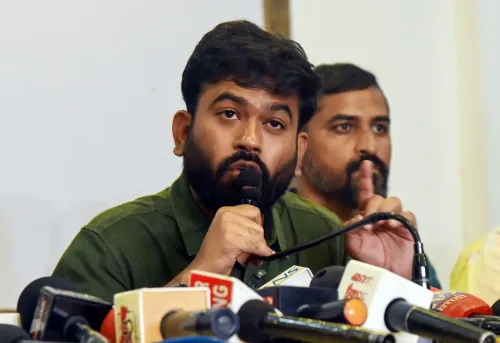
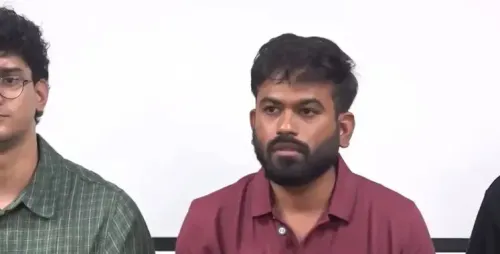
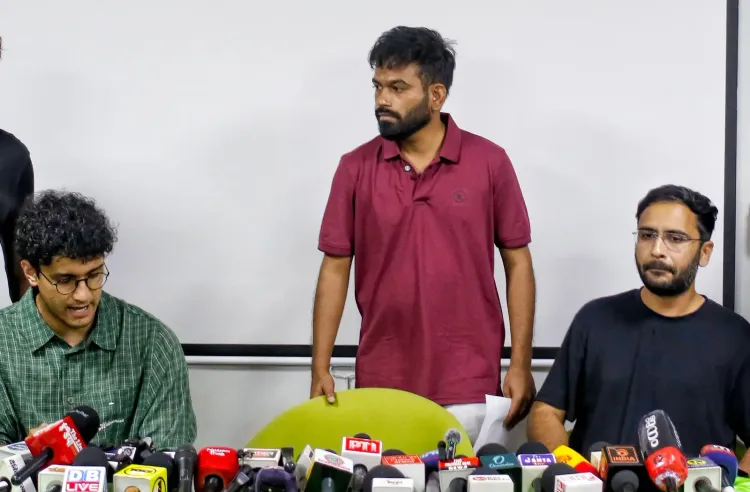
The controversy was triggered on Thursday, 24 September, when CJP founder Abhijeet Dipke, flanked by party spokespersons Saurav Das and Ashutosh Ranka, held a press conference issuing the 48-hour ultimatum to CEC Gyanesh Kumar. Dipke vowed to launch a nationwide agitation and sit on strike unless the Chief Election Commissioner steps down.
The CJP is a recently formed political outfit, and the explicit targeting of the country's top election official has drawn a rare, concerted response from multiple tiers of the ruling party.
Broader Context
This comes amid a period of heightened political friction around electoral administration in India. The Election Commission of India has faced scrutiny from opposition parties over several recent state polls, with critics — including the Congress — raising questions about EVM integrity and the functioning of the poll body. The BJP's collective response on Friday signals that it intends to frame any such criticism as an attack on constitutional institutions rather than legitimate democratic accountability.
How the CJP responds after the 48-hour window expires will determine whether this episode escalates into a wider political standoff around the poll panel.
Point of View
Multi-tier pushback — from a J&K opposition leader to a West Bengal cabinet minister to a sitting MP — is less a spontaneous reaction and more a messaging exercise: any criticism of the Election Commission will be reframed as anti-national activity. That framing is itself worth scrutiny. Holding the CEC accountable is a democratic right, and the BJP's conflation of institutional criticism with 'external forces' risks normalising a chilling effect on legitimate electoral oversight. The CJP, whatever its motives, has handed the BJP an easy political target — but the broader question of how opposition parties and civil society can challenge the Election Commission without being labelled destabilisers remains unresolved.
NationPress
25 Sept 2026
Frequently Asked Questions
What is the CJP's ultimatum to CEC Gyanesh Kumar?
The Cockroach Janata Party (CJP), led by founder Abhijeet Dipke, issued a 48-hour ultimatum on 24 September 2026 demanding that Chief Election Commissioner Gyanesh Kumar resign, threatening a nationwide agitation and an indefinite strike if he does not comply.
Why has the BJP responded so sharply to the CJP ultimatum?
Multiple BJP leaders framed the ultimatum as part of a broader pattern of attempts to discredit and weaken India's constitutional institutions. Leaders including J&K LoP Sunil Sharma and West Bengal Minister Dilip Ghosh alleged that external forces are driving such campaigns to slow India's development.
Did any BJP leader acknowledge the right to protest?
Yes. BJP MP Ghulam Ali Khatana explicitly stated that everyone has the right to protest and put forward their views, while also asserting that democratic institutions have been strengthened under Prime Minister Narendra Modi's leadership.
What is the Cockroach Janata Party (CJP)?
The CJP is a recently formed Indian political party. Its founder Abhijeet Dipke held a press conference on 24 September 2026 alongside spokespersons Saurav Das and Ashutosh Ranka to announce the ultimatum against the Chief Election Commissioner.
How does this fit into the broader debate over India's Election Commission?
Opposition parties including the Congress have raised concerns about the Election Commission's functioning over several recent state polls, questioning EVM integrity and the poll body's independence. The BJP has consistently responded by defending the commission and accusing critics of undermining democratic institutions.