EVM debate: BJP was once biggest critic, Naidu's VVPAT idea rebuilt trust
Synopsis
A former Chief Election Commissioner has revealed that the BJP — today's ruling party — was once the loudest voice against EVMs, even publishing a book questioning their reliability. More strikingly, it was Chandrababu Naidu, a tech icon, who proposed VVPAT as the fix. The irony is hard to miss as EVM and VVPAT debates rage again.
Key Takeaways
Quraishi stated that the BJP was once the 'strongest critic' of Electronic Voting Machines (EVMs) .
The BJP published a book titled 'Democracy at Risk' , authored by G.V.L.
Narasimha Rao with a foreword by L.K.
Advani , questioning EVM reliability.
Chandrababu Naidu led the opposition delegation to the Election Commission in 2010 and proposed the VVPAT system.
Naidu's concern was not alleged tampering, but lack of visible transparency in the voting process.
Lakhs of VVPAT slips were verified and all tallied with machine counts, restoring EVM credibility according to Quraishi.
Quraishi urged dialogue to resolve current disputes over the extent of VVPAT slip counting.
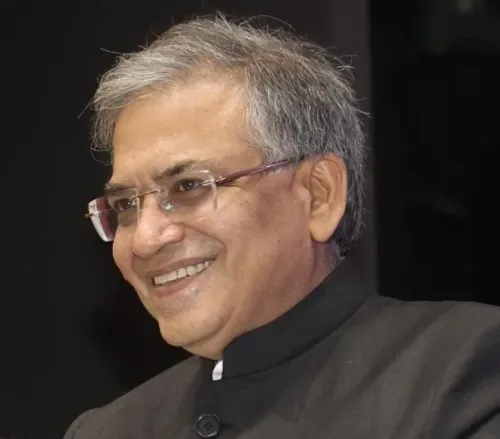
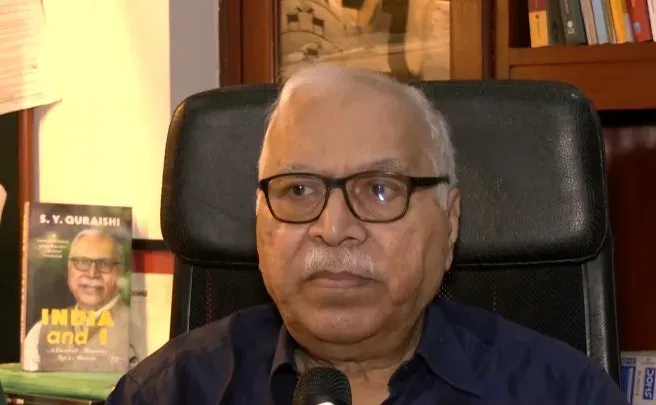
Former Chief Election Commissioner S.Y. Quraishi on Tuesday, 14 July revealed that the Bharatiya Janata Party (BJP) was once the most vocal critic of Electronic Voting Machines (EVMs), and that it was Telugu Desam Party (TDP) chief N. Chandrababu Naidu who proposed the Voter Verifiable Paper Audit Trail (VVPAT) — the very mechanism that eventually helped restore public confidence in India's electronic voting system.
BJP's Earlier Stance on EVMs
Quraishi recalled that when he assumed office as Chief Election Commissioner in 2010, doubts about EVMs were at their highest point. The BJP, he noted, had published a book titled 'Democracy at Risk', authored by G.V.L. Narasimha Rao with a foreword by senior leader L.K. Advani, which questioned the dependability and trustworthiness of the machines.
"The BJP was the biggest critic of EVMs, and they even wrote a book, 'Democracy at Risk'... they were questioning the dependability and trustworthiness of the EVMs," Quraishi said.
Chandrababu Naidu's Surprising Role
Shortly after taking charge, Quraishi convened a meeting with opposition party leaders to hear their concerns. The delegation was led by N. Chandrababu Naidu — a detail that surprised Quraishi, given Naidu's well-known reputation as a technology advocate.
"I was initially very surprised to see him leading a delegation which is anti-technology because he was a technology icon," Quraishi said. He added that he challenged Naidu directly: "At the end of the day, either you will convince me, or I'll convince you to become the brand ambassador of EVM."
Quraishi clarified that Naidu did not allege that EVMs had been tampered with or that election results had been manipulated. Naidu's concern, according to Quraishi, was the absence of visible transparency — that when a voter pressed a button, there was no way to verify with the naked eye that the vote had gone to the intended candidate.
How VVPAT Was Born
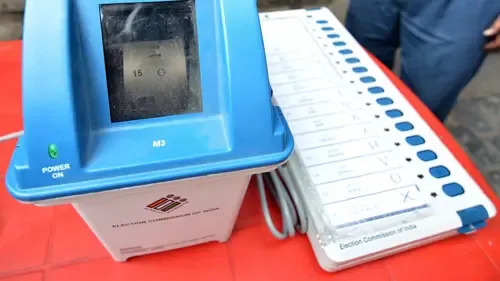
Naidu proposed a solution: attach a printer to the EVM that would display the chosen candidate's name on a screen momentarily, then automatically cut a paper slip that would drop into a sealed box. This slip count could then be cross-checked against the machine's digital tally.
Quraishi quoted Naidu as explaining: "Introduce VVPAT, which means there will be a printer attached, and on that printer there will be a screen on which, when you choose a candidate, it will appear on the screen... a chit or a slip will get cut automatically and go into a sealed box, and then you can compare the figures in the machine and the slips which it has generated."
The Election Commission of India (ECI) subsequently implemented VVPAT across polling stations. Quraishi said that during verification exercises, lakhs of paper slips were compared against machine counts — and all of them tallied. "With the help of VVPAT we were able to establish, re-establish the credibility of EVM," he said.
On the Current VVPAT Debate
Addressing the ongoing controversy over how many VVPAT slips should be counted, Quraishi urged dialogue over dismissal. He said that just as the original EVM concerns were resolved through conversation, the current questions around the extent of slip counting should also be settled through engagement with political parties.
"If some parties — and many parties in this case — are questioning it, we should listen to them. Surely, just as we listened to them and found a solution... if you talk to them and ask them to explain what it is that they want, surely a solution will be found," he said.
This comes amid renewed calls from several opposition parties for a higher percentage of VVPAT slip verification ahead of future elections. Quraishi's account adds a significant historical dimension to that debate, underscoring that the EVM's credibility was itself rebuilt through exactly such a process of political dialogue.
Point of View
Complete with a book bearing L.K. Advani's imprimatur. The VVPAT origin story is equally instructive — the system credited with restoring electoral trust was not an Election Commission initiative but a political demand from the opposition. What this tells us is that EVM credibility has always been a negotiated outcome, not a technical given. As the current VVPAT counting debate intensifies, Quraishi's implicit message is clear: the Commission has solved this kind of problem before through dialogue, and stonewalling is not the answer.
NationPress
13 Oct 2026
Frequently Asked Questions
Was the BJP always a supporter of EVMs?
No. According to former Chief Election Commissioner S.Y. Quraishi, the BJP was once the strongest critic of EVMs, even publishing a book titled 'Democracy at Risk' — authored by G.V.L. Narasimha Rao with a foreword by L.K. Advani — that questioned the machines' dependability and trustworthiness.
Who proposed the VVPAT system in India?
Former CEC S.Y. Quraishi credits N. Chandrababu Naidu with proposing the Voter Verifiable Paper Audit Trail (VVPAT). Naidu led an opposition delegation to the Election Commission around 2010 and suggested attaching a printer to EVMs so voters could visually verify their vote before a paper slip was sealed in a box for audit purposes.
What was Chandrababu Naidu's specific concern about EVMs?
Naidu did not allege that EVMs had been tampered with or that results had been manipulated. His concern, as recalled by Quraishi, was the absence of visible transparency — voters had no way to confirm with the naked eye that their vote had been recorded for the intended candidate.
Did VVPAT verification prove EVMs were accurate?
According to Quraishi, lakhs of VVPAT paper slips were compared against the digital counts recorded in the machines during verification exercises, and all of them tallied. He said this process helped re-establish the credibility of EVMs.
What is the current debate around VVPAT?
Political parties have raised questions about how many VVPAT slips should be counted during verification. Quraishi has urged the Election Commission to engage with these concerns through dialogue, noting that the original EVM credibility crisis was also resolved by listening to parties and finding a workable solution.