Tata Group to return to Bengal with investments, claims BJP's Samik Bhattacharya
Synopsis
Seventeen years after Ratan Tata’s emotional exit from Singur, West Bengal BJP chief Samik Bhattacharya has claimed the Tata Group is set to return with fresh investment proposals — a politically charged assertion with no Tata confirmation yet, but one that reopens Bengal’s most consequential industrial wound.
Key Takeaways
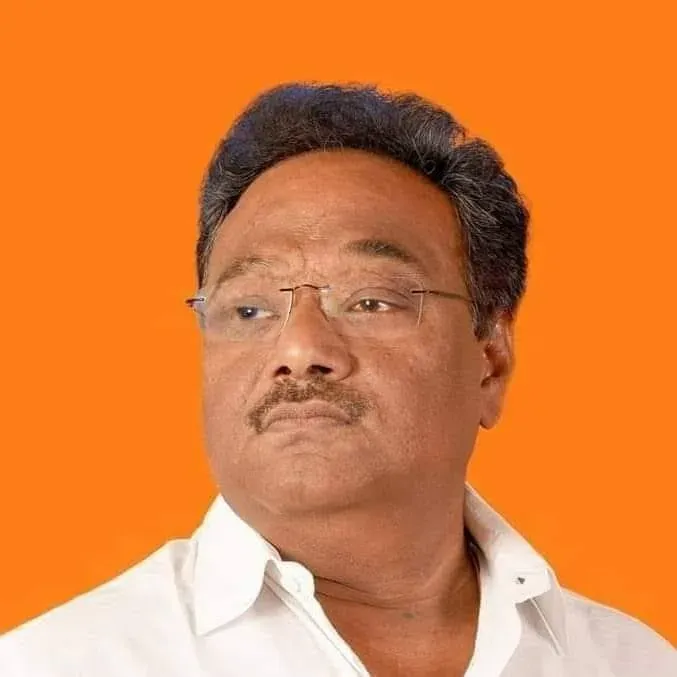
West Bengal BJP president Samik Bhattacharya claimed on 30 May that the Tata Group will return to the state with fresh investment proposals.
The claim references the Tata Motors Nano project exit from Singur, Hooghly on 3 October 2008 , following an anti-land acquisition agitation led by Mamata Banerjee .
The late Ratan Tata relocated the Nano project to Sanand, Gujarat , then governed by Narendra Modi .
No official statement from the Tata Group confirming any investment proposal has been cited.
The BJP frames industrialisation as its central pitch against the ruling All India Trinamool Congress (TMC) in West Bengal.
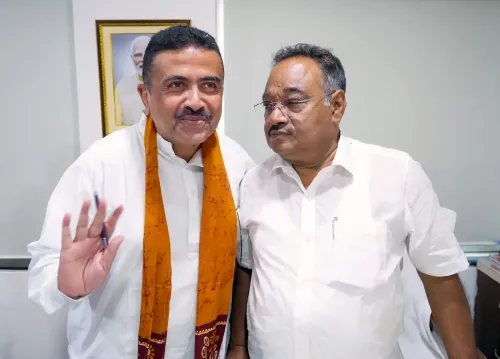
West Bengal BJP president and Rajya Sabha member Samik Bhattacharya claimed on Saturday, 30 May that the Tata Group would return to West Bengal with fresh investment proposals, reigniting a decades-old political flashpoint over the exit of the Tata Motors Nano project from Singur in Hooghly district back in October 2008. The claim, made via a social media post, comes as the BJP positions industrialisation as its central plank ahead of the next state electoral cycle.
What Bhattacharya Said
In his post, Bhattacharya invoked the memory of the late industrialist Ratan Tata, stating that the group had been compelled to abandon Singur amid the anti-land acquisition agitation led by then-Opposition leader Mamata Banerjee, who subsequently became Chief Minister of West Bengal. “On October 3, 2008, the Tata Group was forced to leave Singur, West Bengal. The late industrialist Ratan Tata left West Bengal with a heavy heart. Even today, the people of Bengal have not forgotten that wound, because when industry leaves, not only one company quits, thousands of jobs are also lost, development comes to a halt, and the future of the youth is pushed into darkness,” his post read.
Bhattacharya further asserted that the Bharatiya Janata Party (BJP) had taken on the responsibility of bringing the Tata Group back to the state. “The Tata Group will return to West Bengal. Industries will return. Jobs will return, and West Bengal will also move forward again towards development,” the post stated.
The Singur Exit: A Brief History
The Singur crisis of 2008 remains one of the most consequential industrial disputes in post-liberalisation India. When Ratan Tata announced the Nano project’s withdrawal from Singur on the afternoon of 3 October 2008 in Kolkata, he did so with a pointed remark directed at Banerjee: “I said that I will not pull out from Singur even if a gun is put to my head. But Miss Banerjee just pulled the trigger.”
The project subsequently relocated to Sanand in Gujarat, where Narendra Modi was then serving as Chief Minister — a political footnote that the BJP has repeatedly highlighted as evidence of Gujarat’s investor-friendly governance versus Bengal’s, critics argue.
BJP’s Industrial Pitch for Bengal
The BJP’s framing of the Tata return as a party-led initiative is notable. Bhattacharya’s post positions the party not merely as a political opposition but as an active broker of industrial revival, a narrative the BJP has used consistently in Bengal to contrast itself with the ruling All India Trinamool Congress (TMC). Notably, no official statement from the Tata Group confirming any investment proposal has been cited or independently verified.
What Happens Next
The claim is likely to draw a response from the TMC government, which has held its own investor summits — the Bengal Global Business Summit — to counter the narrative of industrial flight. Whether the Tata Group formally engages with West Bengal on fresh proposals remains to be seen. For now, Bhattacharya’s post has revived a politically charged chapter that both parties are unlikely to let rest.
Point of View
But it rests on no verifiable Tata Group commitment — a distinction the coverage must not blur. The Singur narrative has been the BJP’s most durable weapon in Bengal, linking Mamata Banerjee’s rise to industrial decline. What’s missing from this framing is accountability for the intervening 14 years of BJP opposition: the party has raised Singur repeatedly but has yet to produce a concrete industrial roadmap for Bengal. The TMC, for its part, has hosted investor summits with mixed follow-through. Bengal’s real industrial deficit is structural — land laws, labour relations, logistics — and no social media post resolves that.
NationPress
14 Oct 2026
Frequently Asked Questions
What did West Bengal BJP chief Samik Bhattacharya claim about the Tata Group?
Bhattacharya claimed in a social media post on 30 May that the Tata Group would return to West Bengal with fresh investment proposals. He said the BJP had taken on the responsibility of facilitating this return, citing the party’s belief that industrialisation is the only path to the state’s overall development.
Why did the Tata Group leave West Bengal in 2008?
The Tata Group exited West Bengal in October 2008 after sustained protests against land acquisition for the Nano car plant at Singur in Hooghly district. The agitation was led by then-Opposition leader Mamata Banerjee under the Trinamool Congress banner. Ratan Tata subsequently shifted the project to Sanand in Gujarat.
Has the Tata Group officially confirmed any return to West Bengal?
No official statement from the Tata Group confirming fresh investment proposals in West Bengal has been cited in connection with Bhattacharya’s claim. The assertion is attributed solely to the BJP leader’s social media post.
What was Ratan Tata’s reaction when the Nano project left Singur?
An emotional Ratan Tata said in Kolkata on 3 October 2008: ‘I said that I will not pull out from Singur even if a gun is put to my head. But Miss Banerjee just pulled the trigger.’ The project moved to Sanand, Gujarat, shortly after.
How does the Singur issue fit into West Bengal’s current politics?
The Singur exit remains a live political flashpoint, with the BJP using it to argue that the Trinamool Congress government drove away investment. The TMC has countered with its own Bengal Global Business Summits. The dispute over industrial policy is expected to intensify ahead of future state elections.