Singur chemical park: BJP's ₹1,500 crore proposal revives West Bengal's most contested industrial site
Synopsis
Eighteen years after Tata's Nano plant was forced out of Singur, BJP is pushing to bring large-scale industry back to the same land — this time through a ₹1,500 crore chemical park under a new Central scheme. The proposal, submitted to Chief Minister Suvendu Adhikari, puts West Bengal's ruling TMC in an awkward position: the party that killed the last Singur project now has to decide whether to revive it.
Key Takeaways
BJP West Bengal president Samik Bhattacharya has proposed a dedicated chemical park in the state at a combined investment of ₹1,500 crore or more .
Singur in Hooghly district — site of the 2007 Tata Nano land agitation — is listed as a top candidate location.
The proposal is pegged to the Centre's Bhavya Rasayan Scheme , approved on 24 July , which offers up to ₹1,000 crore per park against a minimum state contribution of ₹500 crore on 2,000 acres .
Three other candidate sites — Haldia , Raghunathpur , and Durgapur — have also been identified.
Bhattacharya has urged Chief Minister Suvendu Adhikari to set up an inter-departmental task force and engage the Union Chemicals Ministry before formal guidelines are issued.
The ruling TMC , which led the original Singur protests, has not yet responded to the proposal.
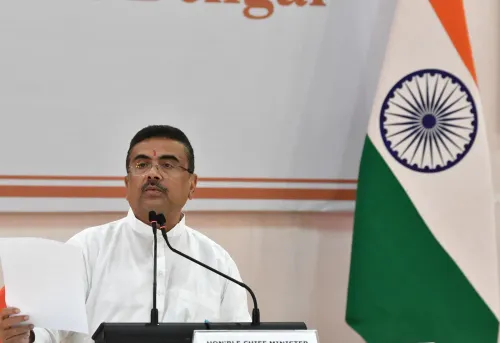
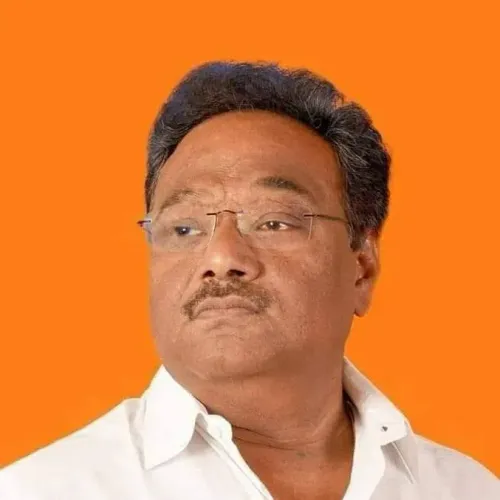
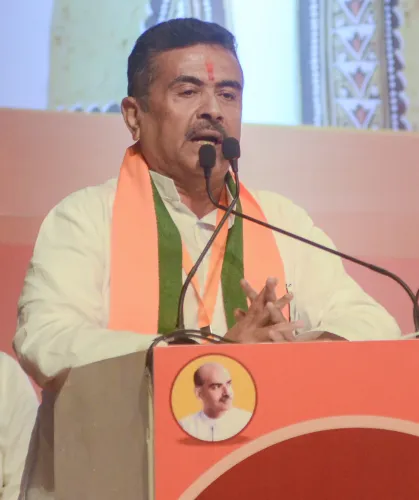
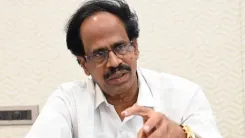
Bharatiya Janata Party (BJP) West Bengal president and Rajya Sabha MP Samik Bhattacharya has proposed establishing a dedicated chemical park in West Bengal at an estimated combined investment of ₹1,500 crore, with Singur in Hooghly district identified as one of the most suitable locations. The proposal has been submitted to Chief Minister Suvendu Adhikari, seeking to leverage a newly approved Central scheme that could bring up to ₹1,000 crore in Union funding to the state.
The Singur Connection
Singur carries deep political and industrial significance in West Bengal. In 2007, the site became the flashpoint of one of India's most consequential land-acquisition battles, when the then-opposition All India Trinamool Congress (TMC) led a prolonged and at times violent agitation against the acquisition of farmland for Tata Motors' Nano small car project under the late Buddhadeb Bhattacharjee-led Left Front government. The sustained protests ultimately forced the Tata Group to withdraw, with then-chairman Ratan Tata announcing the exit from Singur — ending one of the state's most contentious industrial ventures. That land has largely remained idle since, making it a recurring symbol of West Bengal's fraught relationship with large-scale industrialisation.
The Central Scheme Driving the Proposal
The immediate trigger for Bhattacharya's proposal is the Union Cabinet's approval on 24 July of the Bhavya Rasayan Scheme — a ₹3,030 crore Central initiative to establish three dedicated chemical parks across India. The scheme offers a Central grant of up to ₹1,000 crore per park, contingent on a minimum state contribution of ₹500 crore on a minimum of 2,000 acres of contiguous, encumbrance-free land. According to Bhattacharya, this creates a rare window for West Bengal to anchor a national-scale chemicals hub, with the state's combined infrastructure investment estimated at ₹1,500 crore or more, to be followed by private capital at a later stage.
Four Candidate Locations
Beyond Singur, Bhattacharya has identified three additional potential sites for the proposed park: Haldia in East Midnapore district, Raghunathpur in Bankura district, and Durgapur in West Burdwan district. All four locations were assessed on criteria including land availability, infrastructure readiness, and connectivity to downstream industrial clusters.
Projected Economic Impact
The proposal argues that the chemical park could generate direct employment across construction, plant operations, logistics, and ancillary micro, small and medium enterprises (MSMEs). Bhattacharya also cited multiplier effects for downstream sectors including agriculture, textiles, pharmaceuticals, automobiles, and electronics. The park would be developed with plug-and-play infrastructure — including a common effluent treatment plant (CETP), treatment, storage and disposal facility (TSDF), utilities, and pipelines — to attract anchor investors. In his submission, Bhattacharya described the project as 'a statement of intent that West Bengal is open for large-scale industrial investment, at a time when competing states will move quickly to stake their claims.'
What Bhattacharya Has Asked the CM to Do
Bhattacharya urged Chief Minister Adhikari to constitute an inter-departmental task force led by the state commerce and industries department and the West Bengal Industrial Development Corporation (WBIDC) to prepare the state's Challenge Route submission under the scheme. He also recommended that the WBIDC prepare an updated land title, encumbrance, and infrastructure-readiness dossier, and that the state proactively engage with the Union Ministry of Chemicals and Petrochemicals ahead of formal guidelines being issued. Earmarking the state's matching contribution in the upcoming budget, in consultation with the West Bengal Finance Department, was also recommended. Whether the ruling TMC government — which led the original Singur agitation — will act on a BJP proposal remains the central political question.
Point of View
The party is daring the ruling dispensation to either embrace large-scale industry — and implicitly repudiate its own founding agitation — or reject a Central scheme and hand the BJP a ready-made narrative about West Bengal being closed for business. The Bhavya Rasayan Scheme is real and the funding is on the table, but the proposal's fate will be decided less by industrial logic than by whether the TMC government is willing to hand its rival a visible win. West Bengal's track record of converting announced industrial projects into operational ones adds another layer of scepticism that neither party has addressed.
NationPress
13 Sept 2026
Frequently Asked Questions
What is the BJP's proposed chemical park in West Bengal?
BJP West Bengal president Samik Bhattacharya has proposed setting up a dedicated chemical park in West Bengal at a combined investment of ₹1,500 crore or more, with Singur in Hooghly district listed as one of the top candidate locations. The proposal has been submitted to Chief Minister Suvendu Adhikari and is linked to the Centre's newly approved Bhavya Rasayan Scheme.
What is the Bhavya Rasayan Scheme?
The Bhavya Rasayan Scheme is a ₹3,030 crore Central initiative approved by the Union Cabinet on 24 July to establish three dedicated chemical parks across India. It offers a Central grant of up to ₹1,000 crore per park, requiring a minimum state contribution of ₹500 crore on at least 2,000 acres of contiguous, encumbrance-free land.
Why is Singur significant for this proposal?
Singur became nationally prominent in 2007 when the then-opposition TMC led agitations against farmland acquisition for Tata Motors' Nano plant, ultimately forcing the Tata Group to withdraw. The land has remained largely unused since, and the BJP's proposal to site a chemical park there directly revisits one of West Bengal's most politically charged industrial controversies.
Which other locations have been proposed for the chemical park?
Beyond Singur, Bhattacharya has identified Haldia in East Midnapore district, Raghunathpur in Bankura district, and Durgapur in West Burdwan district as alternative candidate sites for the proposed chemical park.
What jobs and economic benefits are projected from the chemical park?
According to Bhattacharya's proposal, the park could generate direct employment in construction, plant operations, logistics, and ancillary MSMEs, with multiplier effects across agriculture, textiles, pharmaceuticals, automobiles, and electronics. The project would include plug-and-play infrastructure such as a CETP, TSDF, utilities, and pipelines to attract anchor investors.