BJP's Nitin Nabin leads Kolkata march, targets Rahul Gandhi and Mamata
Synopsis
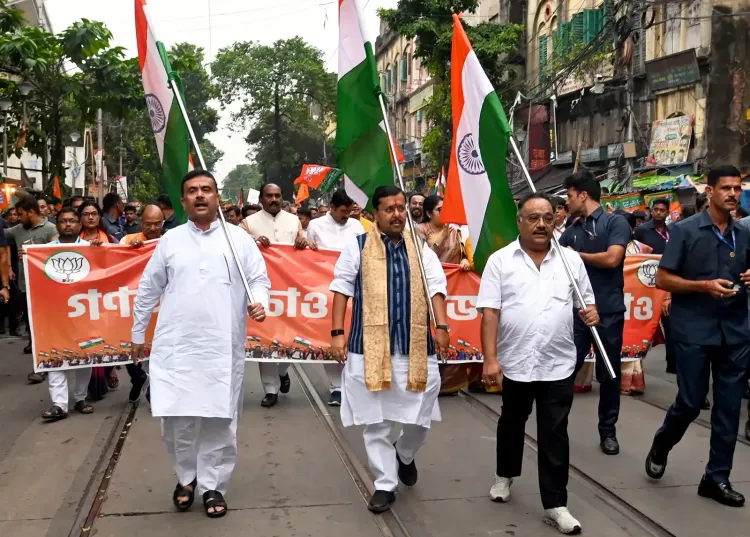
BJP national president Nitin Nabin took the party's counter-offensive to Mamata Banerjee's political backyard — marching through central Kolkata a day after the INDIA Bloc's Ramlila Maidan rally. His remarks framing Rahul Gandhi as a 'tool of foreign forces' and projecting a 'Rahul-free Delhi' signal a sharpening of the BJP's pre-2027 political offensive.
Key Takeaways
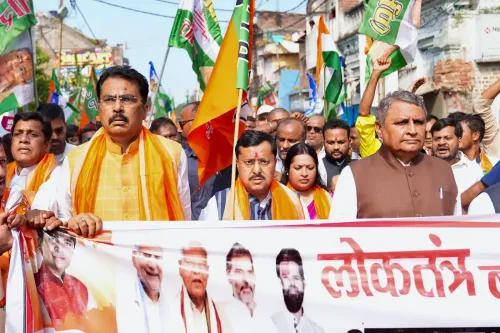
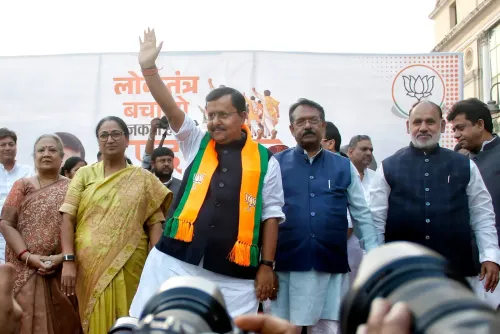
BJP national president Nitin Nabin led the 'Save Democracy, Remove Anarchy' march in Kolkata on 2 November 2026 .
The march ran from College Street to Esplanade , accompanied by CM Suvendu Adhikari and state BJP chief Samik Bhattacharya .
Nabin targeted Rahul Gandhi , alleging he acts as a 'tool kit of foreign forces' and called for a 'Rahul-free Delhi' .
The rally was a direct counter to the INDIA Bloc's 'Save the Vote' protest at Ramlila Maidan the previous day.
CM Adhikari claimed the BJP received 2 crore 92 lakh votes in the 2026 West Bengal elections .
Nabin projected BJP victories through 2027 (Uttar Pradesh) and 2029 (general elections).
Bharatiya Janata Party (BJP) national president Nitin Nabin on Monday, 2 November 2026, led the party's 'Save Democracy, Remove Anarchy' march through central Kolkata, using the occasion to launch a sharp double offensive against Leader of the Opposition Rahul Gandhi and former West Bengal Chief Minister Mamata Banerjee. The procession drew senior party figures and served as a direct counter to the Opposition's own national protest held the previous day.
How the March Unfolded
The rally began at College Street and concluded in the Esplanade area in central Kolkata. Alongside Nabin, the march was joined by West Bengal Chief Minister Suvendu Adhikari and state BJP president Samik Bhattacharya, presenting a united front of the party's national, state government, and organisational leadership.
The timing was deliberate. On Sunday, the INDIA Bloc had staged a 'Save the Vote, Save the Country' programme at Delhi's Ramlila Maidan, demanding the resignation of Chief Election Commissioner Gyanesh Kumar over the Election Commission's Special Intensive Revision (SIR) of electoral rolls. Monday's BJP march was framed as a direct rebuttal to that event.
Nabin's Remarks: From Bengal to Delhi
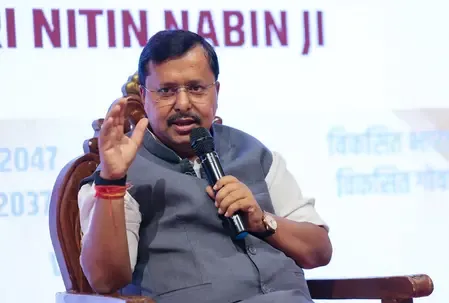
Addressing the crowd at Esplanade, Nabin declared, 'West Bengal is already completely free from Mamata. Unable to cope with the shock of defeat in his own state, the former Chief Minister is now crying in Delhi. Now Delhi too needs to be freed from Rahul quickly.'
He extended the attack to the broader Opposition coalition, saying: 'People of the INDIA Bloc, who were defeated in their respective states, had gathered in Delhi to cry. The manner in which TMC was wiped out in Bengal, Congress and AAP were wiped out in Delhi. In Bihar too, RJD was completely wiped out. Now, it is Uttar Pradesh's turn; we had defeated Akhilesh Yadav earlier too, and we will defeat him in 2027 too. Such people with anarchist mindsets are led by Rahul Gandhi.'
Nabin also levelled a pointed allegation against the Congress leader, saying, 'Rahul Gandhi is acting as the tool kit of foreign forces. When there was unrest in Bangladesh, he was sympathetic towards the elements who were causing the unrest. When elements try to cause unrest in Nepal, he expresses sympathy to them.'
BJP's Claims on Governance and Electoral Mandate
Nabin invoked Prime Minister Narendra Modi's welfare record to sharpen the contrast with the Opposition, claiming that more than 25 crore poor families have risen above the poverty line under Modi's government. He attributed the BJP's victories in 2019 and 2024 to this track record and projected a third consecutive win in 2029.
He also praised Modi's leadership style, saying: 'When it comes to national security, he stands as a Chowkidar; during a crisis like COVID-19, he stands as the Pradhan Sevak of the nation.'
Adhikari Reframes the SIR Debate
Chief Minister Suvendu Adhikari offered his own interpretation of the Election Commission's Special Intensive Revision process, stating: 'Whatever SIR means to the opposition, for us the real meaning of SIR is — remove the infiltrators, save India.'
Adhikari also contextualised the BJP's political standing in the state, saying that in the 2026 West Bengal elections, the party received 2 crore 92 lakh votes. He alleged that the Opposition's current protests were motivated by attempts to 'save themselves from corruption and jail terms, to maintain the dynasty and to bring back the politics of appeasement.'
What This Signals
The Kolkata march underscores the BJP's strategy of turning the Opposition's election integrity protests into a referendum on the INDIA Bloc's electoral losses across multiple states. Notably, the choice of Kolkata — the political home turf of the Trinamool Congress (TMC) — amplifies the symbolic weight of the demonstration. With the Uttar Pradesh assembly elections of 2027 now on the horizon, Monday's rally also served as an early mobilisation signal for the BJP's next major electoral battle.
Point of View
BJP-governed city — is a calculated act of political theatre, signalling confidence on TMC's home ground after the 2026 West Bengal result. Nabin's 'foreign forces' allegation against Rahul Gandhi is a well-worn BJP attack line, but its repetition in this context suggests the party views the INDIA Bloc's election-integrity campaign as a vulnerability it can exploit rather than a threat it needs to answer. The SIR controversy, however, remains unresolved: the Opposition's demand for accountability from the Election Commission has not been substantively addressed by any BJP speaker, which means the underlying tension over electoral roll integrity will persist into the UP 2027 cycle. The march's forward-looking rhetoric — targeting UP 2027 and the 2029 general elections — reveals that this was as much a mobilisation exercise as a protest counter.
NationPress
2 Nov 2026
Frequently Asked Questions
What was the BJP's 'Save Democracy, Remove Anarchy' march in Kolkata about?
It was a rally led by BJP national president Nitin Nabin on 2 November 2026, marching from College Street to Esplanade in central Kolkata. The event was a direct counter to the INDIA Bloc's 'Save the Vote, Save the Country' protest at Delhi's Ramlila Maidan the previous day, which demanded the resignation of Chief Election Commissioner Gyanesh Kumar over the Election Commission's Special Intensive Revision of electoral rolls.
What did Nitin Nabin say about Rahul Gandhi at the Kolkata march?
Nabin called for a 'Rahul-free Delhi', alleging that Rahul Gandhi was acting as a 'tool kit of foreign forces' and expressing sympathy toward destabilising elements in Bangladesh and Nepal. He also said that without addressing internal shortcomings, Congress risks becoming irrelevant.
Why did the BJP hold this march in Kolkata specifically?
Kolkata is the political base of the Trinamool Congress (TMC), and the BJP's choice to march there carries strong symbolic weight following the party's claimed electoral gains in the 2026 West Bengal assembly elections. Nabin and Suvendu Adhikari both used the occasion to underscore the TMC's weakened position.
What is the Election Commission's SIR process that triggered the Opposition protest?
The Special Intensive Revision (SIR) is an electoral roll review process initiated by the Election Commission of India. The INDIA Bloc alleges it could lead to voter deletions and has demanded the resignation of Chief Election Commissioner Gyanesh Kumar. The BJP has defended the process, with Adhikari framing SIR as a mechanism to 'remove infiltrators'.
What did West Bengal CM Suvendu Adhikari say at the rally?
Adhikari claimed the BJP received 2 crore 92 lakh votes in the 2026 West Bengal elections and accused the Opposition of protesting to 'save themselves from corruption and jail terms' and to revive dynastic and appeasement politics. He also reinterpreted SIR to mean 'remove infiltrators, save India'.