How Did BJP Counter Rahul Gandhi's Allegations?
Synopsis
The BJP's rebuttal to Rahul Gandhi's charges highlights their commitment to national interests and data integrity. With strong facts and counterarguments, the party defends its policies against allegations of foreign compromise.
Key Takeaways
BJP firmly counters Rahul Gandhi's claims with facts.
Data localization initiative aims to protect Indian citizens' data.
Proposals for strengthening supply chains are included in the Budget.
India's trade surplus with the US has significantly increased.
The Modi government prioritizes national interests in energy security.
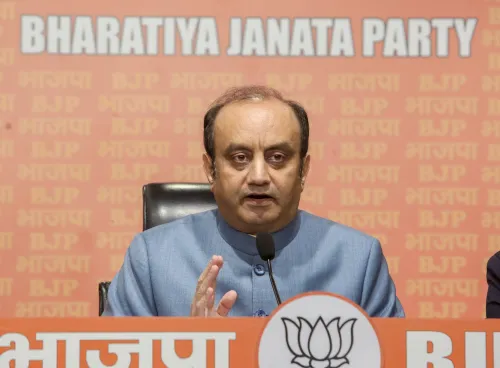
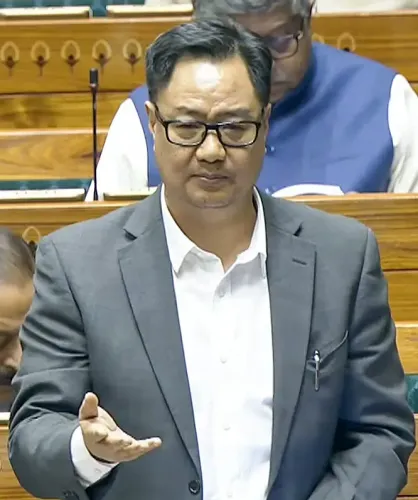
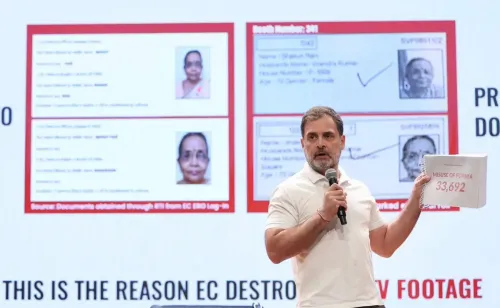
New Delhi, Feb 11 (NationPress) The Bharatiya Janata Party (BJP) on Wednesday presented a robust rebuttal to the Leader of Opposition (LoP) Rahul Gandhi’s series of accusations, which included claims of compromising national interests and yielding to foreign powers. From spokespersons to Union Ministers, the party disseminated facts aimed at dismantling Rahul's assertions.
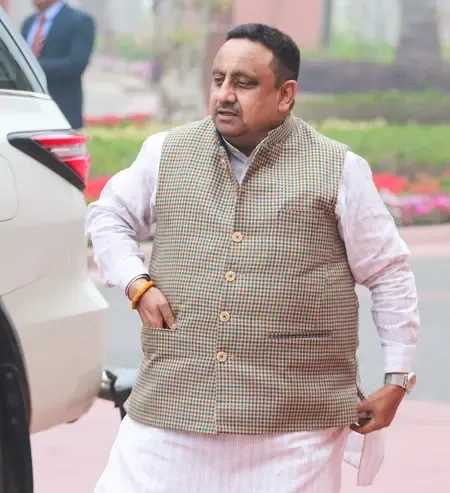
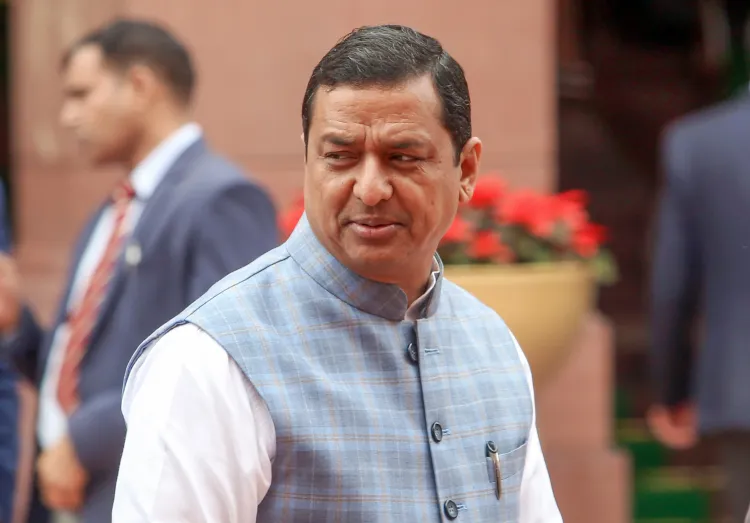
BJP’s chief spokesperson and Lok Sabha MP Anil Baluni utilized X to share a detailed point-by-point response to Rahul Gandhi’s unfounded and misleading allegations regarding the India-US trade deal, labeling his statements about the nation’s data as “lies”. Rahul had characterized data as the most significant asset of the 21st century.
During the Budget session in the Lok Sabha, Baluni remarked that Rahul opted for theatrics over factual discourse, thus misleading both the House and the populace.
“He didn’t simply critique the documents. He misquoted, misread, and constructed arguments on those distortions. Parliament deserves scrutiny rooted in facts, not selective interpretations. Misrepresenting the Budget undermines democratic debate and disrespects the intellect of the Indian people,” Baluni emphasized.
Addressing Rahul's claim about the government allegedly surrendering data to the US, he refuted it as entirely false and pointed out that the Union Budget proposed tax incentives for companies establishing data centers in India until 2047.
“This initiative will bolster India’s objective of data localization. More data centers in India translate to enhanced opportunities for our IT sector, enabling them to provide cloud and AI solutions to Western clients. The data of 1.4 billion Indians will remain in India,” he asserted.
Baluni also dismissed Rahul’s allegations that the Budget lacked provisions to strengthen India’s supply chains amid global volatility, citing proposals for rare earths, a new semiconductor mission, and various critical mineral corridors across states like Odisha, Andhra Pradesh, Kerala, and Tamil Nadu.
In countering Rahul’s assertions regarding the digital service tax, Anil Baluni stated that the agreement clearly indicates that new digital regulations will be negotiated between India and the US.
He criticized the Congress MP for referencing an “outdated version” of the fact sheet and firmly rejected insinuations of India opening its agricultural sector to US exports.
“First, the updated US Government fact sheet makes no mention of pulses. Second, India imports pulses worth over $2 billion each year,” Baluni noted.
He reiterated that the Commerce Minister has consistently maintained that India will not open its agricultural and dairy sectors to the USA, a stance upheld by the Modi Government during its Free Trade Agreement discussions with the European Union.
Refuting Rahul’s claims of tariff increases from 3% to 18%, Baluni described this as an inaccurate and incomplete assessment.
He further accused Rahul of advancing arguments based on documents that no longer reflect the current reality.
“He is relying on an outdated US government fact sheet that framed India’s proposed $500 billion purchases as a commitment. That language has since been amended. By using an obsolete fact sheet, Gandhi is presenting an exaggerated claim that the US government has retracted,” he stated.
He also dismissed suggestions that India had received no commitments from the US regarding exports, highlighting that since FY15, India’s trade surplus with the US has doubled from $20 billion to $40.9 billion in FY25.
In terms of facts, he stated, “Our exports to the US surged from $42.4 billion in FY15 to $86 billion in FY25. Since 2022, our electronic exports to the US have escalated from nearly zero to $20 billion in 2025.”
Rahul’s significant accusation against the Modi government was that it yielded to US pressure, jeopardizing India’s energy security. Baluni dismissed this claim, asserting that India has consistently prioritized its national interests, with imports from Russia increasing from about 0.1 million barrels per day to nearly 2 million barrels per day in 2023. This reflects strategic autonomy, not capitulation.
“The Modi government has demonstrated its willingness to circumvent Western pressure to ensure India’s energy requirements. Rahul Gandhi’s argument has been invalidated, and it is important to remember that his own party opposed Russian oil imports at that time,” he concluded.
Point of View
Ensuring that the discussion remains rooted in factual evidence. The BJP's defense highlights its commitment to national interests and the importance of maintaining data integrity.
NationPress
22 Sept 2026
Frequently Asked Questions
What were the main allegations made by Rahul Gandhi?
Rahul Gandhi accused the BJP of compromising national interests, yielding to foreign powers, and mismanaging India's data.
How did the BJP respond to these allegations?
The BJP provided a detailed rebuttal, emphasizing facts and data to counter Rahul's claims, while highlighting their commitment to India's data localization and trade integrity.
What specific points did Anil Baluni address?
Anil Baluni addressed issues regarding data localization, supply chain fortification, and the accuracy of trade agreements with the US.
What is the significance of data localization in India?
Data localization is crucial for protecting the data of Indian citizens, enhancing the capabilities of local IT companies, and ensuring national security.
What does the BJP's budget proposal include regarding data centers?
The BJP's budget proposal offers tax breaks for companies establishing data centers in India until 2047, supporting the goal of data localization.