BKI shifts to 'slow and steady' Punjab strategy: Police killings, drone smuggling rise

Synopsis
BKI has quietly dropped its ambition for a full-scale insurgency in Punjab and replaced it with a calculated war of attrition — frequent police killings, drone-dropped weapons, and coordinated propaganda. Intelligence officials warn the design is to exhaust Punjab's security apparatus until a single gap allows a major strike.
Key Takeaways
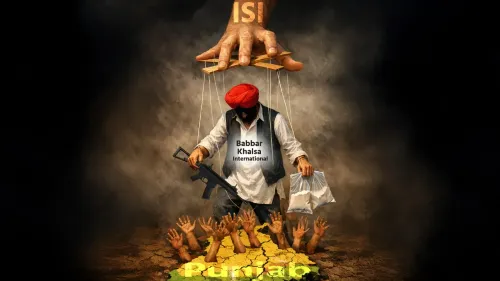
Babbar Khalsa International (BKI) , backed by Pakistan's ISI , has adopted a 'slow and steady' low-intensity pressure strategy in Punjab after the Khalistan movement failed to gain traction.
Four Punjab Police personnel have been killed in targeted attacks so far in 2026 , including ASI Gurnam Singh , Ashok Kumar , ASI Joga Singh , and ASI Harjit Singh .
Between 3–16 September 2026 , Punjab Police seized 33 kg of heroin , 38 firearms (including AK-47s), and 115 live cartridges in nine separate incidents .
The strategy runs on two tracks: operational exhaustion of security forces and a parallel propaganda offensive led by outfits such as Sikhs for Justice (SFJ) .
Intelligence officials warn the goal is to stress Punjab's security system until a single failure enables a large-scale attack.
Babbar Khalsa International (BKI), backed by Pakistan's Inter-Services Intelligence (ISI), has abandoned its original plan for a full-scale military-style insurgency in Punjab and adopted a calculated 'slow and steady' approach — one that involves frequent targeted killings of police personnel, intensified drone activity, and systematic arms and drug smuggling, according to intelligence officials. Security agencies say the trend has become a major concern as of September 2026.
Why the Strategy Shifted
The Khalistan movement failed to attract sufficient grassroots support in Punjab, making large-scale recruitment and coordinated military-style operations unviable. According to officials, the ISI assessed that the original approach was not delivering results and directed a tactical recalibration. The new model prioritises sustained, low-intensity pressure over spectacular single events.
An Intelligence Bureau official described the emerging pattern as significant. 'With the Khalistan movement failing to gain the expected traction, the BKI has now shifted towards carrying out smaller operations at regular intervals,' the official said. 'This is aimed at stressing the security mechanism in Punjab. When the mechanism is under pressure, it is easier to launch large-scale operations in the state.'
Police Killings and Targeted Attacks
The targeting of police personnel has escalated sharply in 2026. On 23 February, Assistant Sub-Inspector Gurnam Singh and constable Ashok Kumar were shot dead at a border check post near the International Border. On 24 May, Assistant Sub-Inspector Joga Singh was killed in an early-morning attack. Earlier this month, Assistant Sub-Inspector Harjit Singh was shot dead in a separate attack — just days after another Assistant Sub-Inspector was shot at near Ajnala, though that officer survived.
Multiple threats have also been issued to Punjab Police regarding personnel safety. Officials characterise this as a deliberate psychological campaign orchestrated by the ISI — designed to generate a sense of constant, imminent threat even when large-scale attacks are not immediately planned.
Arms and Drug Smuggling Data
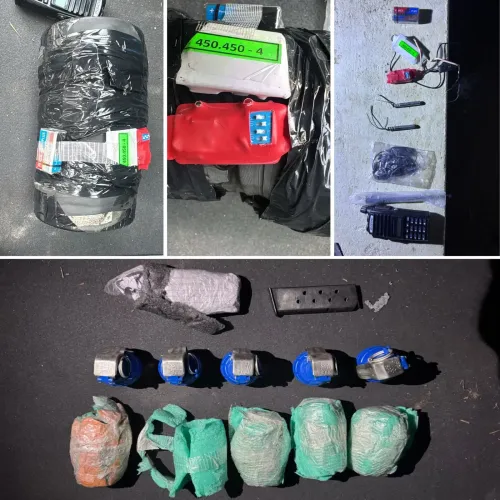
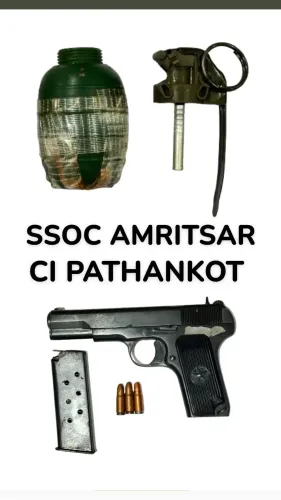
The scale of drone-facilitated smuggling into Punjab has also risen. Between 3 September and 16 September 2026 alone, Punjab Police recorded seizures on nine separate occasions. During this 12-day window, authorities recovered 33 kg of heroin, 38 firearms — including AK-47s, pistols, illegal pistols, and .30 bore pistols — and 115 live cartridges. Officials note that both the frequency of targeted killings and the volume of weapon drops via drones have increased over the year.
The Dual Pressure: Security and Propaganda
Intelligence officials say the BKI strategy operates on two parallel tracks. The first is operational: keeping Punjab Police perpetually engaged in thwarting attacks and interceptions, so that a single lapse could enable a major strike. The second is informational: outfits such as Sikhs for Justice (SFJ) have intensified a propaganda offensive running simultaneously with the ground operations.
'The big attacks are clearly not on the cards for now. However, if one gets to read about police officials being targeted so frequently, and the quantity of arms, ammunition, and drugs being pushed into the state only leads to a panic situation. It feels as though the state is always under an imminent threat,' officials said.
What Security Agencies Are Watching
While Punjab Police have reportedly foiled several operations by Khalistani groups, officials acknowledge that the cumulative pressure on the security apparatus is real and growing. The concern is structural: the BKI needs the security mechanism to fail just once to escalate to a larger operation. Analysts note this mirrors low-intensity conflict doctrine — exhaust the defender before the decisive strike. How Punjab's security establishment manages bandwidth while countering both kinetic and psychological pressure will define the trajectory of the threat in the months ahead.
Point of View
A drumbeat of low-intensity incidents is harder to politically price and easier to normalise. What's underreported is the bandwidth problem: Punjab Police must simultaneously manage kinetic threats, drone interdiction, and an information war, all while being a target themselves. The systemic risk is not any single attack — it is cumulative exhaustion leading to the one operational gap the BKI is deliberately engineering.
NationPress
22 Sept 2026
Frequently Asked Questions
What is BKI's new strategy in Punjab?
Babbar Khalsa International (BKI) has shifted from a planned full-scale military-style insurgency to a 'slow and steady' approach of frequent small operations, targeted police killings, and drone-facilitated arms and drug smuggling. Intelligence officials say the goal is to keep security agencies under constant pressure until a major attack becomes feasible.
Why did the Khalistan movement change tactics in Punjab?
The Khalistan movement failed to attract sufficient local support, making large-scale recruitment and coordinated operations unviable. Pakistan's ISI, which backs BKI, reportedly concluded that the original approach was not working and directed a shift to sustained low-intensity pressure.
How many Punjab Police personnel have been killed in 2026?
At least four Punjab Police personnel have been killed in targeted attacks in 2026: ASI Gurnam Singh and constable Ashok Kumar on 23 February, ASI Joga Singh on 24 May, and ASI Harjit Singh earlier this month. A fifth officer survived a shooting near Ajnala.
How much contraband has been seized in Punjab in September 2026?
Between 3 and 16 September 2026, Punjab Police conducted nine separate seizures, recovering 33 kg of heroin, 38 firearms including AK-47s and .30 bore pistols, and 115 live cartridges. Officials say both seizure frequency and volumes have risen over the year.
What role does propaganda play in BKI's Punjab strategy?
Alongside ground operations, outfits such as Sikhs for Justice (SFJ) have intensified a propaganda offensive designed to amplify fear and a sense of perpetual threat. Intelligence officials describe this as a psychological battle orchestrated by the ISI, running in parallel with kinetic activity to compound pressure on the security establishment.