India-OPEC energy ties: Puri, Al Ghais meet in New Delhi on 22 Sep
Synopsis
India and OPEC have reaffirmed their energy partnership at a high-level New Delhi meeting, with both sides agreeing to deepen cooperation on oil market stability and investment. With the 8th OPEC-India Dialogue set for Vienna, the dialogue — now eleven years old — is shaping up as a critical lever for India's energy security strategy as its crude import needs continue to grow.
Key Takeaways
India and OPEC held a high-level energy dialogue in New Delhi on 22 September 2026 .
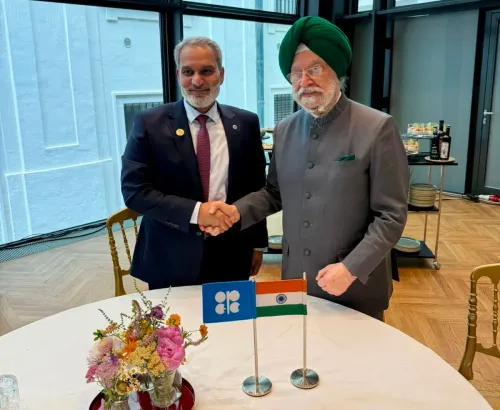
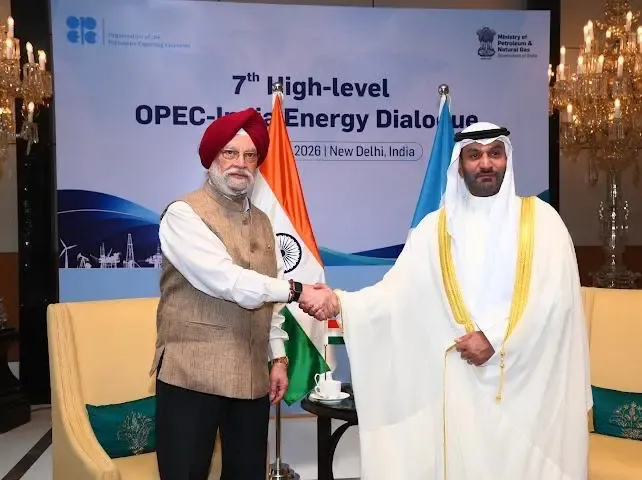
The meeting was co-chaired by Petroleum Minister Hardeep Singh Puri and OPEC Secretary General Haitham Al Ghais .
Talks focused on oil market stability , energy security, and investment across the oil industry.
The OPEC-India Energy Dialogue was launched in New Delhi in 2015 and is now eleven years old .
Both sides agreed to hold the 8th High-Level Meeting of the dialogue in Vienna at a mutually convenient date.
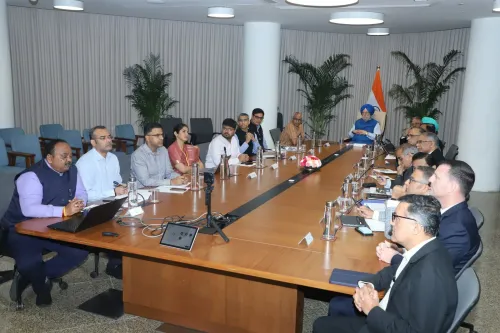
India and the Organisation of the Petroleum Exporting Countries (OPEC) on Tuesday, 22 September 2026, agreed on 'the vital importance of fostering even deeper energy cooperation' at a high-level bilateral meeting held in New Delhi. The session was co-chaired by Minister of Petroleum and Natural Gas Hardeep Singh Puri and OPEC Secretary General Haitham Al Ghais, marking a fresh push to anchor India's energy security within a producer-consumer framework.
Key Agenda: Stability, Security and Investment
Discussions centred on oil market stability, energy security, and the need for adequate and timely investment across the oil industry, according to an official statement. Both sides reviewed short-, medium-, and long-term market outlooks, with particular attention to India's role as a leading driver of global energy demand growth in the coming decades.
What India Said
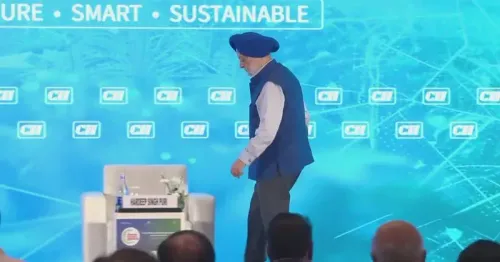
Puri underlined that India and OPEC share a 'naturally complementary and mutually beneficial relationship,' crediting the partnership with contributing significantly to mutual understanding on key energy issues. He highlighted the importance of working closely toward a 'balanced, stable and predictable global energy market' — especially against a backdrop of geopolitical uncertainties and market volatility. 'As one of the world's fastest-growing major economies, India will remain an important driver of global energy demand in the decades ahead. A sustained dialogue between producers and consumers is essential to support investment, strengthen energy resilience and ensure reliable energy supplies for global growth and development,' the minister said.
What OPEC Said
Al Ghais was equally emphatic, stating: 'Dialogue with India is a priority for OPEC because we recognise India's importance within the current global energy landscape and the fact that this importance will only increase in the decades ahead.' He noted that the OPEC-India Energy Dialogue is eleven years strong, having been launched in New Delhi in 2015. The Secretary General also commended India's 'balanced, realistic and pragmatic approach' to energy challenges, stressing that 'many of India's energy priorities are OPEC's priorities.' He added praise for India's consistent advocacy of diplomacy and dialogue as tools for resolving global challenges.
What Was Agreed and What Comes Next
Both parties agreed to convene the 8th High-Level Meeting of the OPEC-India Energy Dialogue at a mutually convenient date in Vienna. This comes amid a period of elevated geopolitical risk in global energy markets, with OPEC+ supply decisions continuing to influence crude benchmarks and, by extension, India's import bill. Notably, India is among the world's largest crude importers, making the stability and predictability of OPEC output directly consequential for domestic fuel prices and inflation.
The next high-level meeting in Vienna will be watched closely for any concrete investment commitments or supply assurances that move beyond the diplomatic framework established so far.
Point of View
But the strategic stakes are not routine. India's crude import dependence makes it acutely vulnerable to OPEC+ supply decisions, and New Delhi's push for a 'balanced and predictable' market is, in effect, a plea for supply certainty that insulates it from price shocks. The eleven-year dialogue has delivered goodwill but few binding commitments — the real test will be whether the Vienna meeting produces anything more substantive on investment timelines or supply floors. India's dual posture — buying discounted Russian crude while courting OPEC — also adds a quiet tension that neither side has directly addressed in public statements.
NationPress
22 Sept 2026
Frequently Asked Questions
What was agreed at the India-OPEC meeting on 22 September 2026?
India and OPEC agreed on the vital importance of deepening energy cooperation, focusing on oil market stability, energy security, and investment. Both sides also agreed to hold the 8th High-Level Meeting of the OPEC-India Energy Dialogue in Vienna at a mutually convenient date.
Who represented India and OPEC at the New Delhi meeting?
The meeting was co-chaired by India's Minister of Petroleum and Natural Gas Hardeep Singh Puri and OPEC Secretary General Haitham Al Ghais .
How long has the OPEC-India Energy Dialogue been running?
The OPEC-India Energy Dialogue was launched in New Delhi in 2015 and is now eleven years old, as noted by OPEC Secretary General Haitham Al Ghais at the meeting.
Why does the India-OPEC partnership matter?
India is one of the world's largest crude oil importers and a fast-growing major economy, making it a critical energy consumer for OPEC member countries. Stable and predictable oil supplies from OPEC are directly linked to India's domestic fuel prices and broader inflation management.
Where will the next India-OPEC high-level meeting be held?
The 8th High-Level Meeting of the OPEC-India Energy Dialogue is set to be held in Vienna, at a mutually convenient date to be confirmed by both sides.