India-Japan defence technology talks: Singh meets Taro Kono in New Delhi

Synopsis
India and Japan held back-to-back defence and diplomatic meetings in New Delhi on 21-22 September 2026, with the LDP delegation also visiting IISc, ISRO and BEL in Bengaluru. The talks signal a push toward deeper co-development and supply chain resilience — and hint at concrete defence-industrial proposals ahead of the next Modi-Takaichi summit.
Key Takeaways
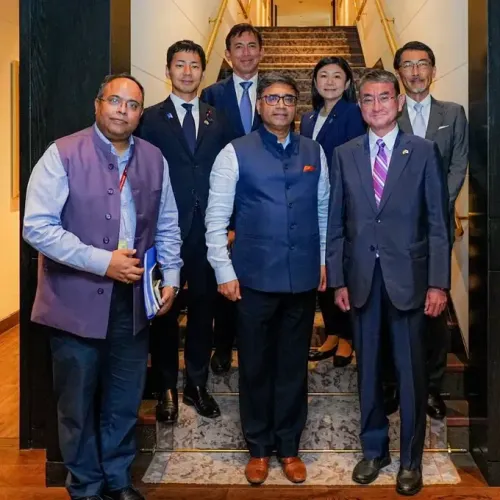
Defence Secretary Rajesh Kumar Singh met LDP delegation chief Taro Kono in New Delhi on 22 September 2026 .
Talks covered bilateral defence technology collaboration , joint exercises , and Indo-Pacific regional security .
The delegation also met Foreign Secretary Vikram Misri on 21 September 2026 , covering economic security, supply chain resilience and technology.
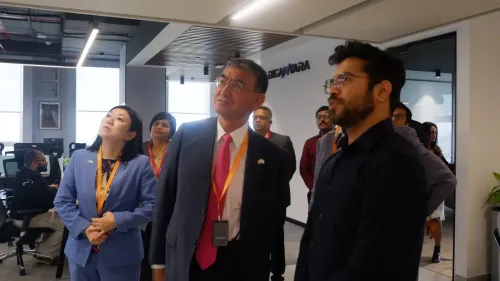
Japanese MPs visited IISc , ISRO , and Bharat Electronics Limited in Bengaluru before the New Delhi leg.
The visit falls under the India-Japan Distinguished Visitors Programme , running from 18-22 September 2026 .
Both sides underlined the partnership as an anchor for stability in the Indo-Pacific , guided by directions from the 16th Annual Summit .
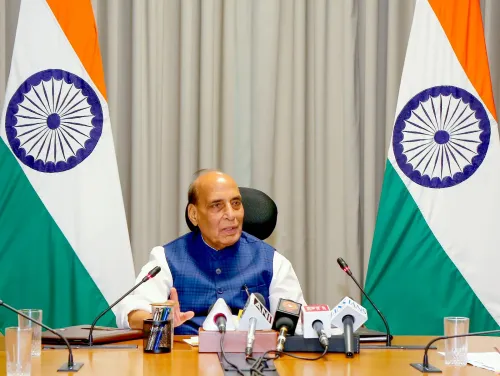
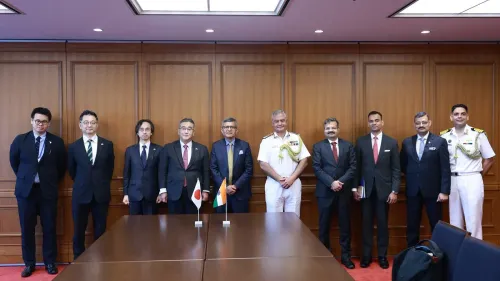
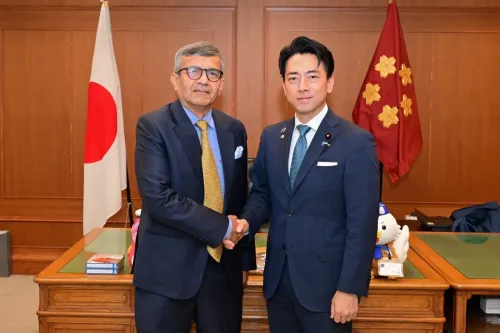
Defence Secretary Rajesh Kumar Singh on 22 September 2026 held wide-ranging discussions with a visiting Japanese parliamentary delegation led by Taro Kono, Director General of International Cooperation at Japan's Liberal Democratic Party (LDP), in New Delhi. The talks centred on strengthening bilateral defence technology collaboration, joint military exercises, and regional security cooperation for peace and stability in the Indo-Pacific.
What Was Discussed
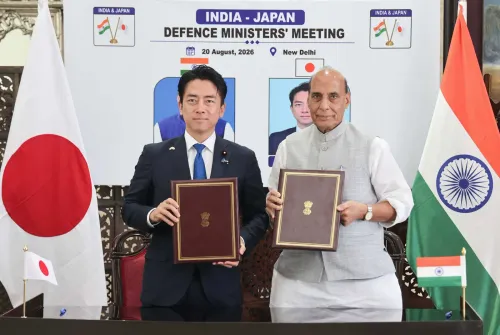
According to the Ministry of Defence, the meeting produced a 'productive exchange of views' covering three core pillars: defence technology co-development, expanded joint exercises, and a coordinated approach to Indo-Pacific security. The talks signal continued momentum in a partnership that has deepened considerably over the past decade, moving well beyond ceremonial exchanges into substantive defence-industrial territory.
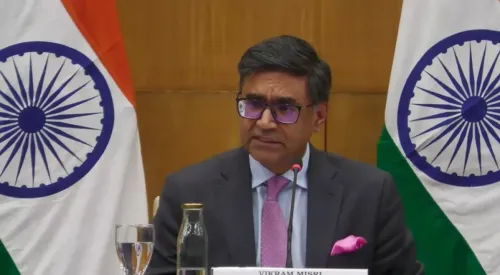
A day earlier, on 21 September 2026, the same delegation called on Foreign Secretary Vikram Misri. Those discussions spanned a wider canvas — defence, economic security, supply chain resilience, trade and investment, technology, innovation, and people-to-people linkages — reflecting the breadth of the India-Japan Special Strategic and Global Partnership.
The Parliamentary Delegation
The LDP delegation arrived in India under the India-Japan Distinguished Visitors Programme, scheduled from 18 to 22 September 2026. Alongside Kono, the delegation included Kenji Nakanishi, Deputy Chairperson of the LDP Policy Research Council; Karen Makishima, Acting Director of the LDP International Bureau and Deputy Chair of the Committee for the Promotion of a Digital Society; and Sakon Yamamoto, according to a statement from the Ministry of External Affairs (MEA).
Bengaluru Visits: Tech, Space and Defence
Before travelling to New Delhi, the Japanese lawmakers visited Bengaluru, where they toured the Indian Institute of Science (IISc), the Indian Space Research Organisation (ISRO), and Bharat Electronics Limited (BEL). The Indian Embassy in Japan noted that the visits reflect the depth of ongoing cooperation between the two nations and the opportunities that lie ahead, particularly in AI, technology, space, defence, and startups.
The delegation reportedly noted the strides made by India's deep-tech entrepreneurship ecosystem and commended the scope and speed of the country's economic development, including its growing manufacturing base. They assessed the need for a more intensive economic security partnership, with a specific emphasis on de-risking and supply chain resilience.
Strategic Context and the Modi-Takaichi Direction
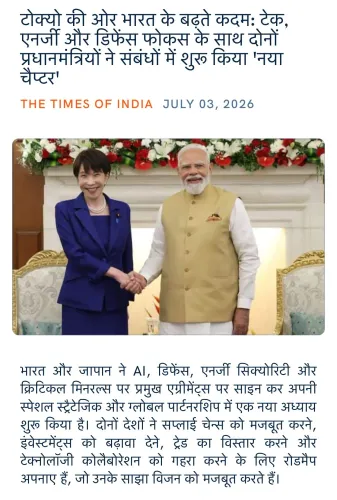
The MEA's statement underlined that, given 'rapid global economic and political churn', both sides regard the India-Japan Special Strategic and Global Partnership as 'an anchor for peace and stability in the Indo-Pacific'. The engagement is guided by directions set at the 16th Annual Summit between Prime Minister Narendra Modi and Prime Minister Takaichi. This visit comes at a time when both nations are actively working to diversify supply chains away from single-point dependencies — a concern shared across the Quad framework that counts both India and Japan as members. Notably, the focus on BEL and ISRO during the Bengaluru leg underscores Japan's interest in co-investing in India's defence-industrial and space sectors, areas where bilateral cooperation is still at a relatively early stage compared to India's partnerships with France or the United States.
What Comes Next
No specific agreements or timelines were announced following the meetings, but the sustained high-level engagement — spanning both the defence and foreign affairs tracks — suggests that concrete co-development proposals may be formalised at or ahead of the next annual bilateral summit. Industry observers will watch for any follow-on announcements from BEL or the Defence Research and Development Organisation (DRDO) regarding Japan-linked technology transfer or joint venture frameworks.
Point of View
And both New Delhi and Tokyo have domestic-political incentives to show progress. Yet the absence of any announced co-development framework after years of similar exchanges raises a fair question about whether the partnership has moved beyond goodwill into binding commitments. The Modi-Takaichi summit directions cited by the MEA will need to produce measurable deliverables soon — rhetoric about Indo-Pacific stability is no longer enough to hold the partnership's expanding ambitions together.
NationPress
22 Sept 2026
Frequently Asked Questions
What did India and Japan discuss in their 22 September 2026 meetings?
Defence Secretary Rajesh Kumar Singh and LDP delegation chief Taro Kono discussed strengthening bilateral defence technology collaboration, joint military exercises, and regional security cooperation for peace and stability in the Indo-Pacific. The meetings took place in New Delhi as part of the India-Japan Distinguished Visitors Programme.
Who were the members of the Japanese parliamentary delegation that visited India?
The LDP delegation was led by Taro Kono, Director General of International Cooperation. Other members included Kenji Nakanishi (Deputy Chairperson, LDP Policy Research Council), Karen Makishima (Acting Director, LDP International Bureau), and Sakon Yamamoto, according to the Ministry of External Affairs.
Why did the Japanese MPs visit Bengaluru before New Delhi?
The delegation visited the Indian Institute of Science (IISc), ISRO, and Bharat Electronics Limited in Bengaluru to assess India's deep-tech, space, and defence-industrial capabilities. The Indian Embassy in Japan described these visits as reflecting the depth of cooperation and future possibilities in AI, space, defence, and startups.
What is the India-Japan Special Strategic and Global Partnership?
It is the highest tier of the bilateral relationship between India and Japan, built on political trust, mutual goodwill, and a shared strategic outlook. Both sides have described it as an anchor for peace and stability in the Indo-Pacific, with its current direction guided by the 16th Annual Summit between Prime Ministers Modi and Takaichi.
What are the next steps following these talks?
No specific agreements or timelines were publicly announced, but the sustained engagement across defence and diplomatic channels suggests concrete co-development proposals could be formalised at or ahead of the next bilateral annual summit. Industry observers are watching for follow-on announcements involving BEL or DRDO.