Pattinapakkam fishermen hold black flag march against TN secretariat plan
Synopsis
Fishermen from 10 Pattinapakkam villages are marching with black flags on 4 October against GO 564, which they say would hand over land acquired in 1957 specifically for their rehabilitation to a new Tamil Nadu Assembly and Secretariat complex — a demand the government has so far ignored despite a prior agitation on 29 September.
Key Takeaways
Fishermen from 10 coastal villages in Pattinapakkam , Chennai, are staging a black flag march on 4 October 2026 against the Tamil Nadu government's proposed Assembly and Secretariat complex.
The protest is organised by the Mylapore Area All Fishermen Village Panchayat Council at the Mullikuppam-Srinivasapuram Loop Road junction .
Fishermen demand withdrawal of GO 564 , arguing land under Survey Nos.
4592 and 4593 was acquired in 1957 exclusively for fishing community rehabilitation.
A prior agitation was held on 29 September ; the government has not changed its position, prompting the community to escalate.
The council has also sought formal recognition of the area as a fishermen's residential zone under the Coastal Regulation Zone Notification, 2019 .
Community cites state climate assessments indicating Mullikuppam will remain relatively safe from sea-level rise through 2050 and 2100 .
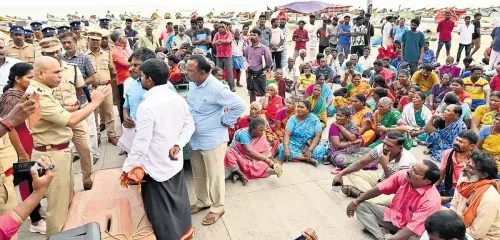
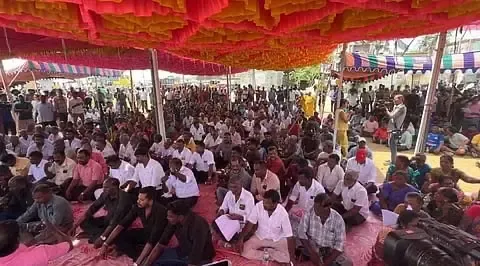
Fishermen from 10 coastal villages in Pattinapakkam, Chennai, are staging a black flag march on Sunday, 4 October 2026, to oppose the Tamil Nadu government's proposal to construct a new Assembly and Secretariat complex on land historically reserved for the fishing community. The protest, organised by the Mylapore Area All Fishermen Village Panchayat Council, is being held at the Mullikuppam-Srinivasapuram Loop Road junction, with black flags also being hoisted along the beachfront as a visible mark of dissent.
The Core Demand
The council has demanded that the state government withdraw GO 564, which it claims sanctions the proposed Assembly and Secretariat complex at Pattinapakkam. Fishermen argue that the land in question — falling under Survey Nos. 4592 and 4593 — was originally acquired through GO Ms No. 3313, dated 10 October 1957, exclusively for the rehabilitation and long-term housing of the local fishing community. Using it for a government administrative complex, they contend, would directly contradict the purpose for which it was acquired and would breach assurances previously extended to coastal residents.
A Campaign That Is Intensifying
Sunday's demonstration is not an isolated event. Fishermen had already staged an agitation on 29 September, calling on the government to revoke the order and preserve the land for coastal communities. With the Tamil Nadu government yet to change its position, the village council decided to escalate its campaign through the black flag protest. This pattern of escalation — from petitions to agitations to symbolic marches — signals growing frustration among a community that sees its habitat under institutional threat.
Climate Safety and Legal Recognition
The fishing community has also cited the state's own climate vulnerability assessments in support of their case, claiming the data indicates that Mullikuppam would remain relatively safe from projected sea-level rise through 2050 and 2100. This argument is intended to counter any government rationale that coastal relocation might protect residents from climate risk. Additionally, the council has urged the government to formally designate the locality as a fishermen's residential zone under the Coastal Regulation Zone Notification, 2019, a move that would provide legal protection against diversion of the land.
What the Community Is Asking For
Beyond the immediate demand to scrap GO 564, protesters have called for structured consultations with coastal residents before any final decision is made on the Secretariat project. They maintain that coastal land traditionally associated with fishing communities must be protected for housing and livelihood needs, not diverted for major infrastructure projects. The community's appeal reflects a broader tension in urban coastal governance — between infrastructure expansion and the rights of communities whose livelihoods and identities are tied to the shoreline.
Whether the Tamil Nadu government will engage with the council's demands or press ahead with the Secretariat plan remains to be seen, with the outcome likely to determine the trajectory of protests in the weeks ahead.
Point of View
Rather than administrative fait accompli, is the only route that does not end in prolonged conflict.
NationPress
4 Oct 2026
Frequently Asked Questions
Why are Pattinapakkam fishermen protesting against the Tamil Nadu secretariat plan?
Fishermen from 10 coastal villages are opposing the Tamil Nadu government's proposal, backed by GO 564, to use land in Pattinapakkam for a new Assembly and Secretariat complex. They argue the land — under Survey Nos. 4592 and 4593 — was acquired in 1957 specifically for fishermen's rehabilitation and housing, and diverting it would violate the original purpose of the acquisition.
What is GO 564 and why do fishermen want it withdrawn?
GO 564 is a government order that, according to the Mylapore Area All Fishermen Village Panchayat Council, provides for the proposed Assembly and Secretariat complex at Pattinapakkam. Fishermen want it withdrawn because the land it covers was originally acquired through GO Ms No. 3313, dated 10 October 1957, exclusively for the welfare and housing of the local fishing community.
What have fishermen asked the Tamil Nadu government to do?
The council has demanded withdrawal of GO 564, formal recognition of the area as a fishermen's residential zone under the Coastal Regulation Zone Notification 2019, and structured consultations with coastal residents before any decision is finalised on the Secretariat project.
Is this the first protest against the Pattinapakkam secretariat plan?
No. Fishermen had already staged an agitation on 29 September urging the government to revoke the order. With no change in the government's position, the community escalated to the black flag march on 4 October 2026.
What role does climate risk play in the fishermen's opposition?
The fishing community has cited the state's own climate vulnerability assessments, which reportedly indicate that Mullikuppam will remain relatively safe from projected sea-level rise through 2050 and 2100. They use this data to argue that neither climate risk nor public interest justifies relocating or displacing coastal residents from the area.