CM Yogi: BrahMos missile now being made in UP
Synopsis
Uttar Pradesh Chief Minister Yogi Adityanath declared on 21 November 2026 that BrahMos supersonic cruise missiles — invoked for their role in Operation Sindoor — are now being produced in UP, marking a major milestone for the state's Defence Industrial Corridor and India's Atmanirbhar Bharat push.
Key Takeaways
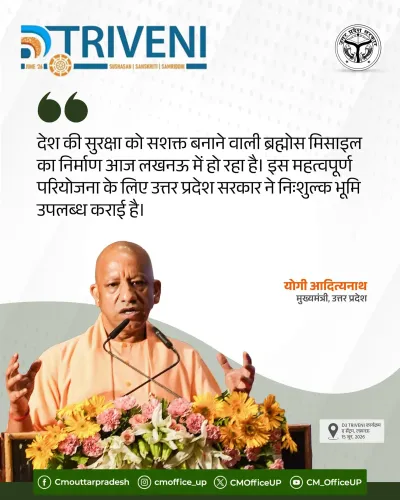
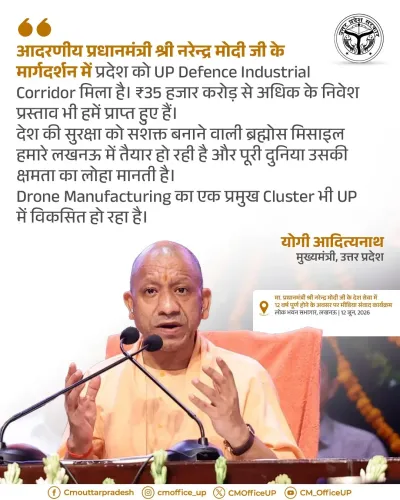
CM Yogi Adityanath announced on 21 November 2026 that BrahMos supersonic cruise missiles are now being manufactured in Uttar Pradesh .
The post invokes Operation Sindoor , framing the missile's battlefield record as context for UP's new production role.
The announcement is linked to the UP Defence Industrial Corridor , launched in 2018 , with clusters across Lucknow, Kanpur, Agra, Aligarh, Jhansi, and Chitrakoot.
BrahMos is an Indo-Russian joint venture and one of the world's fastest supersonic cruise missiles, in service across the Indian Army, Navy, and Air Force.
The development aligns with Atmanirbhar Bharat indigenisation mandates that have pushed defence manufacturing into new states and reduced import dependence.
Exact facility location, production volumes, and commissioning timelines have not yet been formally announced.
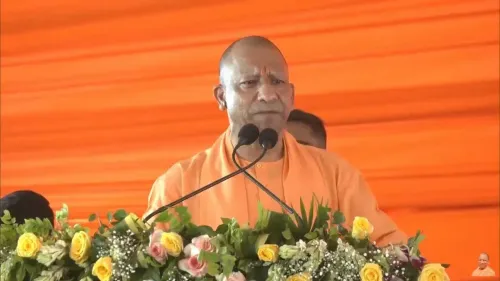
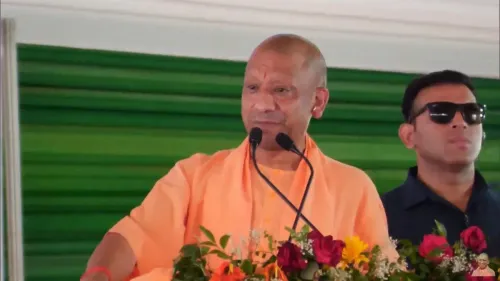
The supersonic cruise missile that rattled enemy defences during Operation Sindoor is now rolling off production lines inside Uttar Pradesh — that is the pointed claim Uttar Pradesh Chief Minister Yogi Adityanath made on Saturday, 21 November 2026, tagging Prime Minister Narendra Modi in a post that doubles as both a defence milestone and a statement of industrial ambition.
CM Yogi's post, written in Hindi, reads: 'ऑपरेशन सिंदूर' में दुश्मन की नींद उड़ाने वाली 'ब्रह्मोस' भी अब यूपी में बन रही है — 'The BrahMos that kept the enemy awake during Operation Sindoor is now being manufactured in UP as well.' The line is short. The implication is not.
BrahMos and the UP Defence Corridor
BrahMos is an Indo-Russian joint venture that produces one of the world's fastest supersonic cruise missiles, a system in active service across the Indian Army, Navy, and Air Force. For decades, the country's strategic missile ecosystem was concentrated in a handful of traditional defence hubs. The arrival of BrahMos production capacity in Uttar Pradesh signals a deliberate geographic broadening of that base.
The foundation for this shift was laid in 2018, when the Uttar Pradesh Defence Industrial Corridor was announced — a cluster-based manufacturing initiative spanning nodes including Lucknow, Kanpur, Agra, Aligarh, Jhansi, and Chitrakoot. The corridor was designed to draw defence manufacturers, reduce import dependence, and plug UP into the national security supply chain. BrahMos manufacturing in the state would represent one of the corridor's most consequential wins to date.
Atmanirbhar Bharat's Sharpest Edge
The broader context is India's Atmanirbhar Bharat push — Prime Minister Modi's self-reliance doctrine that has progressively raised indigenisation mandates for defence procurement, restricted imports across equipment categories, and pushed public and private manufacturers toward deeper in-country production. Missile systems, long considered the most sensitive rung of the indigenisation ladder, are increasingly part of that conversation.
Decentralising production to states like UP also carries a strategic logic: spreading the industrial footprint reduces single-point vulnerability and creates regional defence manufacturing ecosystems with their own skilled workforces and supply chains. The corridor model, if the BrahMos addition holds, moves UP from aspirant to anchor state in that framework.
Operation Sindoor as the Rhetorical Frame
CM Yogi's choice to anchor the post in Operation Sindoor — invoking the missile's battlefield record — transforms what could have been a routine industrial update into a national-pride moment. It connects factory floor to frontline, and positions UP's emerging defence capacity as directly battle-tested. The tag to PM Modi signals that the Chief Minister is placing this milestone squarely within the Prime Minister's larger defence-industrialisation narrative.
Exact commissioning timelines, production volumes, and the facility's precise location within UP remain to be formally announced. But the political signal is clear: Uttar Pradesh is no longer just a consumer of India's defence output — it intends to be one of its manufacturers.
Point of View
He embeds UP's defence corridor progress directly into the Atmanirbhar Bharat narrative, strengthening both his own governance credentials and the BJP's broader story on strategic self-reliance. The move also signals that the UP corridor, often discussed in aspirational terms since 2018, is delivering tangible, high-profile wins. If BrahMos production in UP scales to full capacity, it reshapes the geography of India's most sensitive manufacturing sector — a shift with implications well beyond one state's industrial balance sheet.
NationPress
21 Nov 2026
Frequently Asked Questions
Is BrahMos missile now being manufactured in Uttar Pradesh?
CM Yogi Adityanath announced on 21 November 2026 that BrahMos supersonic cruise missiles are now being produced in Uttar Pradesh, as part of the state's Defence Industrial Corridor. Official details on the facility location and production capacity are yet to be formally released.
What is the UP Defence Industrial Corridor?
The Uttar Pradesh Defence Industrial Corridor was announced in 2018 to develop defence manufacturing clusters across six nodes in the state — Lucknow, Kanpur, Agra, Aligarh, Jhansi, and Chitrakoot — with the aim of attracting defence manufacturers and reducing India's import dependence.
What is BrahMos and who makes it?
BrahMos is a supersonic cruise missile developed by BrahMos Aerospace, an Indo-Russian joint venture. It is one of the world's fastest cruise missiles and is in active service with the Indian Army, Navy, and Air Force.
What is Operation Sindoor?
CM Yogi referenced Operation Sindoor in his post as the context in which BrahMos demonstrated its operational effectiveness against enemy targets. Full verified details of the operation are not available from current sources.
How does BrahMos production in UP relate to Atmanirbhar Bharat?
India's Atmanirbhar Bharat initiative has pushed for greater indigenisation in defence manufacturing, including decentralising production beyond traditional hubs. BrahMos manufacturing in UP represents a significant step in that direction, expanding the country's strategic missile production footprint.