CM Pema Khandu: Buddha Relic Expo Opens at Tawang Monastery
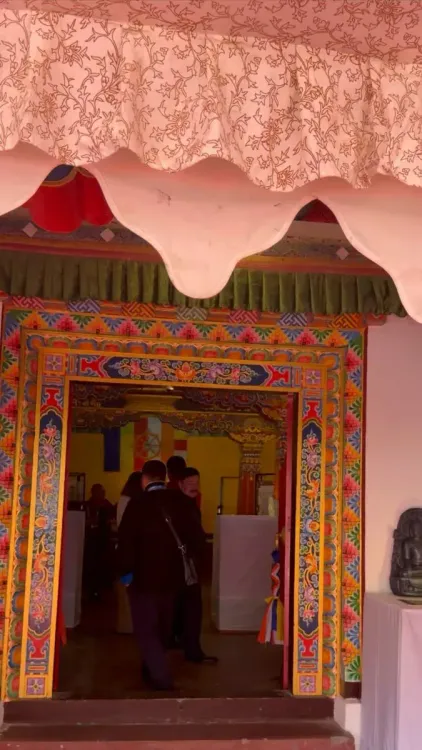
Synopsis
Arunachal Pradesh CM Pema Khandu has announced that a Sacred Exposition of Buddha's Holy Relics and two major exhibitions on Buddhist civilisation — including the 1898 Piprahwa discovery — are now open to visitors at Tawang Monastery.
Key Takeaways
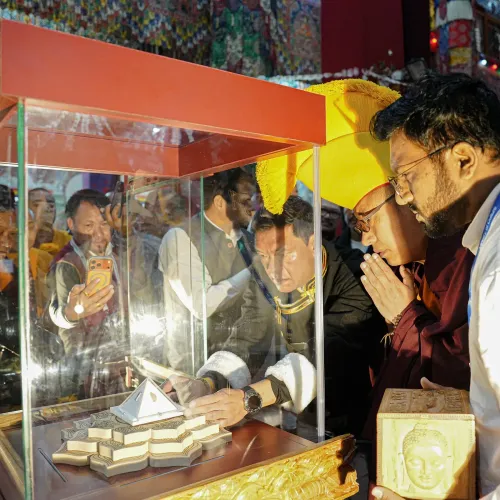
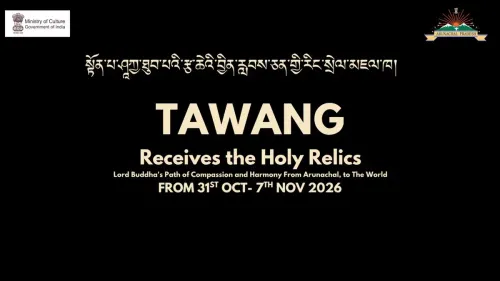
A Sacred Exposition of the Holy Relics of Lord Buddha is currently open to the public at Gaden Namgyal Lhatse (Tawang Monastery) , Arunachal Pradesh.
The exhibition 'Unearthing the Sacred Piprahwa' traces the archaeological history of the Piprahwa relics, discovered in 1898 in Uttar Pradesh. 'Crossroads of Dhamma' , curated by the National Museum, New Delhi in collaboration with the Indian Museum, Kolkata , presents the historical, artistic, and cultural journey of Buddhism.
Tawang Monastery , a 17th-century Gelugpa institution near the India-China border, is one of the largest Buddhist monasteries outside Tibet.
The exposition is part of a broader national effort to promote India's Buddhist heritage, particularly in the Northeast.
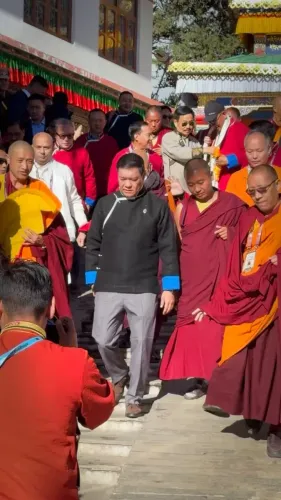
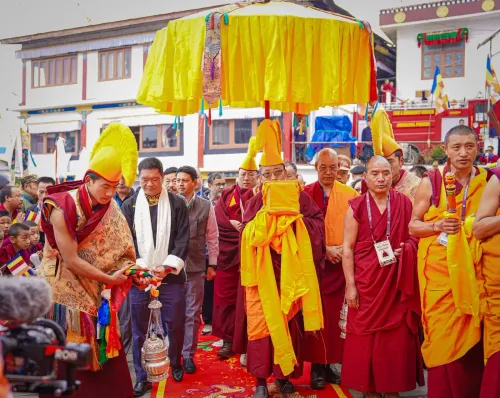
At one of the highest and most storied monasteries on earth, a rare window into Buddhist history has swung open. Arunachal Pradesh Chief Minister Pema Khandu announced on Sunday, 1 November 2026, that a Sacred Exposition of the Holy Relics of Lord Buddha is now underway at Gaden Namgyal Lhatse — Tawang Monastery — and that two landmark exhibitions have been mounted alongside it for the public.
Two Exhibitions, One Civilisation's Story
The first exhibition, 'Unearthing the Sacred Piprahwa: The Story of the Holy Buddha Relics and Their Discovery', takes visitors back to 1898 — the year archaeologists unearthed relics at Piprahwa in present-day Uttar Pradesh, a site long associated with Kapilavastu and the early life of the Buddha. The discovery is considered one of the most significant finds in the archaeology of early Buddhism, and the exhibition traces how those relics came to occupy a central place in Buddhist historical consciousness.
The second, 'Crossroads of Dhamma: Classical Legacies, Living Art, and Anthropological Perspectives', was curated by the National Museum, New Delhi, in collaboration with the Indian Museum, Kolkata. It offers a panoramic journey — historical, artistic, and cultural — through the spread of Buddhist civilisation. Together, the two exhibitions frame Tawang not merely as a place of worship but as a living archive of one of humanity's most consequential philosophical traditions.
Why Tawang Is the Right Stage
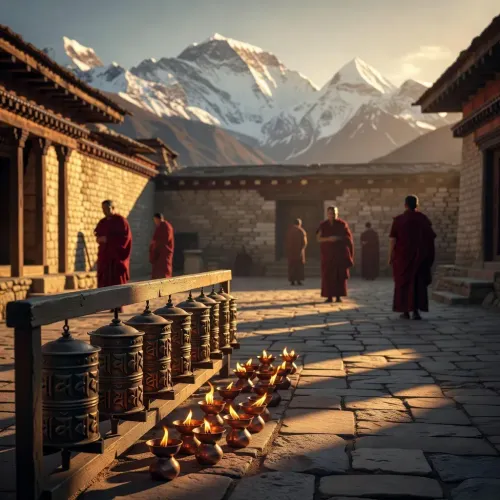
Tawang Monastery is no ordinary venue. Founded in the 17th century as a Gelugpa institution and perched near the India-China border, it is one of the largest Buddhist monasteries outside Tibet. Hosting a relic exposition here carries both spiritual weight and geopolitical resonance — a quiet, confident assertion of India's deep Buddhist identity in a region where that identity is sometimes contested.
Arunachal Pradesh has steadily worked to position its monasteries — and Tawang in particular — as world-class cultural tourism destinations. Periodic public expositions of Buddhist relics, mounted by Indian museums and state governments since the late 20th century, have formed the backbone of this effort. The current exposition, involving two of India's premier national institutions, marks a significant step up in scale and scholarly ambition.
Buddhism, the Northeast, and a Larger National Push
The exhibition partnership between New Delhi's National Museum and Kolkata's Indian Museum — two of India's oldest and most prestigious repositories — signals that this is not a local heritage event but a nationally backed cultural initiative. It fits squarely within a broader pattern of highlighting India's archaeological and living links to Buddhism, particularly in the Northeast, where those links are both ancient and politically significant.
For Buddhist pilgrims, scholars, and ordinary travellers alike, Tawang is now offering something rare: a single venue where sacred relics, archaeological history, and living art converge at altitude. The monastery's gates are open — and the story they are telling stretches from the foothills of ancient Kapilavastu to the ridgelines of the Eastern Himalayas.
Point of View
One art-historical — at a frontier monastery, the state and central governments are simultaneously advancing cultural tourism, asserting sovereign cultural continuity, and elevating Arunachal Pradesh's profile within India's broader Buddhist diplomacy. The involvement of both the National Museum and the Indian Museum signals a deliberate move beyond local heritage events toward nationally significant programming in the Northeast.
NationPress
1 Nov 2026
Frequently Asked Questions
What is the Buddha relic exposition at Tawang Monastery?
It is a Sacred Exposition of the Holy Relics of Lord Buddha now open to the public at Gaden Namgyal Lhatse (Tawang Monastery) in Arunachal Pradesh, accompanied by two special exhibitions on Buddhist civilisation.
What is the Piprahwa relic and why is it significant?
The Piprahwa relic refers to remains discovered in 1898 at an archaeological site in Uttar Pradesh associated with Kapilavastu; they are among the most important finds in the archaeology of early Buddhism and are attributed to Lord Buddha.
Who curated the 'Crossroads of Dhamma' exhibition at Tawang?
The exhibition was curated by the National Museum, New Delhi, in collaboration with the Indian Museum, Kolkata, and covers the historical, artistic, and cultural journey of Buddhism.
Where is Tawang Monastery and why is it historically important?
Tawang Monastery, also known as Gaden Namgyal Lhatse, is a 17th-century Gelugpa Buddhist monastery in Tawang district, Arunachal Pradesh, near the India-China border, and is one of the largest Buddhist monasteries outside Tibet.
Who announced the Buddha relic exposition at Tawang in 2026?
Arunachal Pradesh Chief Minister Pema Khandu announced the exposition and exhibitions on 1 November 2026 via a post on social media platform X.