Assam CM Himanta Wins Bullet Train Extension to Guwahati
Synopsis
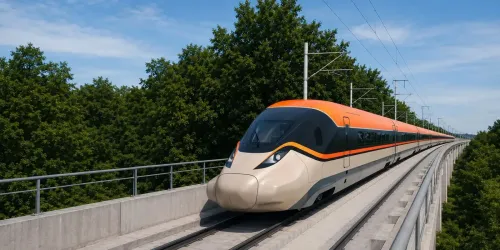
The Northern Bullet Train Corridor will now extend to Guwahati instead of ending at Siliguri, following sustained advocacy by Assam CM Himanta Biswa Sarma and Prime Minister Modi's support — a potentially transformative connectivity win for the Northeast.
Key Takeaways
The Northern Bullet Train Corridor has been extended to Guwahati , moving beyond its originally planned terminus at Siliguri .
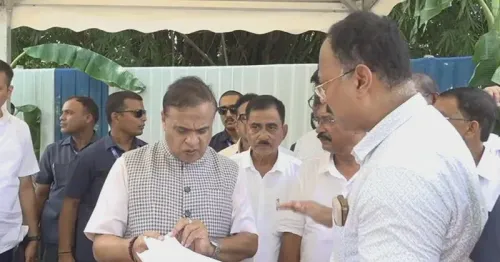
CM Himanta Biswa Sarma initiated the push through a letter in June and a follow-up meeting in July with the Centre.
PM Narendra Modi's backing is credited as decisive in approving the Guwahati extension.
Guwahati is the Northeast's largest city and primary commercial hub, making it the logical anchor for high-speed rail in the region.
India's high-speed rail programme began with the Mumbai-Ahmedabad corridor approved in 2015 ; the Northern Corridor marks its expansion into the Northeast.
The project still requires alignment studies, land acquisition and funding approvals before construction can begin.
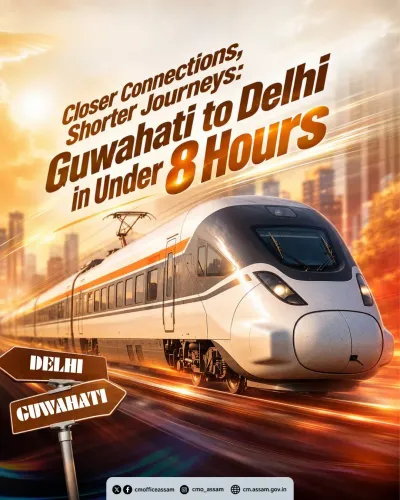
A corridor that was set to stop at Siliguri will now push all the way to Guwahati — and for the Northeast, that changes everything. The Chief Minister's Office of Assam announced on Wednesday, November 4, 2026, that the Northern Bullet Train Corridor has been extended to Assam's commercial capital, crediting a sustained diplomatic push by Chief Minister Dr. Himanta Biswa Sarma and the backing of Prime Minister Narendra Modi.
From Siliguri to Guwahati: What Changed
The original alignment of the Northern Bullet Train Corridor was planned to terminate at Siliguri, the chokepoint city in West Bengal that serves as the Northeast's gateway through the narrow Siliguri Corridor. That routing would have left Assam — and the broader Northeast — dependent on conventional rail for the final, often congested leg of any journey. According to the CMO's post, a letter in June followed by a follow-up meeting in July set the breakthrough in motion, with CM Sarma pressing the case directly at the highest levels before PM Modi's administration greenlit the extension.
Guwahati, the Northeast's largest city and its primary economic engine, is now the designated terminus. The CMO described it as a 'game-changing breakthrough' for Assam, and the framing is hard to argue with: high-speed rail reaching Guwahati would compress travel times from the Gangetic plain to the Northeast by an order of magnitude, reshaping logistics, tourism and business investment in a region that has historically paid a steep price for its geographic distance.
The Policy Arc Behind the Push
India's high-speed rail ambition formally launched with the Mumbai-Ahmedabad corridor, approved in 2015 under a landmark Japan-India partnership — the country's first bullet train project. The Northern Corridor represents the next wave of that ambition, reaching into a geography the initial programme never touched. It sits squarely within the Act East Policy, which has prioritised rail, road and air upgrades for the Northeast states since 2014, framing connectivity not just as infrastructure but as strategic integration of a region that shares borders with Bangladesh, Bhutan, China and Myanmar.
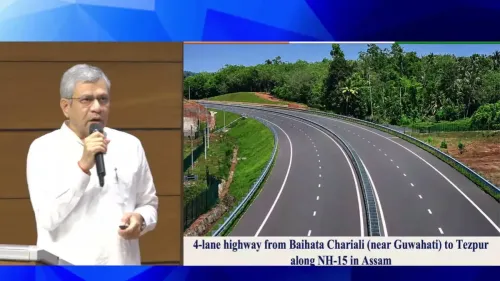
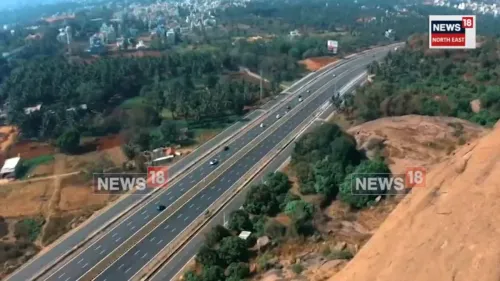
CM Himanta Biswa Sarma, in office since 2021, has made connectivity a signature theme of his tenure — pushing road, rail and air projects as prerequisites for the state's economic transformation. The Guwahati extension, if it moves through detailed project reports, land acquisition and funding approvals, would be the most consequential infrastructure win of that effort to date.
What Still Needs to Happen
Bullet train extensions do not run on announcements alone. The corridor will require alignment studies, cost estimates, environmental clearances and coordinated land acquisition across multiple states before a single track is laid. Railway ministry updates on these preparatory steps will be the real signal of whether the November 2026 breakthrough translates into steel and sleepers on a Guwahati-bound route. The Northeast's infrastructure history is littered with projects that moved slowly once the political moment passed. The difference this time, Assam's government is signalling, is that the mandate came from the top.
For a region that has long watched high-speed connectivity modernise western and southern India from a distance, a bullet train pulling into Guwahati would not just be a faster train — it would be a statement about where the Northeast stands in India's development story.
Point of View
Shifting high-speed rail from a western-India story to a genuinely national one. For CM Himanta Biswa Sarma, it is a tangible dividend of executive access — turning a letter and a meeting into a corridor alignment change, which is unusually fast in India's infrastructure decision cycle. The broader pattern matters: each Northeast connectivity win makes the region incrementally harder to marginalise in national planning, compounding over time into genuine economic integration. The real test, as always, will be execution speed — whether project reports and land acquisition follow the political announcement or whether this breakthrough waits years for its next chapter.
NationPress
4 Nov 2026
Frequently Asked Questions
What is the Northern Bullet Train Corridor in India?
The Northern Bullet Train Corridor is a proposed high-speed rail project that would connect northern India to the Northeast. It was originally planned to terminate at Siliguri in West Bengal, but has now been extended to Guwahati in Assam following advocacy by CM Himanta Biswa Sarma and PM Modi's support.
Why was the bullet train route extended to Guwahati instead of stopping at Siliguri?
Assam CM Himanta Biswa Sarma wrote a letter in June and held a follow-up meeting in July 2026 to press the case for extending the corridor directly to Guwahati, Assam's commercial capital. PM Narendra Modi's backing made the extension possible.
How will the Guwahati bullet train benefit the Northeast?
High-speed rail reaching Guwahati would dramatically reduce travel times between the Northeast and the rest of India, boosting logistics, tourism and business investment in a region historically constrained by geographic distance and limited fast-rail links.
When will the Northern Bullet Train Corridor to Guwahati be built?
No construction timeline has been officially announced. The project still requires detailed alignment studies, environmental clearances, land acquisition and funding approvals before work can begin. Railway ministry updates on these steps will indicate how quickly the project advances.
What is India's first bullet train project?
India's first bullet train project is the Mumbai-Ahmedabad High Speed Rail Corridor, approved in 2015 under a Japan-India partnership. The Northern Corridor extending to Guwahati represents the next phase of India's high-speed rail expansion.