CAA 2026: District Collectors now empowered to grant citizenship under new rules
Synopsis
India has quietly but consequentially restructured how CAA citizenship is granted — shifting final decision-making from Empowered Committees to District Collectors across eight states and UTs. The Citizenship (Third Amendment) Rules, 2026, notified on 19 August, make the Collector the sole competent authority, compressing bureaucratic layers in a law that remains among India's most contested.
Key Takeaways
The Ministry of Home Affairs notified the Citizenship (Third Amendment) Rules, 2026 on 19 August 2026 , shifting CAA decision-making to District Collectors .
District Collectors now have full authority to verify, scrutinise, and grant citizenship under Section 6B of the Citizenship Act, 1955.
Rules apply to residents of Gujarat, Rajasthan, Punjab, West Bengal, Assam, Tripura (both excluding tribal areas), Jammu and Kashmir , and Ladakh .
All applications must be submitted and processed electronically ; applicants must appear in person to take the oath of allegiance .
All pending matters with Empowered Committees and Designated Officers are to be transferred to respective District Collectors.
The CAA, 2019 provides a fast-track citizenship pathway for six religious minorities from Pakistan, Bangladesh, and Afghanistan who entered India before 31 December 2014 .
The Central Government has authorised District Collectors to receive, scrutinise, and grant citizenship to eligible applicants under Section 6B of the Citizenship Act, 1955, in a significant restructuring of the Citizenship Amendment Act (CAA) implementation framework. The change, notified through the Citizenship (Third Amendment) Rules, 2026, was published in the Gazette of India (Extraordinary) by the Ministry of Home Affairs on 19 August 2026.
What the New Rules Change
Until now, CAA applications were routed through district administration, but final decisions rested with Empowered Committees and Designated Officers. The amended rules transfer that decision-making authority exclusively to the District Collector — also known as the District Magistrate or Deputy Commissioner — within their respective territorial jurisdictions.
This makes the Collector the competent authority rather than a processing intermediary, a shift officials say is expected to reduce bureaucratic layers and potentially accelerate the citizenship grant process. All applications must now be submitted and processed electronically.
States and Territories Covered
The rules apply to applicants ordinarily residing in Gujarat, Rajasthan, Punjab, West Bengal, Assam (excluding tribal areas), and Tripura (excluding tribal areas), as well as the Union Territories of Jammu and Kashmir and Ladakh.
Key Procedural Requirements
According to the operative clause in the notification, 'The Collector, on being satisfied with the suitability of the applicant, that he is a fit and proper person to be registered or naturalised, as the case may be, shall grant him the citizenship of India.' The Collector is required to verify documents, conduct necessary enquiries, and administer the oath of allegiance as specified in the Second Schedule to the Citizenship Act.
Applicants who fail to appear in person to subscribe the application and take the oath — despite being given reasonable opportunities — will have their applications rejected. All pending matters previously handled by Empowered Committees and Designated Officers are to be transferred to the respective District Collectors.
Background: What the CAA Provides
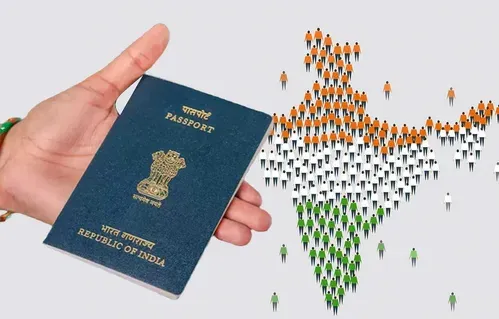
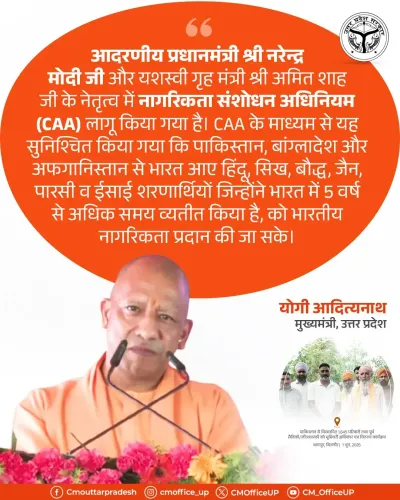
The Citizenship Amendment Act, 2019, amended the Citizenship Act, 1955, to create a fast-track pathway to Indian citizenship for Hindus, Sikhs, Buddhists, Jains, Parsis, and Christians who fled religious persecution from Pakistan, Bangladesh, and Afghanistan and entered India on or before 31 December 2014. The law reduces the mandatory residence period for these communities from 11 years to 5 years and creates a special eligibility category that does not extend to Muslims from the same three countries.
What Officials Say
Officials familiar with the development describe the amendment as a step towards greater administrative efficiency and state-level empowerment in implementing the CAA framework, while noting that the Central Government retains overall legislative authority under the Citizenship Act, 1955. The rules came into force from the date of their publication in the Official Gazette — 19 August 2026.
The restructuring marks a notable shift in how India's most contested citizenship law is administered on the ground, with the full impact dependent on how District Collectors exercise their newly consolidated authority.
Point of View
Where institutional capacity and political pressures vary sharply. The exclusion of tribal areas in Assam and Tripura reflects the political sensitivity that has surrounded CAA implementation in the Northeast since 2019. Crucially, the notification is silent on appeal mechanisms if a Collector rejects an application, a gap that could generate fresh litigation. The Centre retains legislative authority but has effectively devolved the most consequential step — the actual grant of citizenship — to officers who are state-cadre IAS, raising questions about uniform implementation across the eight covered states and UTs.
NationPress
9 Oct 2026
Frequently Asked Questions
What do the Citizenship (Third Amendment) Rules, 2026 change?
The rules transfer the authority to grant citizenship under the CAA from Empowered Committees and Designated Officers to District Collectors, making them the sole competent authority. They were notified in the Gazette of India on 19 August 2026 and came into force immediately.
Which states and Union Territories are covered under the new CAA rules?
The rules apply to applicants ordinarily residing in Gujarat, Rajasthan, Punjab, West Bengal, Assam (excluding tribal areas), Tripura (excluding tribal areas), Jammu and Kashmir, and Ladakh.
What is the process for applicants under the new CAA rules?
Applicants must submit their applications electronically. The District Collector will verify documents, conduct suitability enquiries, and administer the oath of allegiance. Failure to appear in person to take the oath, despite reasonable opportunities, will result in rejection.
What happens to pending CAA applications with Empowered Committees?
All pending matters previously handled by Empowered Committees and Designated Officers are to be transferred to the respective District Collectors under the new rules.
Who is eligible for citizenship under the CAA, 2019?
Hindus, Sikhs, Buddhists, Jains, Parsis, and Christians who fled religious persecution from Pakistan, Bangladesh, and Afghanistan and entered India on or before 31 December 2014 are eligible. The mandatory residence period for these communities has been reduced from 11 years to 5 years.