Tharoor Calls for Passport, Aadhaar to Prove Citizenship

Synopsis
Congress MP Dr. Shashi Tharoor has called for urgent legislative reform to designate both the Indian passport and Aadhaar card as conclusive proof of citizenship, after an MEA clarification on Passport Seva Divas sparked public confusion over the legal status of India's most widely held identity documents.
Key Takeaways
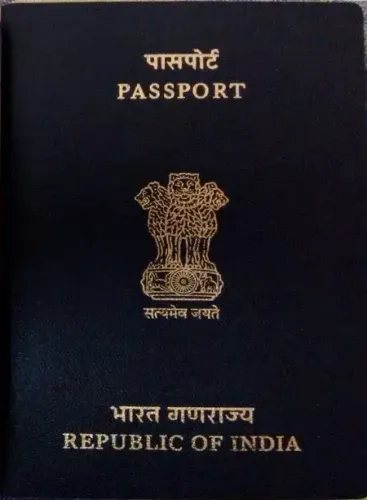
The Ministry of External Affairs clarified on Passport Seva Divas that an Indian passport is a 'travel document and not conclusive proof of citizenship,' citing Section 20 of the Passports Act of 1967 .
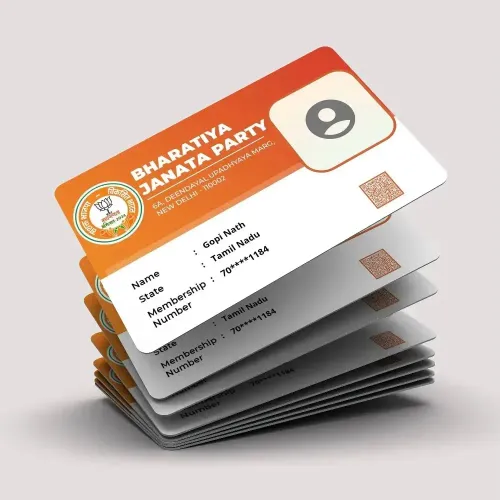
The Supreme Court of India has previously ruled that the Aadhaar card establishes identity and residence but is not proof of citizenship.
Tharoor argues this leaves millions of Indians in 'administrative limbo' with no legally conclusive proof of nationality.
He proposes amending the Passports Act and Aadhaar Act to make both documents conclusive citizenship proof unless explicitly withdrawn by the state.
To address the fact that Aadhaar is issued on the basis of 182 days of residence rather than nationality, Dr.
Tharoor suggests a visually distinct card — with a 'diagonal red stripe' — for non-citizen residents.
The proposal would require coordinated action from the MEA , UIDAI , and Ministry of Home Affairs .
Congress MP Dr. Shashi Tharoor on Friday, June 26, 2026, called for urgent legislative reform to make both the Indian passport and the Aadhaar card conclusive proof of citizenship, responding to a Ministry of External Affairs clarification that a passport is primarily a 'travel document and not conclusive proof of citizenship.'
Context
The Ministry of External Affairs (MEA) issued a clarification — notably on Passport Seva Divas, the annual day marking milestones in India's passport delivery system — stating that an Indian passport is legally a travel document and does not constitute conclusive proof of citizenship. The statement drew on Section 20 of the Passports Act of 1967, which permits the state, under rare public-interest circumstances, to issue passports even to non-citizens. The clarification triggered widespread public confusion and political debate across the country.
Dr. Tharoor described the distinction as 'a difference without a difference, meaningless to the average citizen,' arguing that the passport is the product of a rigorous bureaucratic vetting process — including police verification and document checks — that the state itself mandates as proof of citizenship before granting the document.
Policy Backdrop
The Passports Act was enacted in 1967 to consolidate laws governing the issuance, denial, and impounding of Indian passports. The Aadhaar enrolment programme, launched in 2009 under the Unique Identification Authority of India (UIDAI), ties eligibility to 182 days of local residence rather than nationality, meaning both citizens and non-citizen residents can hold the card. In 2018, the Supreme Court of India upheld Aadhaar's constitutional validity while explicitly holding that it does not constitute proof of citizenship — only of identity and residence.
Dr. Tharoor noted this creates 'a bizarre administrative limbo' where millions of Indians hold world-class biometric and state-issued documents, yet none are legally deemed conclusive proof of nationality within their own borders.
Tharoor's Proposal
The Thiruvananthapuram MP proposed a two-part legislative solution. First, Parliament should formally amend the legal framework to designate both a valid passport and a standard Aadhaar card as conclusive proof of Indian citizenship, unless explicitly cancelled or withdrawn by the state. Second, to address the fact that Aadhaar is currently held by non-citizen residents as well, the UIDAI should introduce a visually distinct card — Dr. Tharoor suggested 'a visible diagonal red stripe across the front' — specifically for non-citizens living in India.
'By clearly demarcating the two categories, the state can safely mandate that carrying either a standard citizen's Aadhaar or a valid passport is compulsory and sufficient proof of citizenship for all Indian nationals at all times,' Dr. Tharoor wrote. He argued such a dual-document policy would 'streamline domestic verification, eliminate arbitrary bureaucratic challenges during electoral revisions, and provide every Indian with absolute, unquestionable legal certainty regarding their identity.'
Stakeholders and Impact
The ambiguity has practical consequences for ordinary citizens, election authorities, and non-citizen residents alike. Successive governments have faced administrative friction when attempting to link Aadhaar, passports, and voter rolls for identity verification. Electoral revision exercises have periodically drawn complaints of arbitrary document demands, and the absence of a single, legally conclusive citizenship document has left both citizens and officials in an uncertain position.
Non-citizen residents — who currently hold standard Aadhaar cards indistinguishable from those of citizens — would be directly affected by any move to create differentiated card formats. Civil liberties groups and identity-rights advocates are likely to scrutinise any such proposal for potential misuse or exclusion.
What's Next
Dr. Tharoor's intervention adds political weight to calls for Parliament to revisit both the Passports Act, 1967 and the Aadhaar Act. Any amendment would require legislative consensus and a coordinated response from the MEA, the UIDAI, and the Ministry of Home Affairs. Observers will watch for UIDAI notifications on revised card formats and any government response to the mounting pressure to clarify the legal standing of India's most widely held identity documents.
Point of View
Legally conclusive citizenship document, he exposes a structural gap that successive administrations have sidestepped rather than resolved. His proposal for a colour-coded, differentiated Aadhaar card is administratively inventive, but it will face scrutiny from civil liberties quarters wary of any system that visibly marks residents by citizenship status. The political timing — on Passport Seva Divas itself — sharpens the contrast between the state's pride in its passport delivery infrastructure and its reluctance to grant that same document full legal weight at home.
NationPress
25 Sept 2026
Frequently Asked Questions
Is an Indian passport proof of citizenship?
Legally, an Indian passport is classified as a travel document under the Passports Act of 1967 and is not conclusive proof of citizenship, as the MEA clarified on Passport Seva Divas 2026. However, the process of obtaining one requires rigorous citizenship verification, making the distinction confusing for most citizens.
Is Aadhaar card proof of Indian citizenship?
No. The Supreme Court of India ruled in 2018 that Aadhaar establishes identity and residence but does not constitute proof of citizenship, since the UIDAI issues it to anyone who has resided in India for 182 days, including non-citizens.
What did Shashi Tharoor propose about Aadhaar and passports?
Dr. Tharoor proposed that Parliament amend the Passports Act and Aadhaar Act to make a valid passport and a standard Aadhaar card conclusive proof of Indian citizenship. He also suggested the UIDAI issue a visually distinct Aadhaar card — featuring a diagonal red stripe — specifically for non-citizen residents.
What is Section 20 of the Passports Act 1967?
Section 20 of the Passports Act of 1967 allows the Indian government, under rare public-interest circumstances, to issue passports to individuals who are not Indian citizens. The MEA cited this provision to explain why a passport cannot be treated as conclusive proof of citizenship.
What is Passport Seva Divas?
Passport Seva Divas is an annual day observed in India to mark milestones and achievements in the country's passport services delivery system, managed by the Ministry of External Affairs.