Passport not proof of citizenship: Congress demands MEA clarify its stance
Synopsis
The MEA's declaration that a passport is not proof of citizenship has triggered a sharp Congress pushback — with leaders questioning the timing, the legal logic, and the pattern of successive documents being stripped of citizenship value. With NRC memories fresh in Assam, the political stakes of this 'clarification' are anything but routine.
Key Takeaways
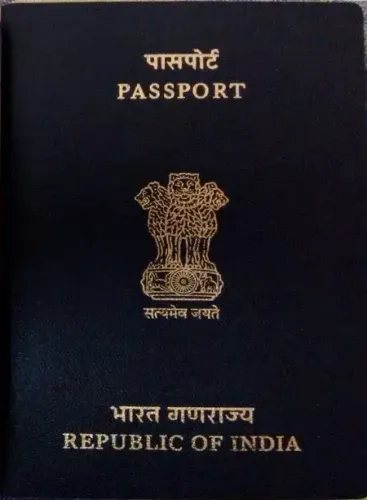
The MEA stated at a Passport Seva Divas event on Wednesday, 24 June that a passport is primarily a travel document, not proof of citizenship.
Congress leader Salman Khurshid argued the Passport Act implicitly links passport issuance to citizenship, and called for the government to explain the timing of the statement.
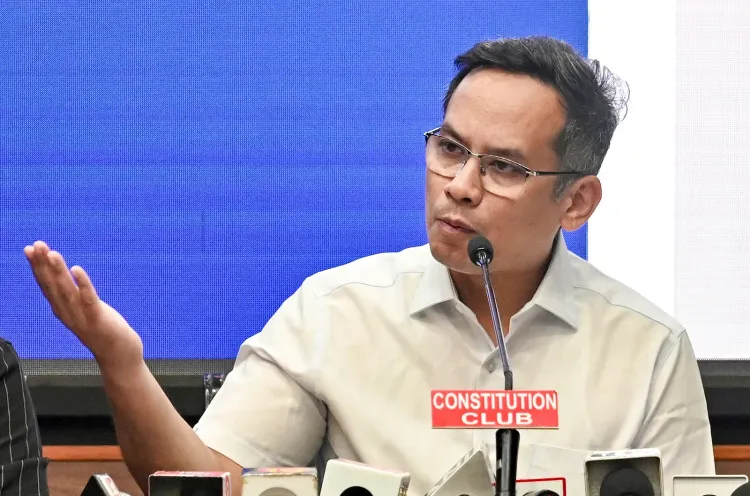
Congress MP Gaurav Gogoi raised concerns about a pattern of documents — voter ID, PAN, Aadhaar, and now passport — being disqualified as citizenship proofs.
Congress MLA Vijay Wadettiwar said the statement 'only creates confusion' and that a passport is already issued exclusively to citizens.
The controversy intersects with ongoing debates around the NRC in Assam and the broader Citizenship Amendment Act (CAA) .
The Indian National Congress on Thursday, 25 June sharply criticised the Bharatiya Janata Party (BJP)-led Central government after the Ministry of External Affairs (MEA) declared that a passport has never been proof of citizenship — with Congress leaders warning that such a statement risks creating widespread 'confusion' among ordinary citizens.
The controversy erupted after an MEA official stated at a Passport Seva Divas event on Wednesday that a passport should primarily be understood as a travel document, not a citizenship credential.
What Congress Leaders Said
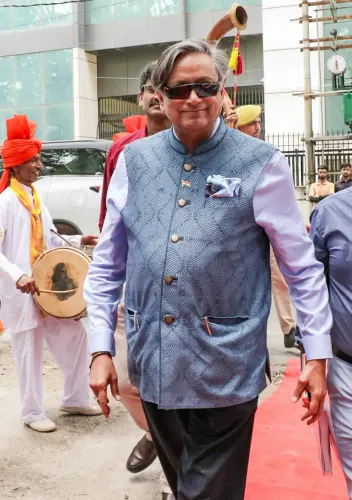
Senior Congress leader Salman Khurshid argued that the Passport Act itself creates an implicit link between the document and citizenship. 'One thing is very clear in the Passport Act: a passport can be denied if a person is not a citizen. If non-citizenship is a ground for refusing a passport, then the issuance of a passport must have some relevance to citizenship as well,' he said.
Khurshid acknowledged that formal citizenship determination falls under the Citizenship Act, but maintained that reading both laws together, a passport 'must carry some significance.' He added: 'I do not think an ordinary person would easily understand the distinction.'
He also questioned the timing of the government's statement, saying: 'The Union government should explain why this clarification is being issued now and why it is being stated formally after so many years.'
Congress MP Raises NRC Concern
Congress MP Gaurav Gogoi called on the MEA to go further and clarify whether the government has ever issued passports to non-Indian nationals. 'As per the Passport Act, a passport is issued to bonafide Indian citizens only and therefore it is a proof of Indian citizenship — but if it is not, then they should clarify,' he said.
Gogoi drew on his experience observing the National Register of Citizens (NRC) process in Assam, highlighting the difficulties common people faced in proving their citizenship. He noted a pattern where documents — voter ID, PAN card, Aadhaar, and now passport — are being progressively disqualified as citizenship proofs. 'Maybe the Union government feels that only if you are listed in the NRC, that is a proof of citizenship,' he told reporters.
MLA Calls Statement Unnecessary and Confusing
Congress MLA Vijay Wadettiwar argued that several legal documents, including a passport, Aadhaar card, and voter ID, are collectively recognised as means to establish citizenship — and that a passport, by its very nature, is issued only to a citizen. 'I do not understand why such statements are being made, why there is so much discussion around it, or why objections are being raised,' he said.
Wadettiwar was unequivocal in his assessment: 'All this only creates confusion among people and contributes to misunderstanding.'
Why the Timing Matters
The MEA's statement comes amid an ongoing national conversation around citizenship documentation, particularly in the context of the NRC in Assam and broader debates over the Citizenship Amendment Act (CAA). Critics argue that progressively narrowing the list of valid citizenship proofs places a disproportionate burden on marginalised and rural populations who may lack access to formal records.
The Centre has not yet issued a formal follow-up clarification. How the government responds — and whether it addresses the legal interplay between the Passport Act and the Citizenship Act — is likely to shape the next phase of this debate.
Point of View
Not the Passport Act, is the governing statute. But the timing is the real story. Coming amid unresolved NRC anxieties in Assam and CAA implementation, it feeds a legitimate fear: that the government is systematically narrowing the documentary pathways through which ordinary Indians can assert citizenship. Each 'clarification' — on Aadhaar, voter ID, PAN, and now passports — lands not as legal precision but as incremental exclusion. The Centre owes citizens not just a legal footnote but a coherent, accessible explanation of what documentation actually suffices and for whom.
NationPress
24 Sept 2026
Frequently Asked Questions
What did the MEA say about passports and citizenship?
An MEA official stated at a Passport Seva Divas event on 24 June that a passport should primarily be understood as a travel document and has never been proof of citizenship. The statement sparked immediate political controversy.
Why is the Congress objecting to the MEA's statement?
Congress leaders argue that the Passport Act itself links passport issuance to citizenship — since a passport can be denied to a non-citizen — making the MEA's position legally inconsistent. They also warn that the declaration creates confusion among ordinary citizens about what documents establish their citizenship.
What is the legal position on passports and citizenship in India?
Formally, citizenship in India is governed by the Citizenship Act, while passports are governed by the Passport Act. The MEA's position is that these are separate legal instruments. However, critics note that the Passport Act bars issuance to non-citizens, implying an indirect link.
How does this relate to the NRC in Assam?
Congress MP Gaurav Gogoi, who has closely observed the NRC process in Assam, raised concerns that successive documents — voter ID, PAN, Aadhaar, and now passports — are being ruled out as citizenship proofs, potentially leaving citizens with no clear documentary pathway other than NRC inclusion.
Has the Centre issued any further clarification?
As of Thursday, 25 June, the Centre had not issued a formal follow-up clarification addressing the legal interplay between the Passport Act and the Citizenship Act or the specific concerns raised by Congress leaders.