Shashi Tharoor urges law change to end passport-citizenship confusion
Synopsis
The MEA's Passport Seva Divas clarification — that an Indian passport is not conclusive proof of citizenship — has exposed a legal vacuum that Congress MP Shashi Tharoor says affects millions. His fix: amend the law to make passports and Aadhaar conclusive citizenship proof, and give non-citizen residents a visually distinct Aadhaar card. It is a simple idea that successive governments have avoided confronting.
Key Takeaways
Congress MP Shashi Tharoor on 26 June called for legislative amendments to recognise passports and Aadhaar as conclusive proof of Indian citizenship.
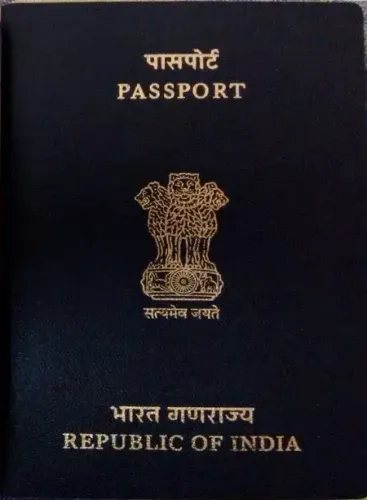
The demand follows an MEA clarification on Passport Seva Divas that a passport is primarily a travel document, not citizenship proof, under the Passports Act, 1967 .
The Supreme Court has previously ruled that Aadhaar establishes identity and residence — not citizenship — compounding the legal gap.
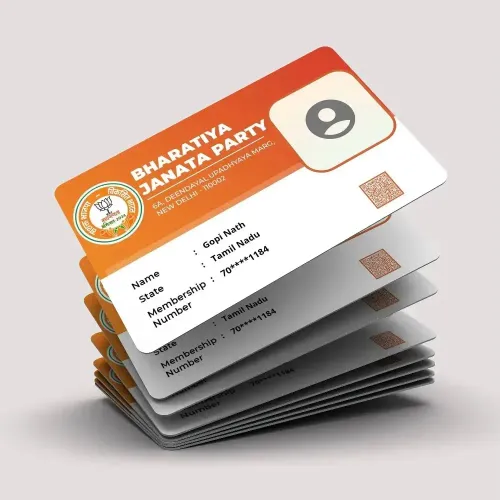
Tharoor proposed that UIDAI issue a visually distinct Aadhaar card for non-citizen residents to separate them from citizens.
The reform, he argued, would reduce disputes in electoral roll revisions and give every Indian legal certainty over their citizenship status.
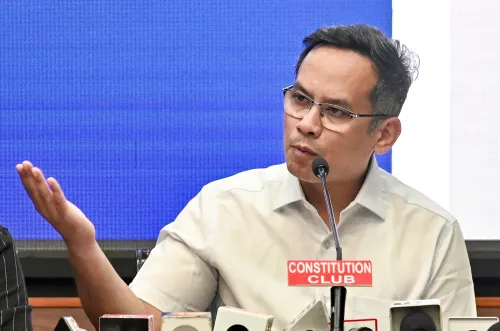
Congress MP Shashi Tharoor on Friday, 26 June called for an urgent legislative overhaul to resolve what he described as a deepening legal paradox over Indian identity documents, arguing that both passports and Aadhaar cards must be recognised as conclusive proof of Indian citizenship unless explicitly cancelled or withdrawn by the state.
What Triggered the Demand
Tharoor's remarks came in direct response to a clarification issued by the Ministry of External Affairs (MEA) on Passport Seva Divas, in which the ministry stated that an Indian passport is primarily a travel document and does not, in law, constitute conclusive proof of citizenship. The MEA grounded its position in the Passports Act, 1967, specifically Section 20, which permits passports to be issued to non-citizens under exceptional circumstances deemed to be in the public interest.
Tharoor acknowledged the legal basis of the government's stance but argued it has generated widespread confusion among ordinary citizens who have long treated the passport as the highest form of identity proof available to them.
The Core Legal Paradox
'For decades, the passport has been regarded as the gold standard of identity,' Tharoor said, questioning how a document issued only after rigorous police verification and extensive document scrutiny could then be deemed insufficient as proof of nationality. 'If a passport does not establish domestic citizenship, then what does?' he asked.
The Thiruvananthapuram MP further noted that the Supreme Court had previously ruled that an Aadhaar card serves only as proof of identity and residence — not citizenship. Taken together, he argued, the two legal positions leave millions of Indians holding government-issued documents that are still not legally recognised as conclusive proof of their nationality.
What Tharoor Has Proposed
To break the deadlock, Tharoor proposed amendments to the existing legal framework that would formally recognise both passports and Aadhaar as valid proof of citizenship. He also suggested that the Unique Identification Authority of India (UIDAI) introduce a visually distinct Aadhaar card for non-citizen residents — a design change that would clearly separate citizens from long-term resident non-citizens at a glance.
Such a reform, he argued, would simplify domestic verification, reduce bureaucratic disputes during exercises such as electoral roll revisions, and provide every Indian with legal certainty over his or her citizenship status.
Why It Matters
The debate touches a fault line that has grown more sensitive in recent years, particularly in the context of the National Register of Citizens (NRC) exercises and ongoing disputes over electoral rolls. Critics argue that if neither a passport nor an Aadhaar card can conclusively establish citizenship, the burden of proof effectively falls on the individual — a situation that disproportionately affects marginalised communities with limited access to legacy documentation.
This is not the first time the citizenship-proof gap has surfaced in public discourse, but the MEA's explicit clarification on a high-profile occasion has given the issue fresh urgency. With no government response to Tharoor's proposals yet, the question of what legally constitutes proof of Indian citizenship remains unresolved.
Point of View
The government has inadvertently validated a question that opponents of the NRC have raised for years: if your most rigorous government-issued document does not prove you belong here, what does? Tharoor's proposal is pragmatic, but it sidesteps a harder truth — that amending the Passports Act and the UIDAI framework to confer citizenship-proof status would require the government to also tighten the issuance process, something that has historically been resisted on administrative and political grounds. The real risk is that the clarification, left unaddressed by legislation, becomes a tool for harassment rather than a neutral legal statement.
NationPress
25 Sept 2026
Frequently Asked Questions
Why did Shashi Tharoor call for changes to the passport law?
Tharoor called for a legislative overhaul after the Ministry of External Affairs clarified on Passport Seva Divas that an Indian passport is primarily a travel document and not conclusive proof of citizenship under the Passports Act, 1967. He argued this creates a legal paradox for millions of Indians who rely on passports as their primary identity proof.
What does the MEA's clarification on passports mean for Indian citizens?
The MEA's clarification means that, strictly in law, holding a valid Indian passport does not conclusively establish that the holder is an Indian citizen, as Section 20 of the Passports Act, 1967 allows passports to be issued to non-citizens in exceptional circumstances. For most citizens this changes nothing practically, but it creates a legal vulnerability that could be exploited in citizenship verification exercises.
What is Shashi Tharoor's proposal to fix the citizenship-proof gap?
Tharoor has proposed amending the legal framework to formally recognise both passports and Aadhaar cards as conclusive proof of citizenship. He has also suggested that UIDAI issue a visually distinct Aadhaar card for non-citizen residents, making it easier to differentiate citizens from non-citizens without additional documentation.
Why is Aadhaar not considered proof of citizenship in India?
The Supreme Court has ruled that Aadhaar establishes proof of identity and residence, not citizenship, because it is issued on the basis of residence in India rather than nationality. This means a long-term foreign resident can also hold an Aadhaar card, which is why it cannot serve as citizenship proof in its current form.
Who is affected by the passport-citizenship legal gap?
The gap potentially affects all Indian citizens who rely solely on a passport or Aadhaar as identity proof, particularly during electoral roll revisions, NRC-related exercises, or other state-level citizenship verification drives. Critics argue marginalised communities with limited access to legacy documents such as birth certificates are most at risk.