Kejriwal backs Goa hunger striker, demands Section 39(a) rollback
Synopsis
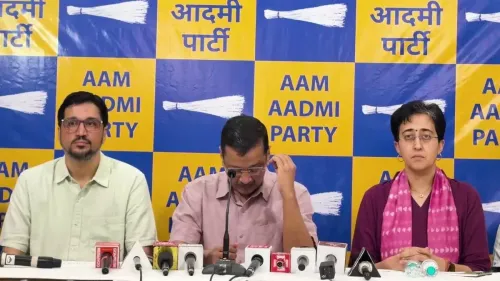
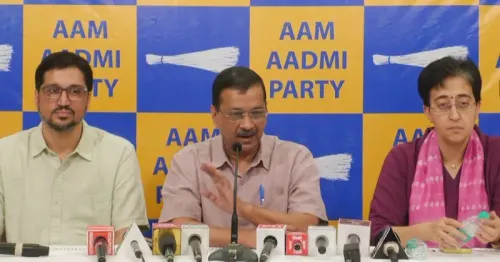
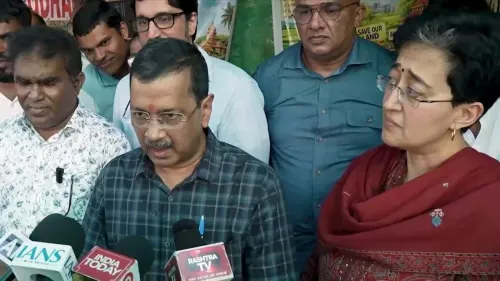
AAP convenor Arvind Kejriwal has publicly backed Goan activist Rama Kankonkar, now nine days into a hunger strike, and demanded the immediate rollback of Section 39(a), which he says is being used to facilitate land sales across Goa at the expense of its residents.
Key Takeaways
Arvind Kejriwal publicly backed activist Rama Kankonkar , who is on a hunger strike for nine days over Goa's land policy.
Kejriwal labelled the Goa BJP government a 'builders-colonisers govt' and demanded the immediate rollback of Section 39(a) .
Karapur is the specific flashpoint, but Kejriwal framed the problem as statewide, affecting 'the length and breadth' of Goa.
AAP has a history of contesting Goa and aligning with local protests in BJP-ruled states as part of its national expansion strategy.
The outcome of the hunger strike and any legislative response in the Goa assembly will determine how the standoff escalates.
Nine days into a hunger strike, Rama Kankonkar is still fasting — and now AAP convenor Arvind Kejriwal has stepped into the fight, publicly backing the Goan activist and demanding the immediate rollback of a land provision he says is being weaponised to sell off the state.
In a post on Sunday, 9 August 2026, Kejriwal trained his fire on the Goa BJP government, calling it a 'builders-colonisers govt' that 'doesn't care about the people of Goa.' At the centre of his charge: Section 39(a), a provision he alleges is being used to enable land transactions that harm residents — not just in Karapur, the flashpoint area, but 'across the length and breadth of the state.'
Kankonkar's fast and the Karapur flashpoint
Kankonkar's anshan — a hunger strike rooted in the Gandhian tradition of non-violent protest — has stretched to nine days, a duration that signals both the depth of local anger and the absence of any official response that has satisfied protesters. Karapur has emerged as a specific site of contention, but Kejriwal's framing deliberately broadens the grievance to a statewide pattern of land conversion and development policy.
Goa has a long and contested history of clashes between state planning authorities and citizen groups over land use. Recurring disputes over conversion of agricultural and eco-sensitive land have periodically drawn national attention, and local activists have consistently argued that regulatory provisions are bent in favour of builders and developers over ordinary residents.
AAP's calculated move into Goa's land politics
Kejriwal's intervention follows a recognisable AAP playbook: align publicly with grassroots protests in BJP-governed states, frame the ruling party as pro-developer and anti-people, and build a political footprint outside Delhi. AAP has contested Goa before, and lending national visibility to a local hunger strike costs the party little while potentially deepening its connect with Goan voters who feel unheard by the state government.
The demand is unambiguous: Section 39(a) must be 'rolled back immediately.' Whether the Goa BJP government responds — in the assembly, through dialogue, or with silence — will determine whether this stays a local protest or becomes a sustained political pressure campaign.
A nine-day fast is not a footnote. If Kankonkar's health deteriorates without a government response, the stakes for both sides rise sharply.
Point of View
Sympathetic hook to re-enter Goa's political conversation without having to build a campaign from scratch. The framing of Section 39(a) as a tool for 'builders and colonisers' mirrors the anti-corruption, pro-common-man language that has defined AAP's brand nationally. For the Goa BJP government, the challenge is less about AAP's electoral threat and more about managing a land-governance narrative that local protests are already making uncomfortable. If the hunger strike continues without resolution, the story stops being about a politician's tweet and starts being about a state's accountability deficit.
NationPress
24 Sept 2026
Frequently Asked Questions
Who is Rama Kankonkar and why is he on a hunger strike?
Rama Kankonkar is a Goan activist who has been on a hunger strike for nine days to protest against land policies in Goa, particularly the application of Section 39(a), which he and supporters argue is being used to facilitate land sales that harm residents.
What is Section 39(a) in Goa?
Section 39(a) is a provision in Goa's land regulations that Kejriwal and protesters allege is being misused to enable land conversion and sales favouring builders and developers, to the detriment of local communities. Specific details of its exact legal text remain subject to verification.
Why is Kejriwal commenting on a Goa land issue?
AAP has previously contested elections in Goa and regularly voices support for grassroots protests in BJP-ruled states. Kejriwal's backing of Kankonkar fits a broader AAP strategy of positioning the party as a defender of ordinary citizens against pro-developer state governments.
What is the Karapur land dispute about?
Karapur is an area in Goa cited as a specific flashpoint in the land controversy. Kejriwal's statement suggests it is one of several locations where Section 39(a) is being applied in ways that local residents and activists contest.
What happens next with the Goa land protest?
The key developments to watch are the state of Kankonkar's health, any response from the Goa BJP government, and whether the issue is raised in the Goa assembly. Kejriwal's public backing raises the national profile of the protest and increases pressure on the state administration.